Simon & Schuster
made to look like it.
/ About the project
A strategic provocation. In 2022, the Justice Department blocked Penguin Random House from buying Simon & Schuster, preserving one of the last independently owned Big Five publishers. Most coverage framed the decision as a near miss. I saw a positioning opportunity and built a rebrand that argues independence is the asset, not the consolation prize. This is a self-initiated proposal grounded in real market data. I owned the strategy, identity, and applied system; the business facts are public record.
/ INDUSTRY
Literature
/ SCOPE
Brand Strategy, Visual Identity, Editorial
/ Credits
Client: Self-Initiated Proposal
Designer: Micah Hoang
/ Year
2024
Background
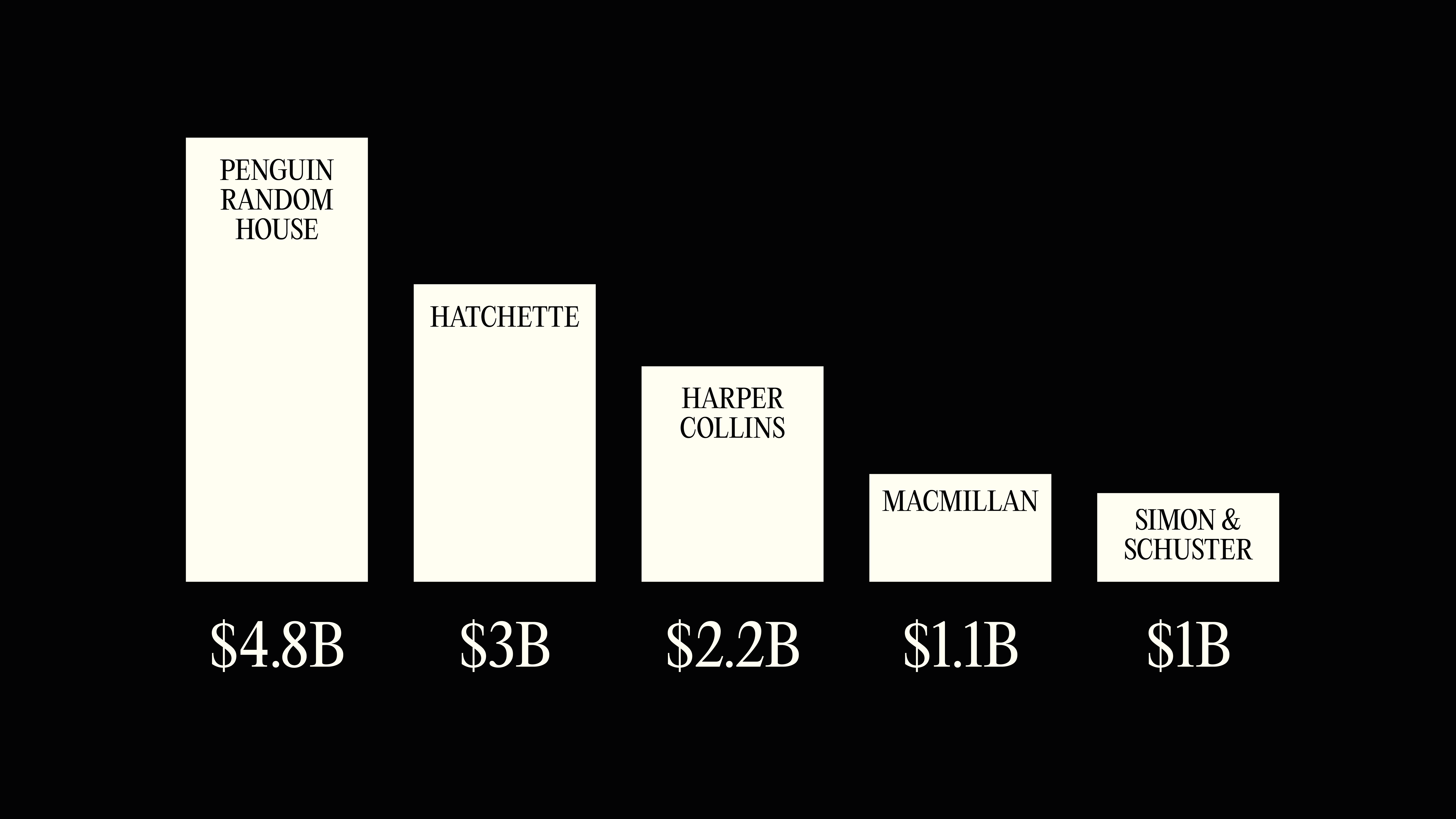
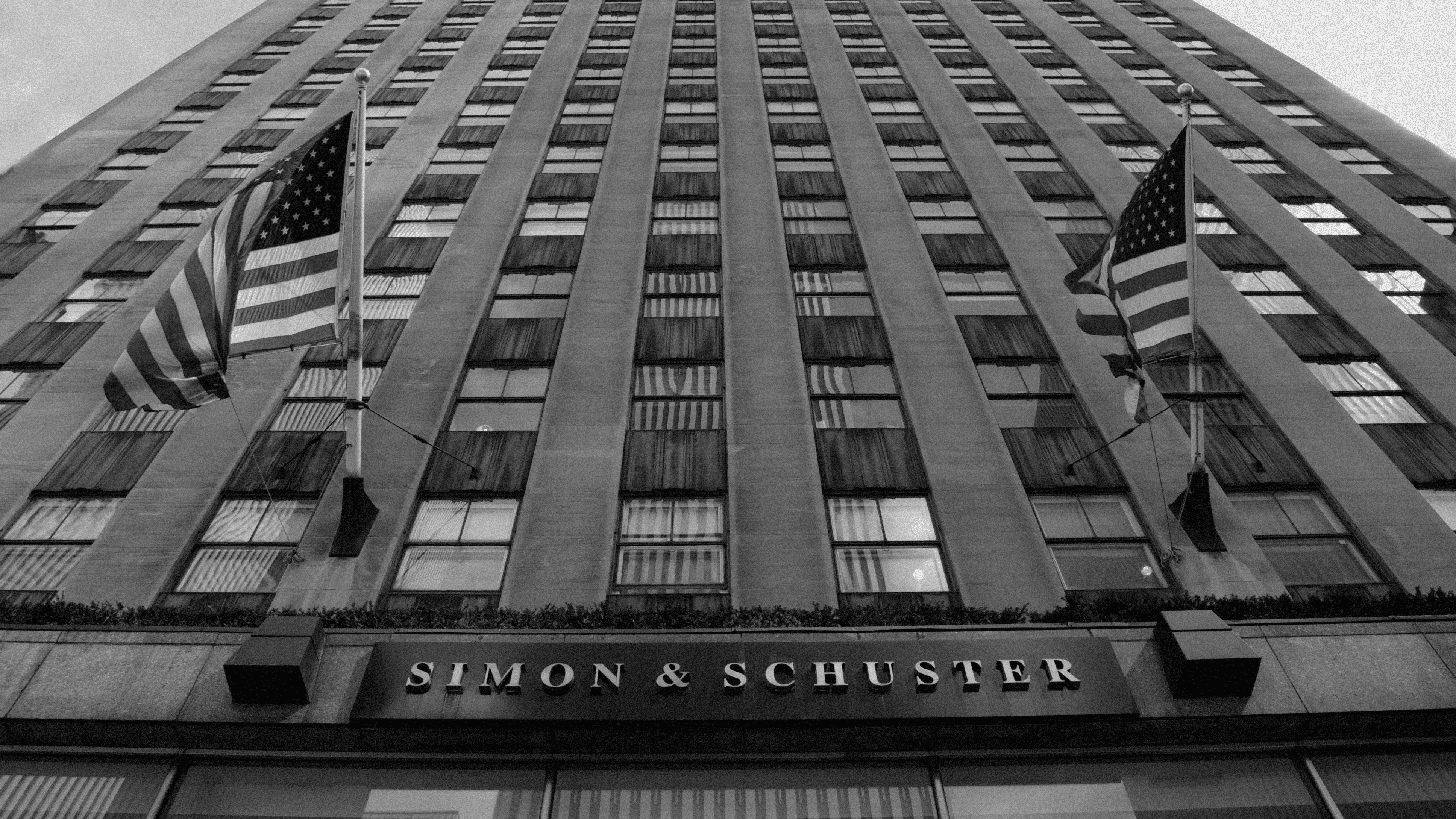
Five conglomerates control trade publishing. S&S is the smallest, and after the block, the only one whose independence is now its defining trait. Founded in 1924, it publishes 2,000 titles a year across more than 50 imprints. Scale and independence usually read as separate stories. I built the brand where they meet.
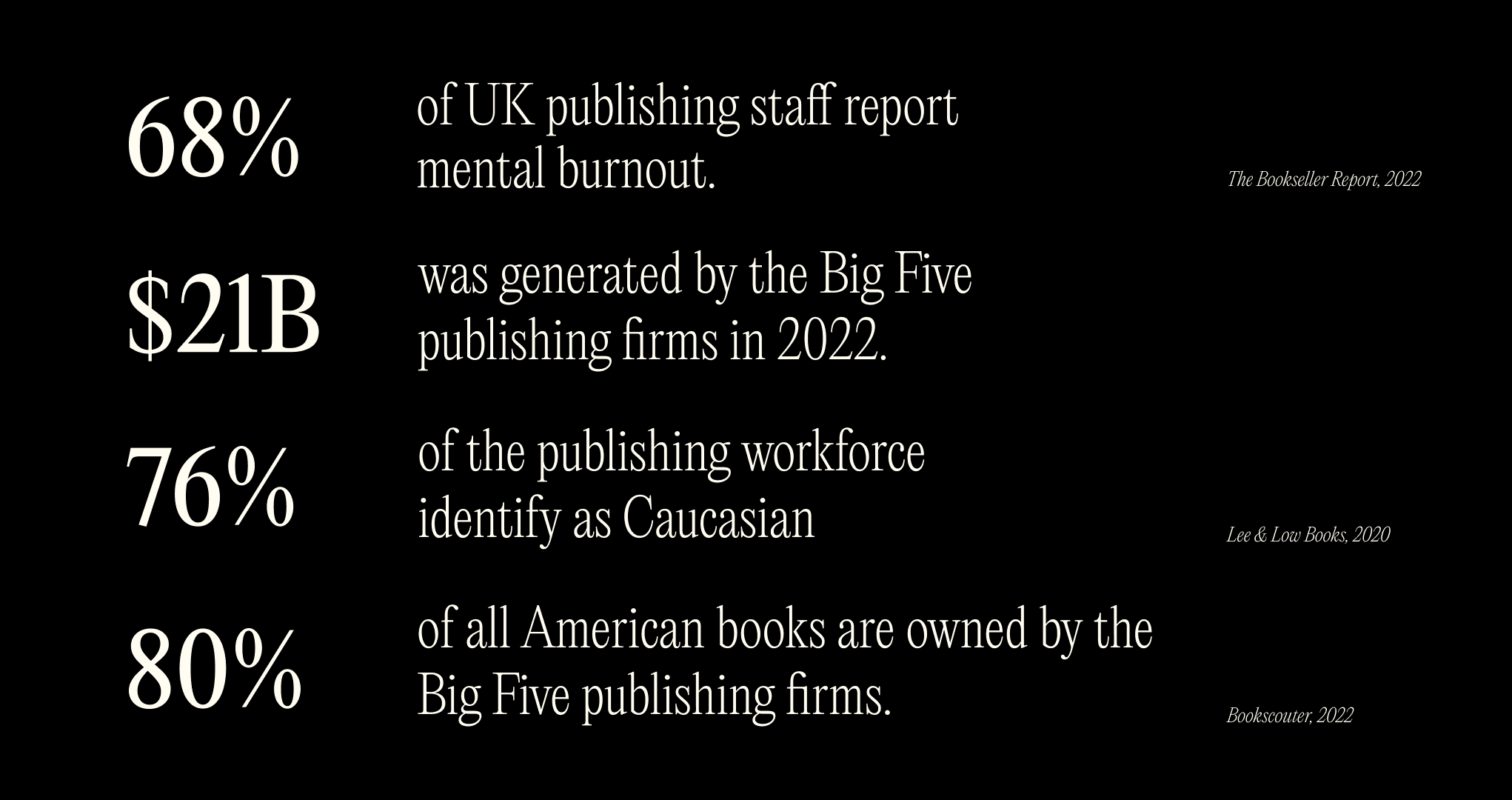
Statistics & Insights

Strategy

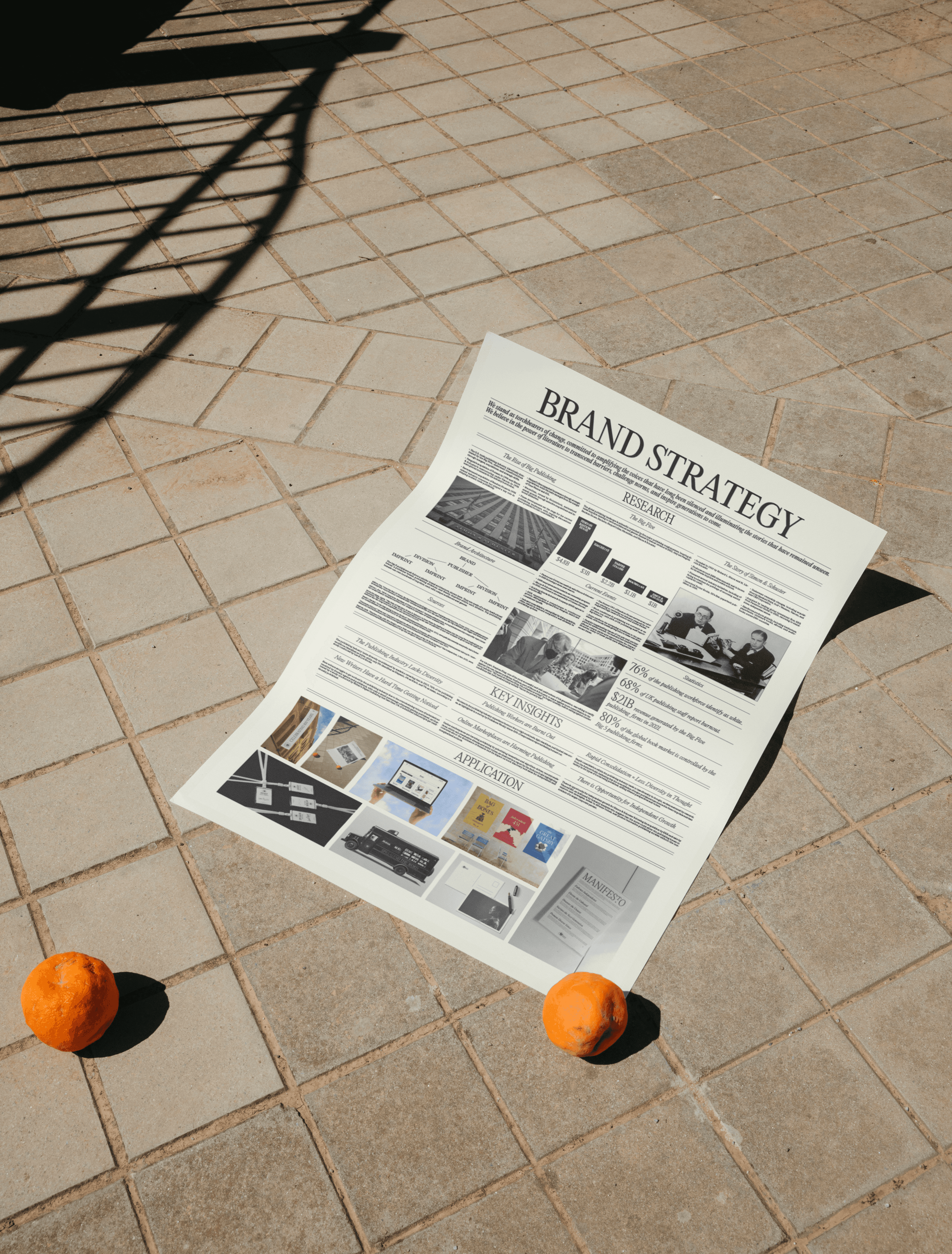
An antitrust block looks like a loss. I made it the advantage no competitor can copy, because the others are owned. The manifesto commits S&S to emerging authors, transparent acquisition, and mentorship as proof of the position.
Logomark
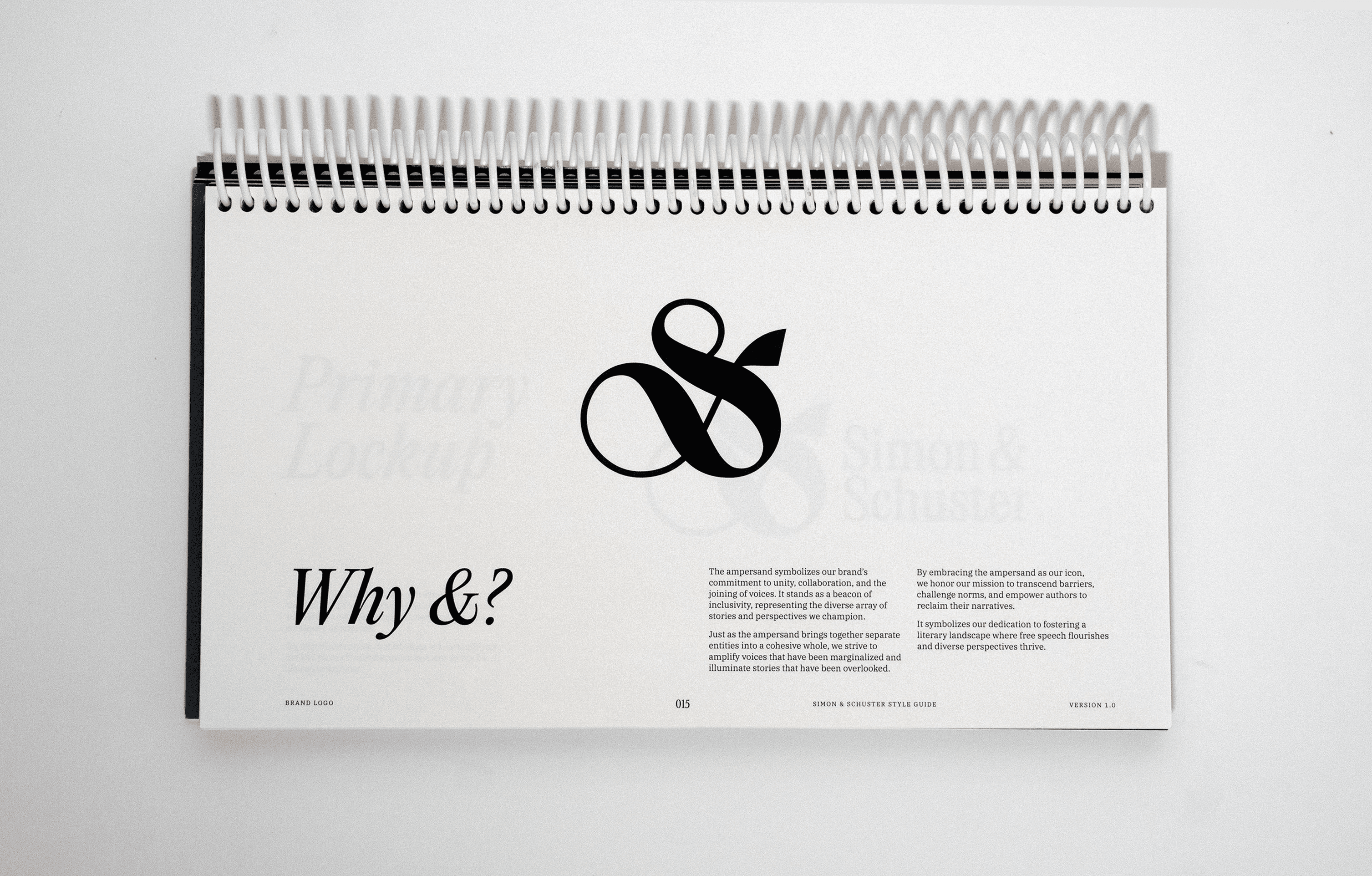

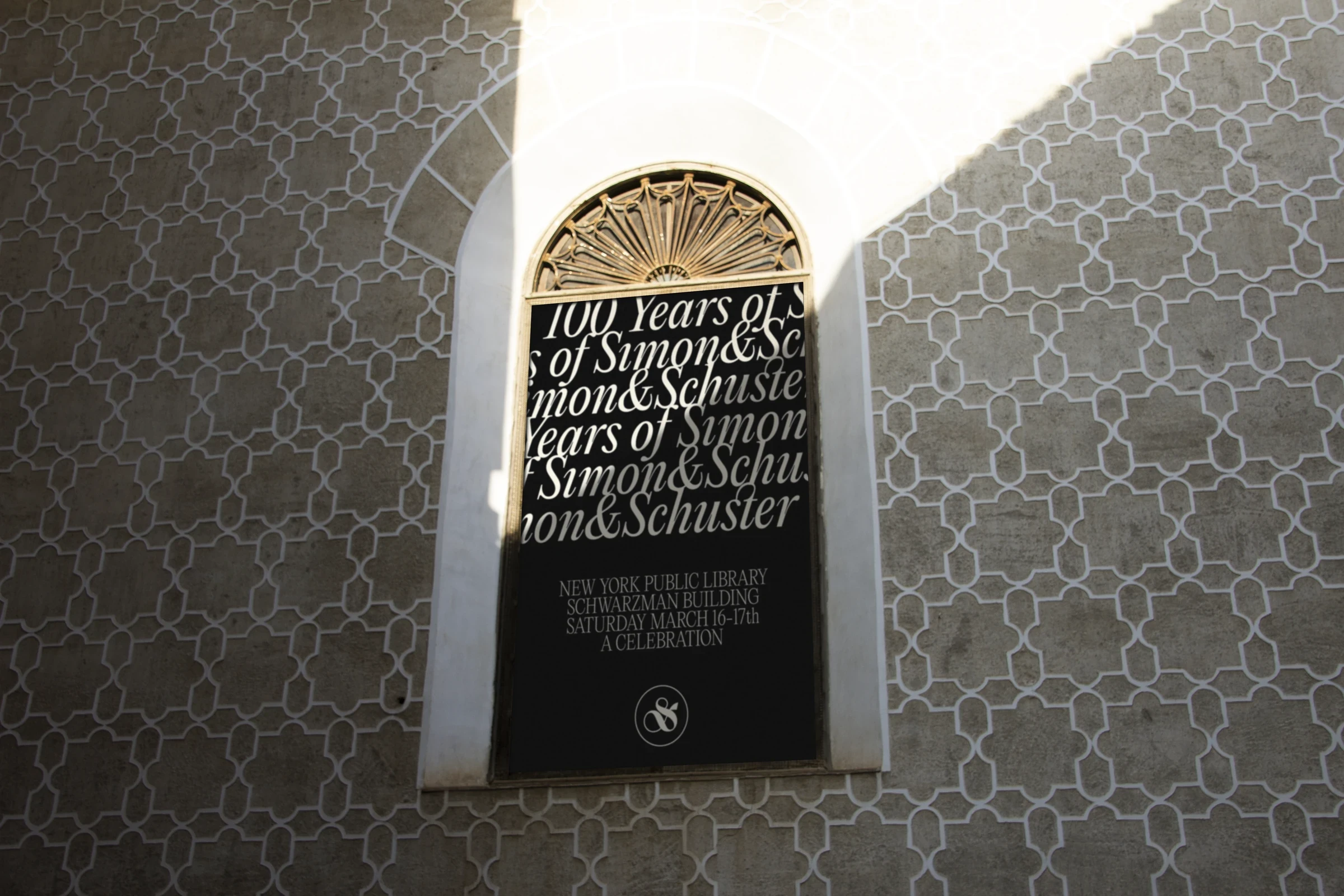
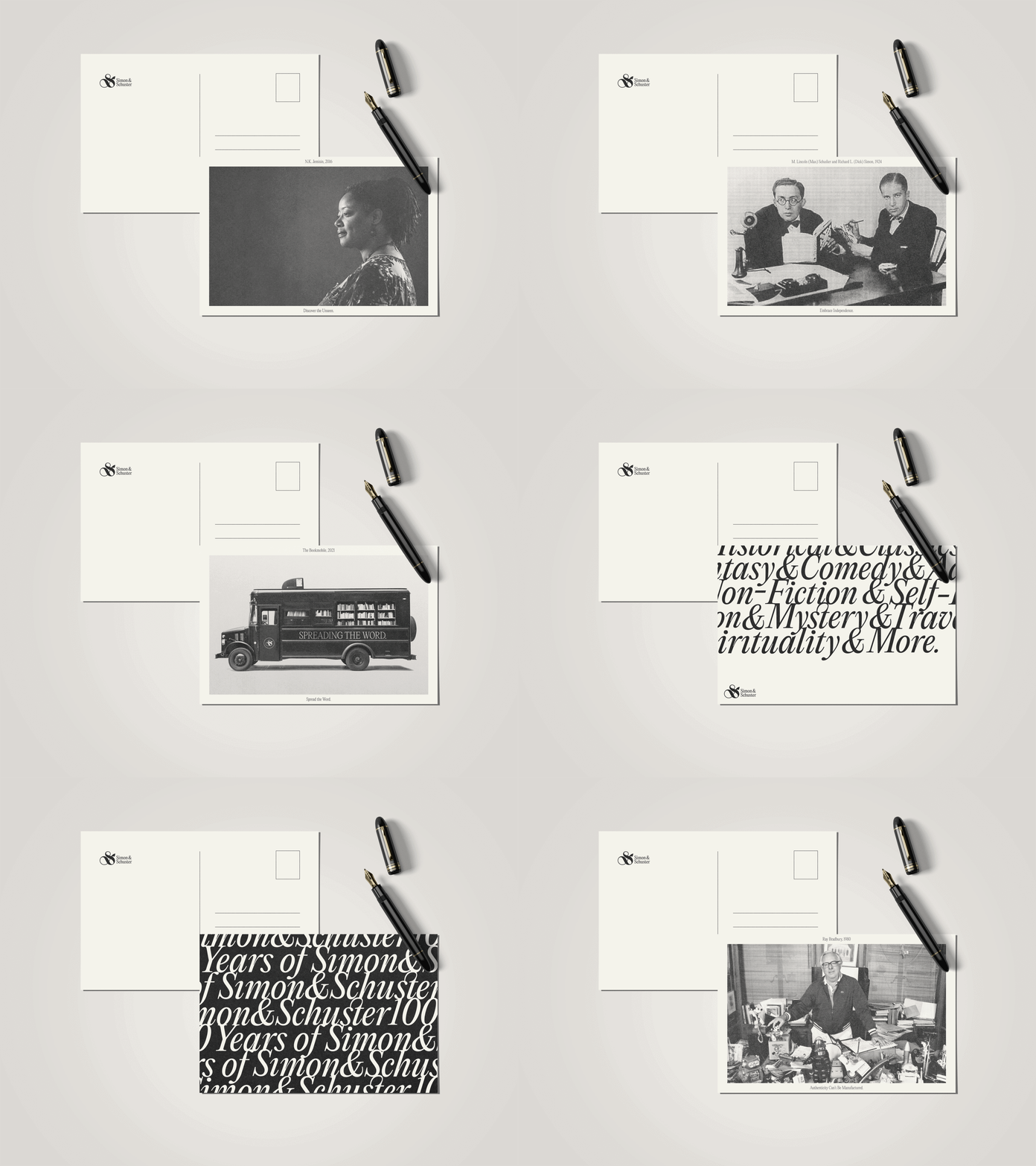
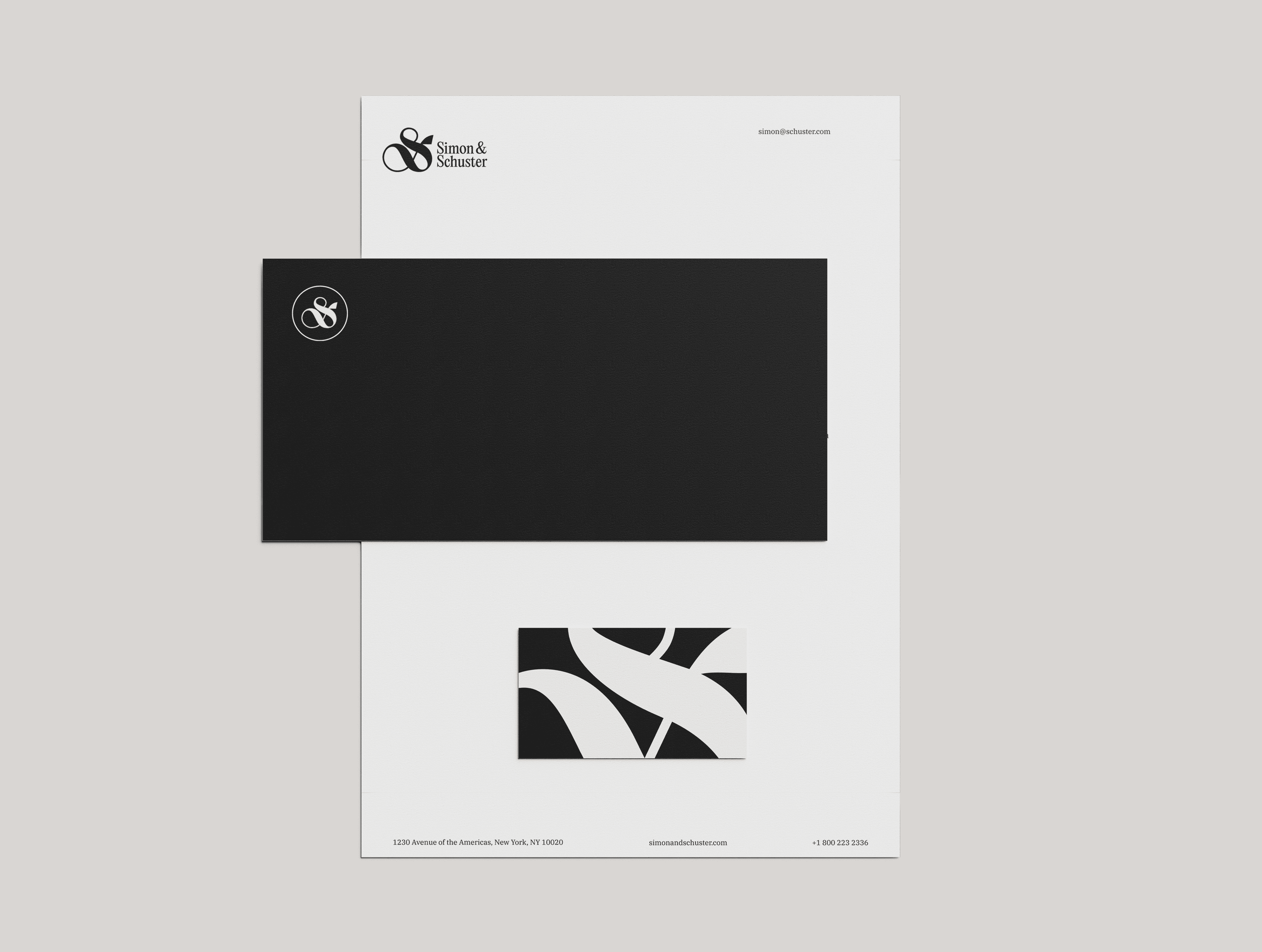
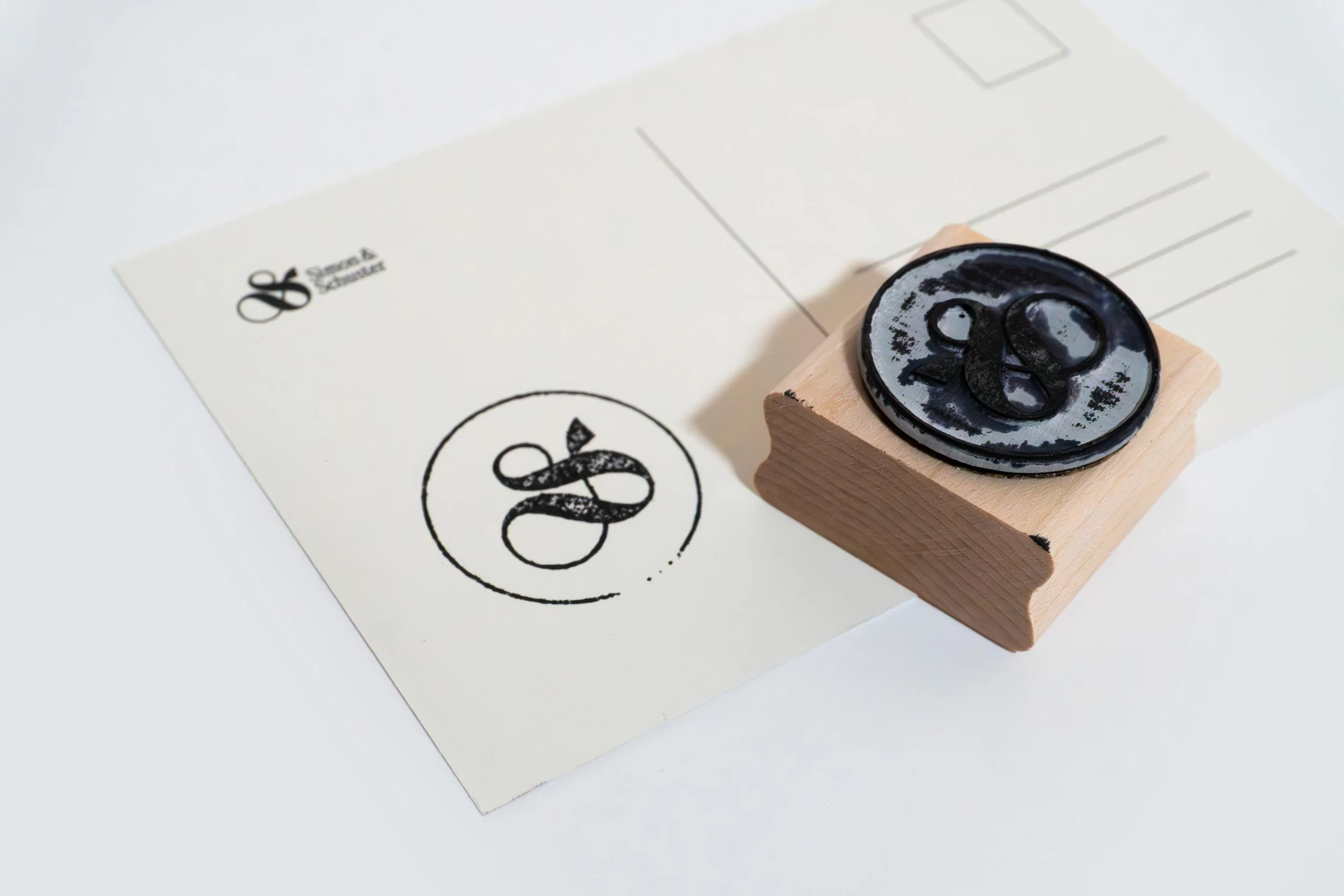
I merged the ampersand with an “S” so one mark could carry more than 50 imprints without redrawing any. Set in PP Editorial New, it reads first as a publisher's mark. The system works three ways: standalone, locked to type, and as a stamp. Paired with an author's signature, it gives each collaboration its own lockup.
Guidelines
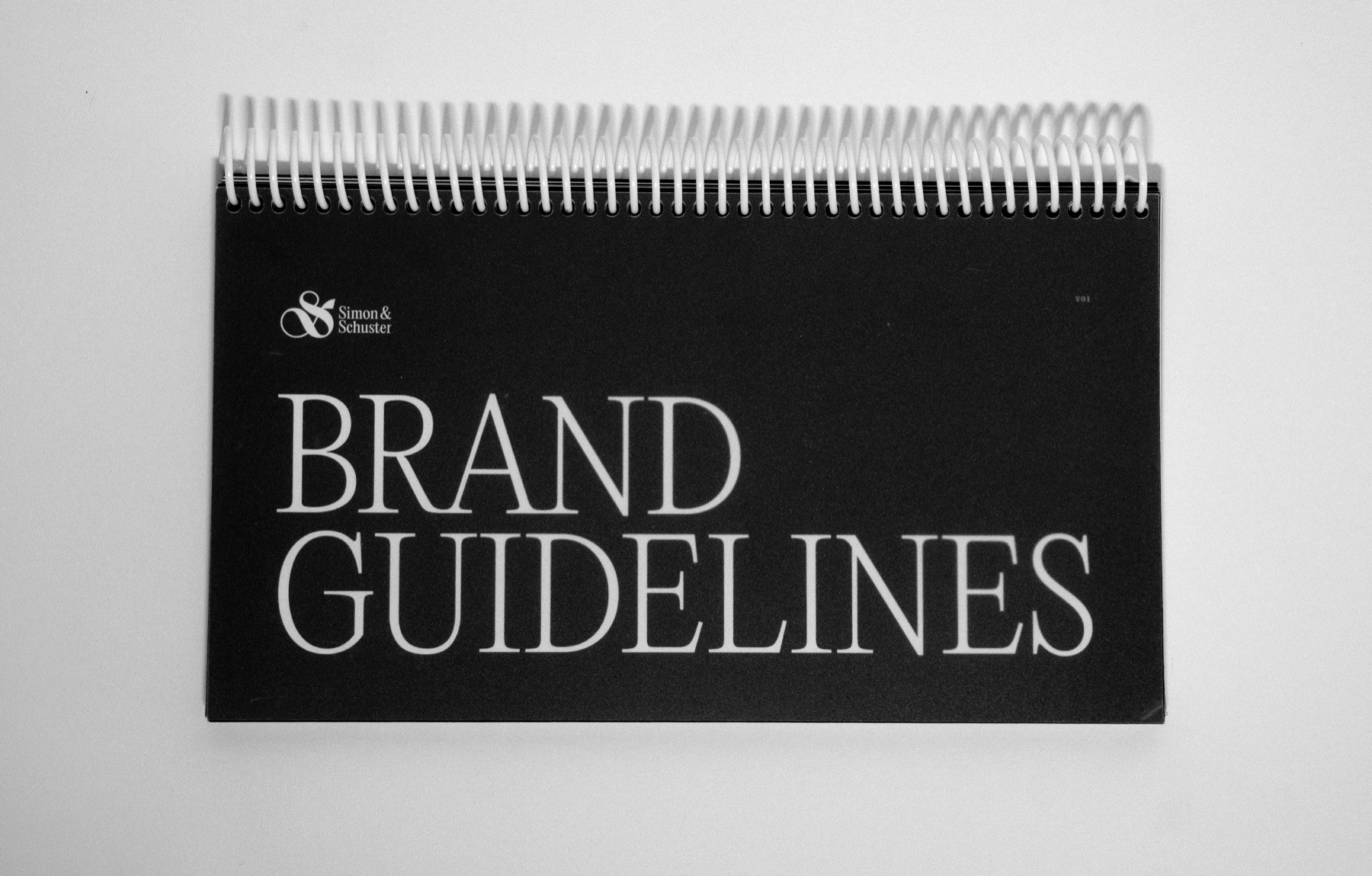
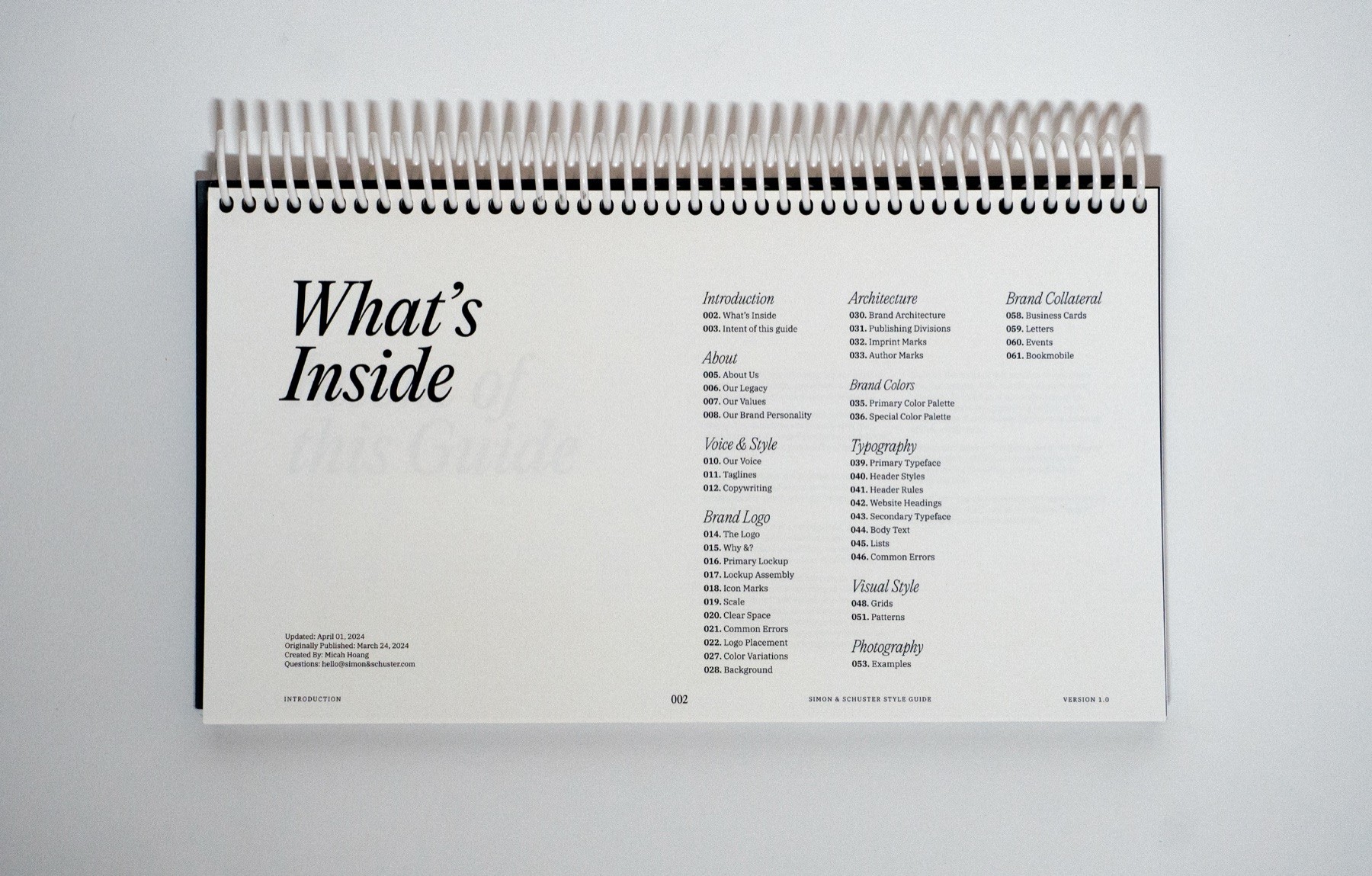
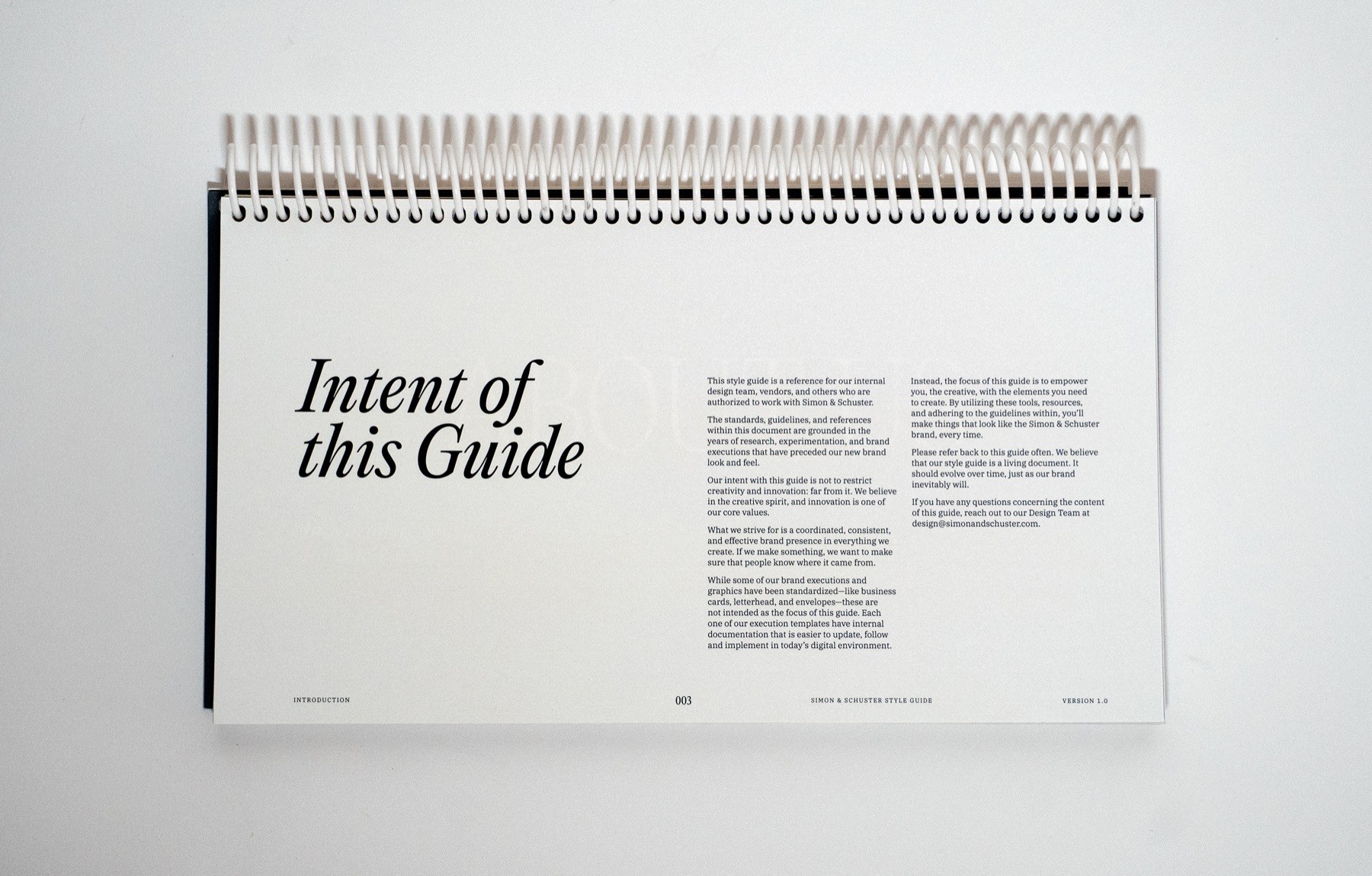
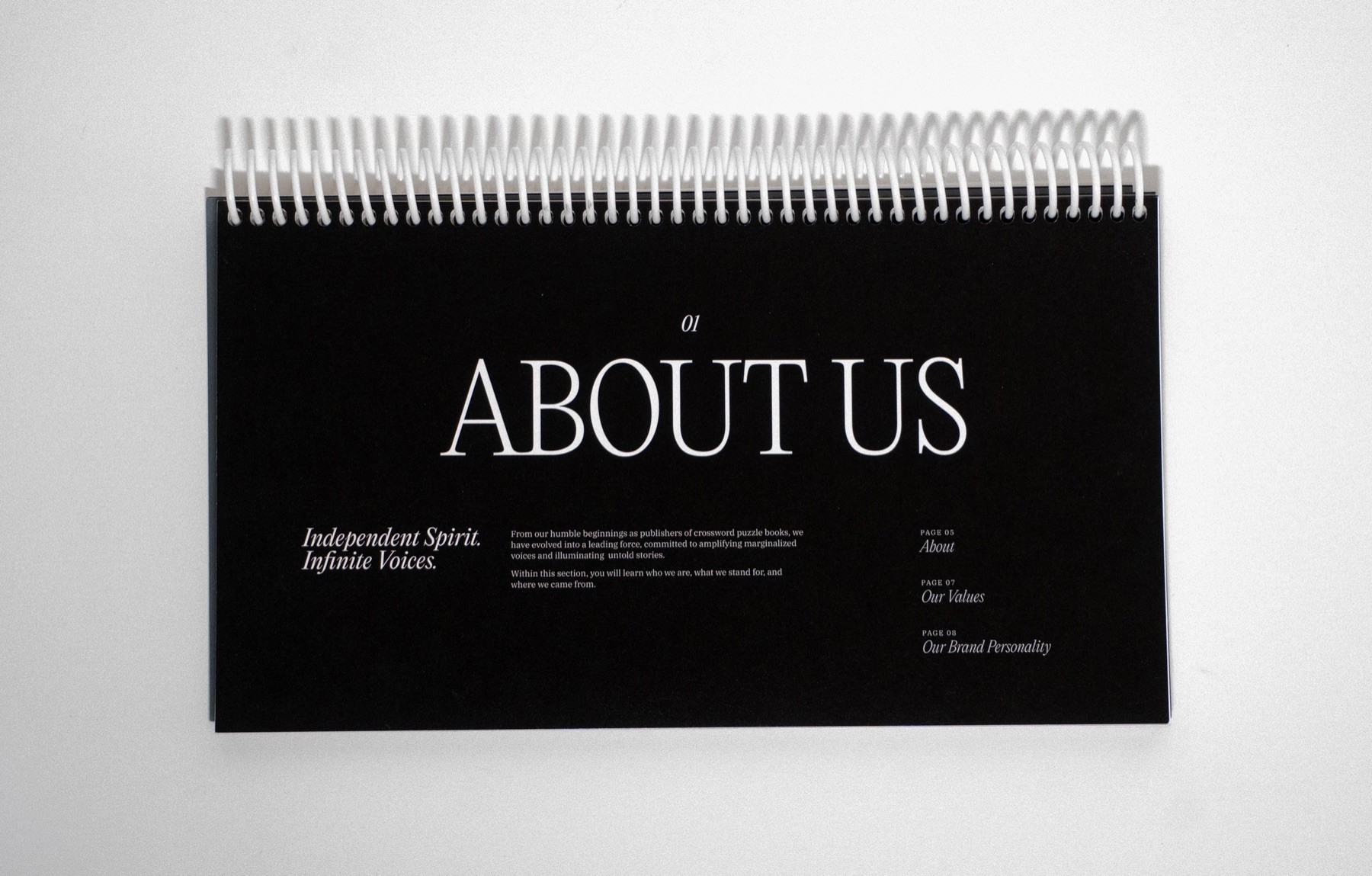
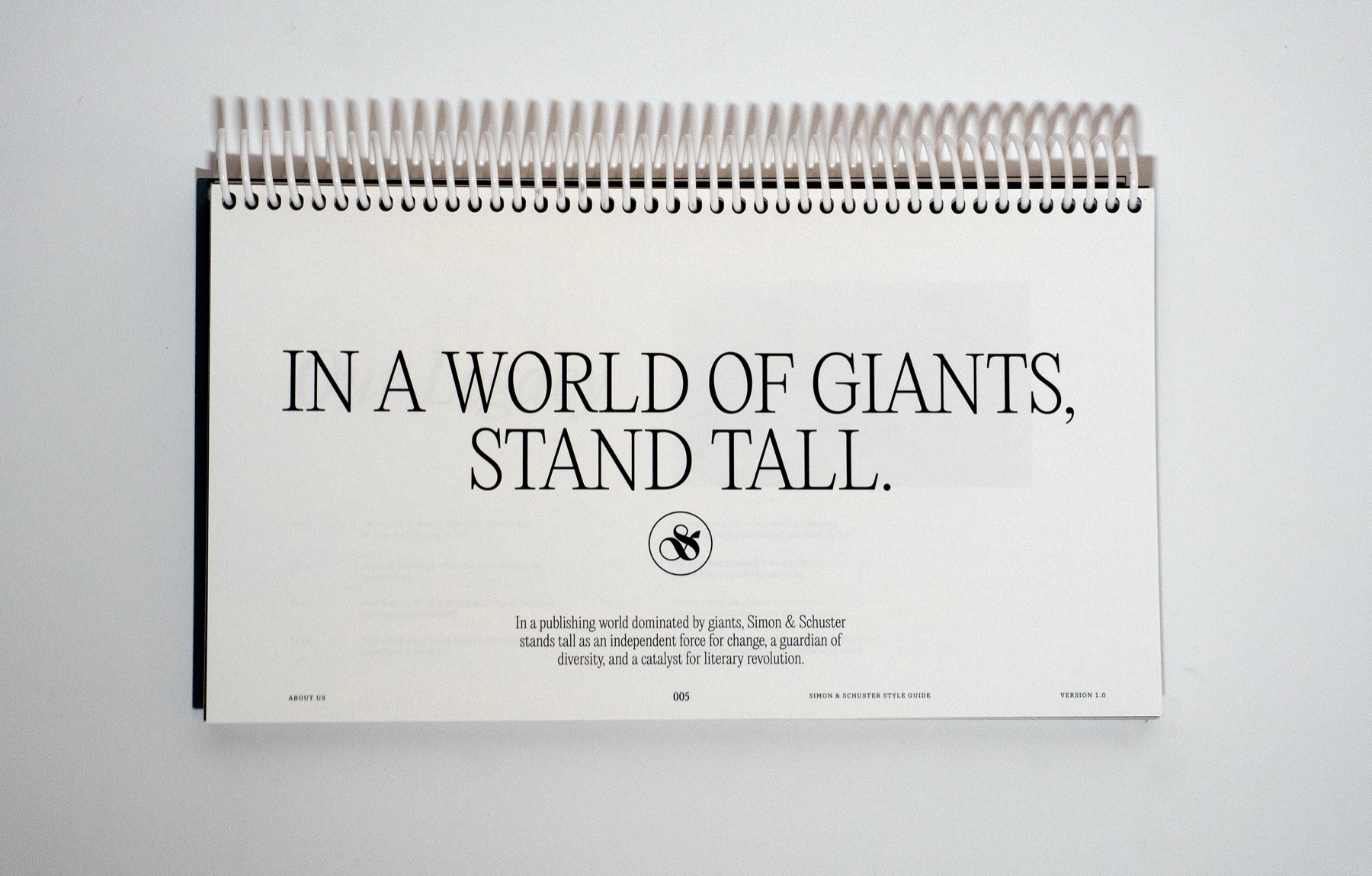
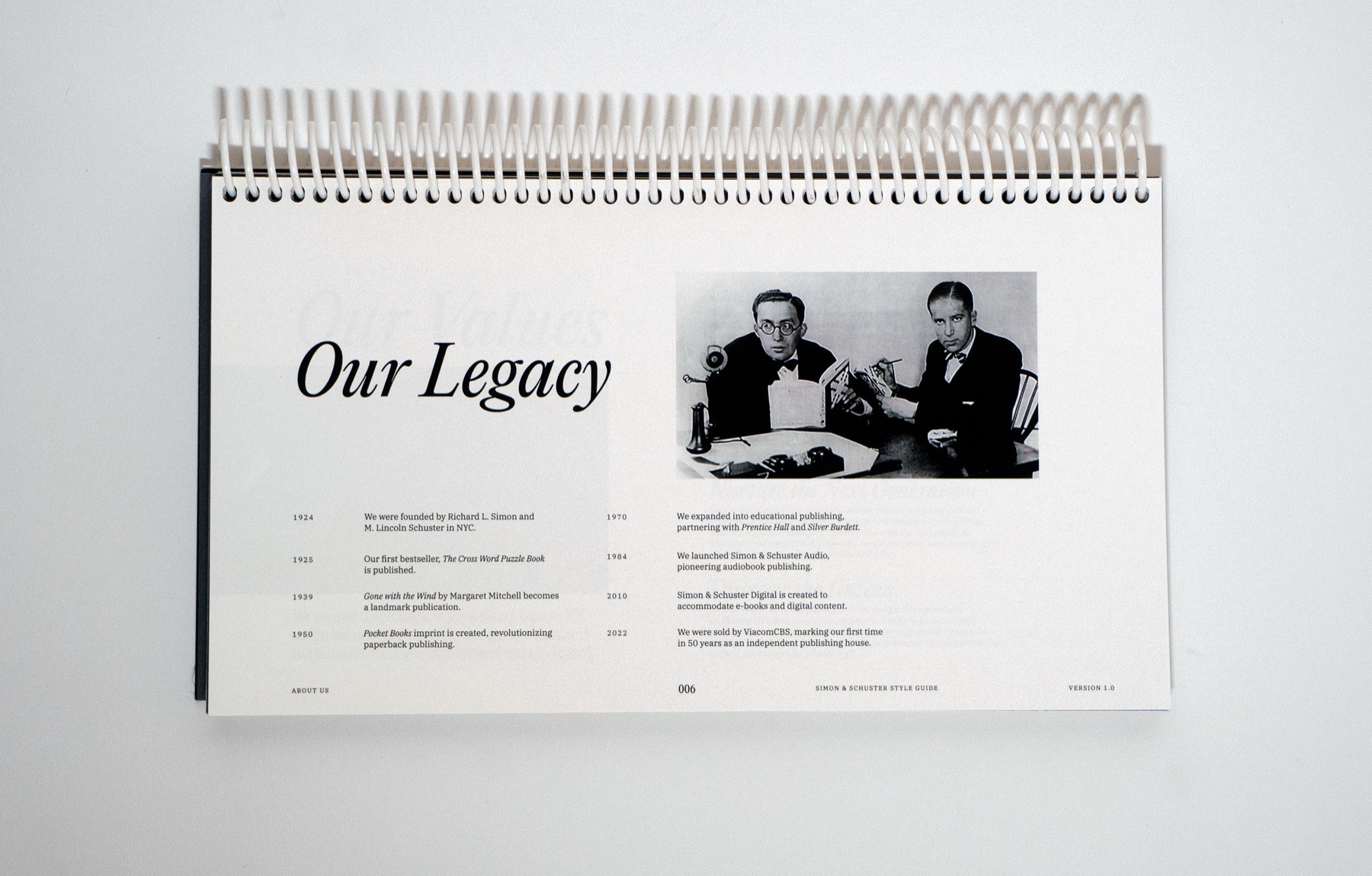
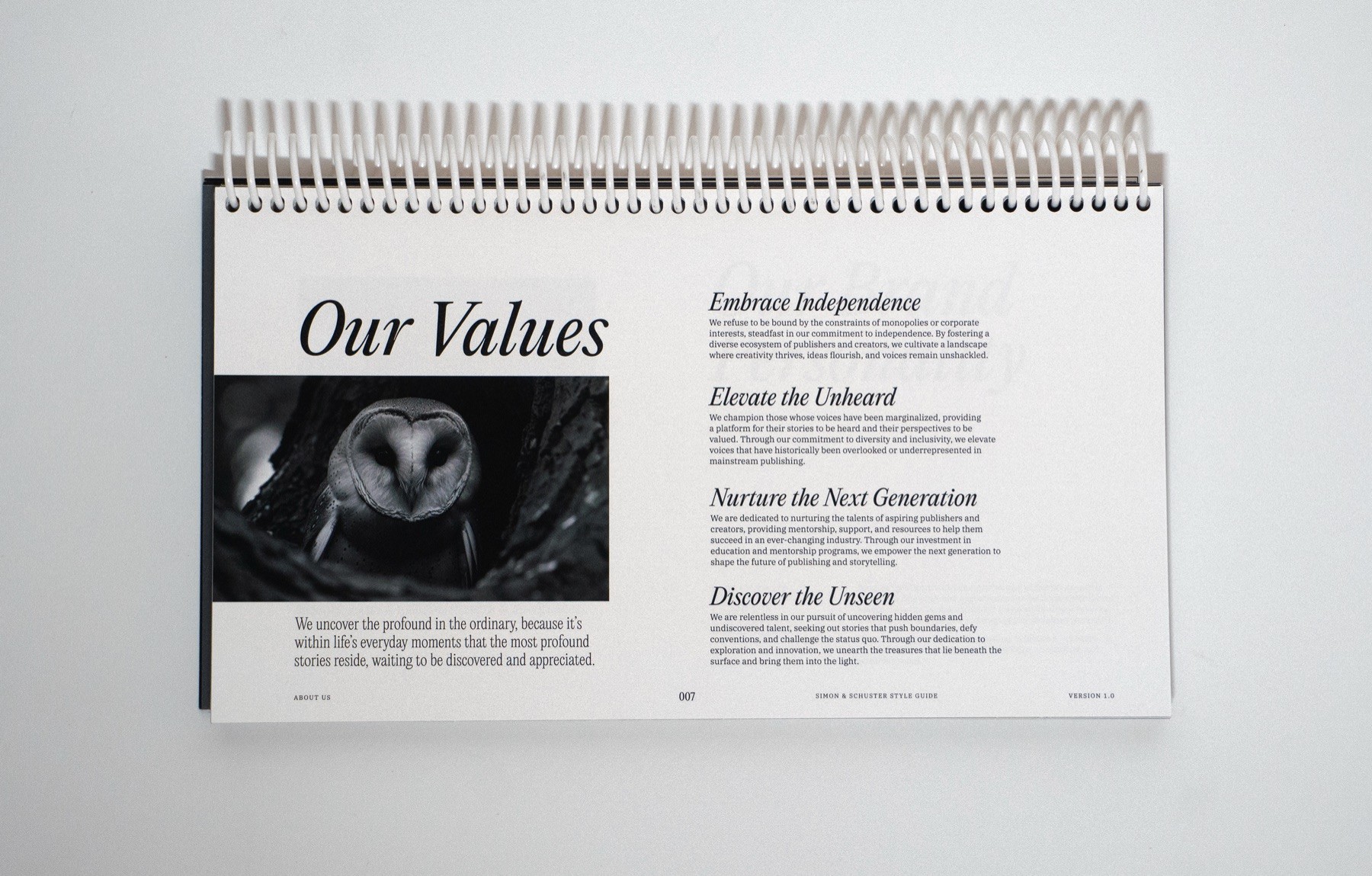
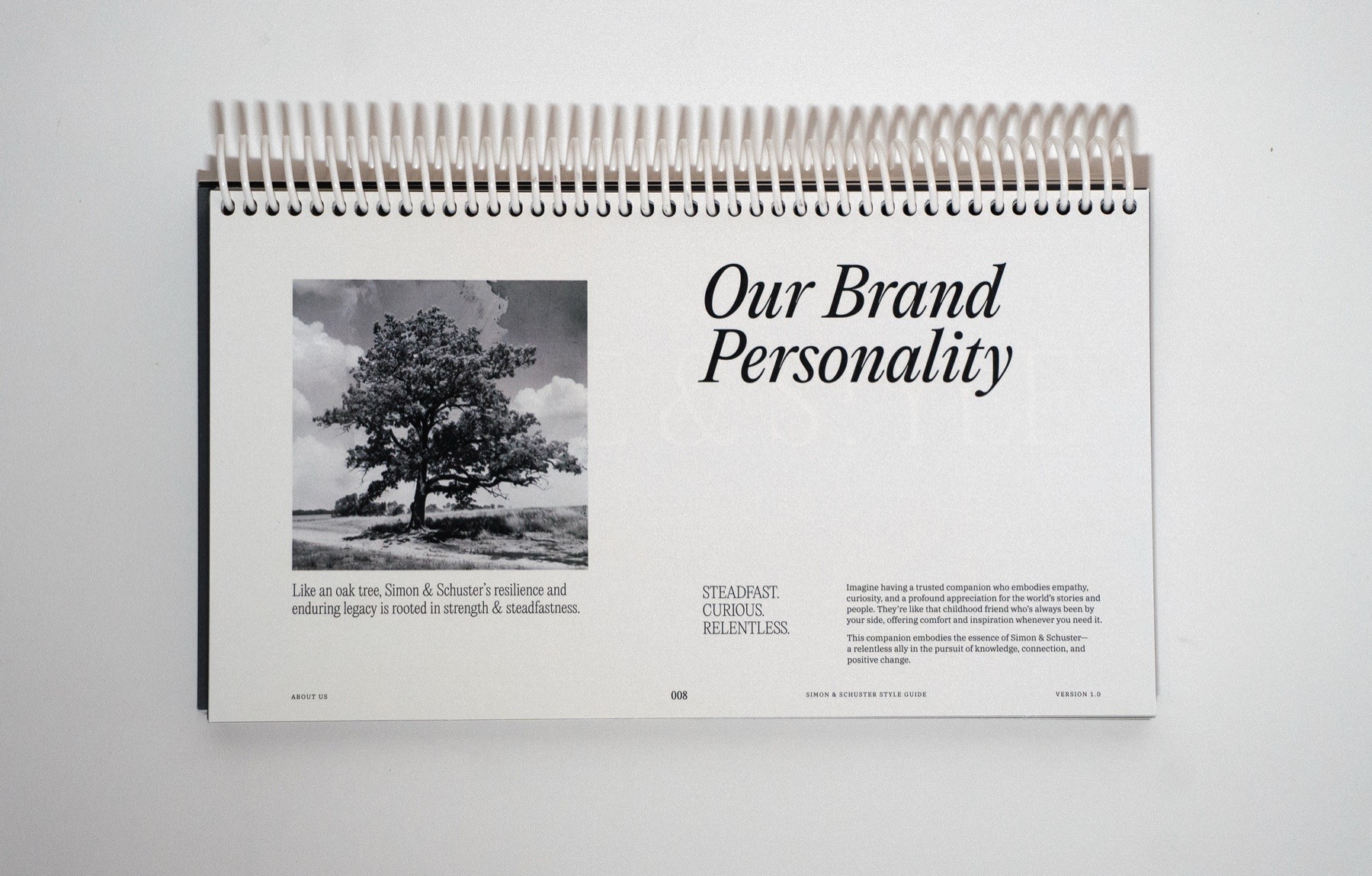
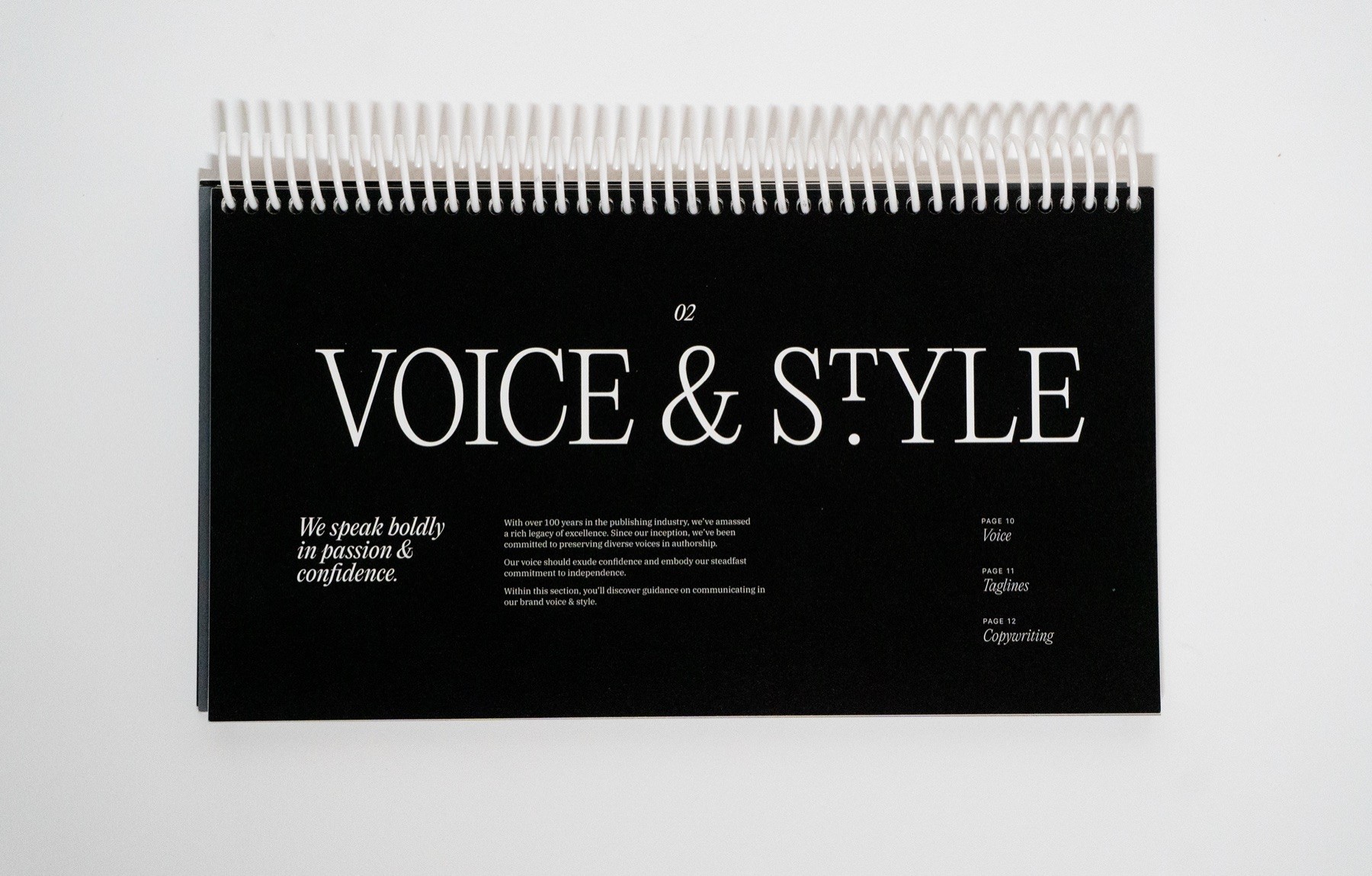
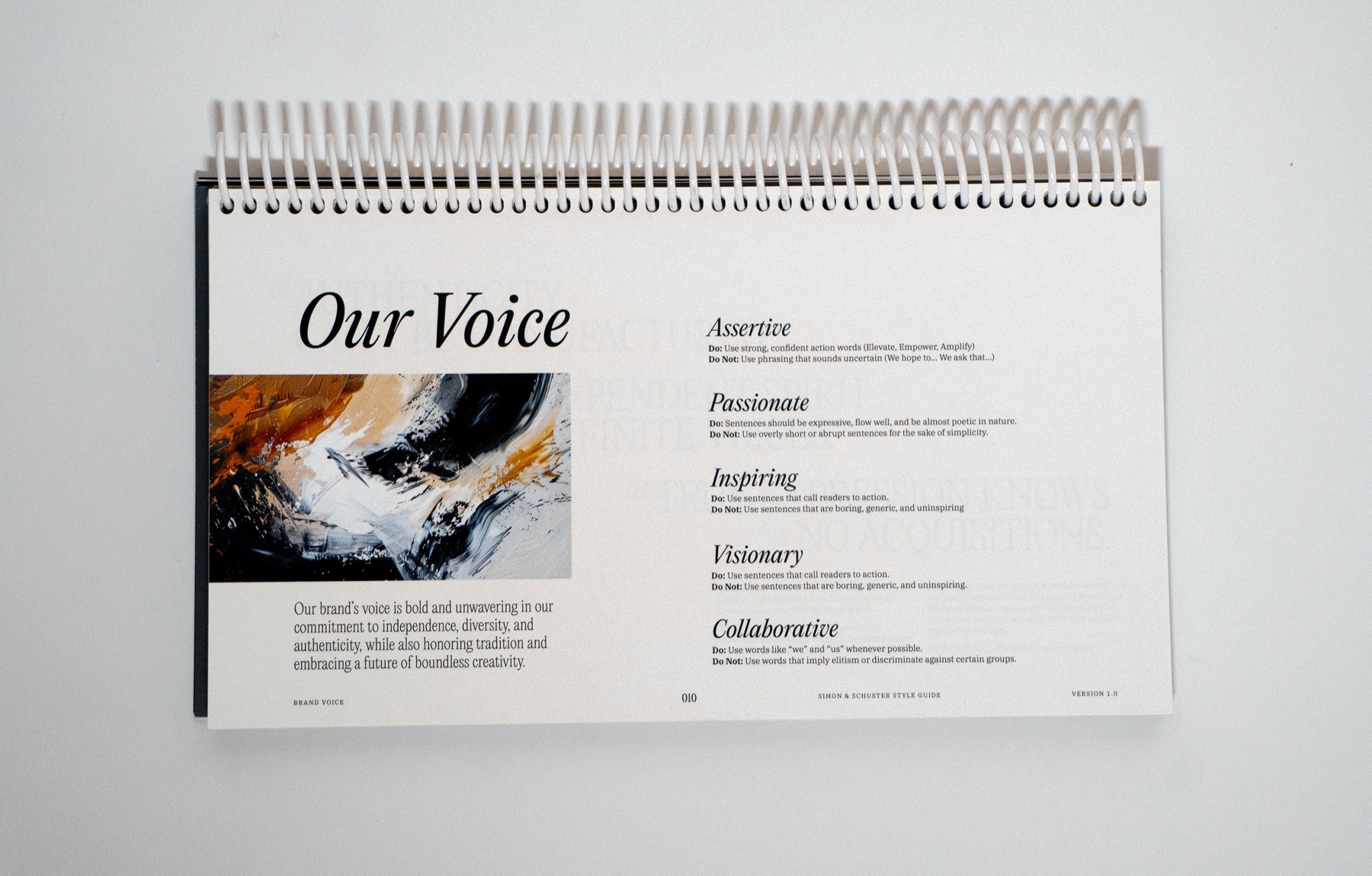
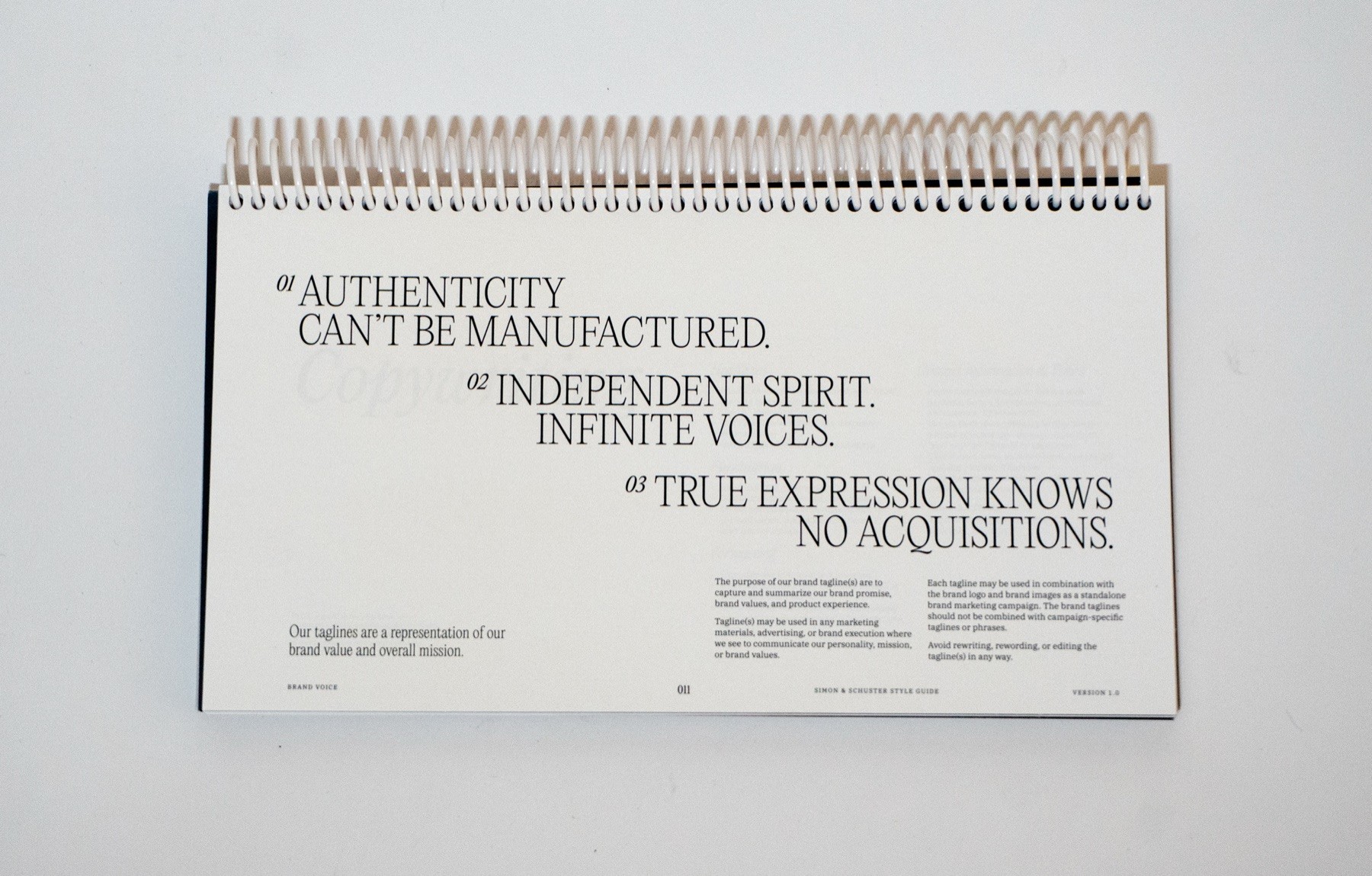
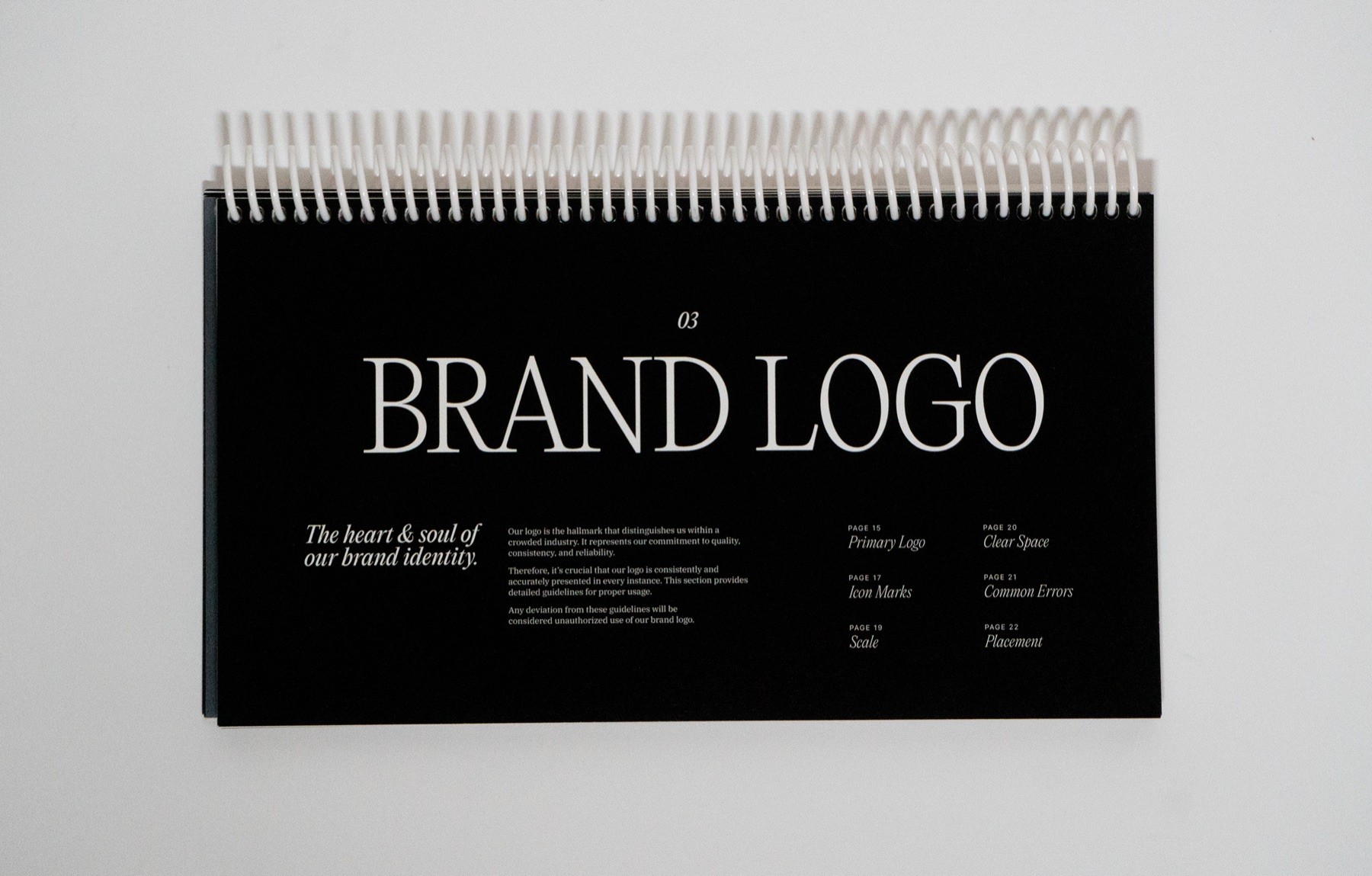
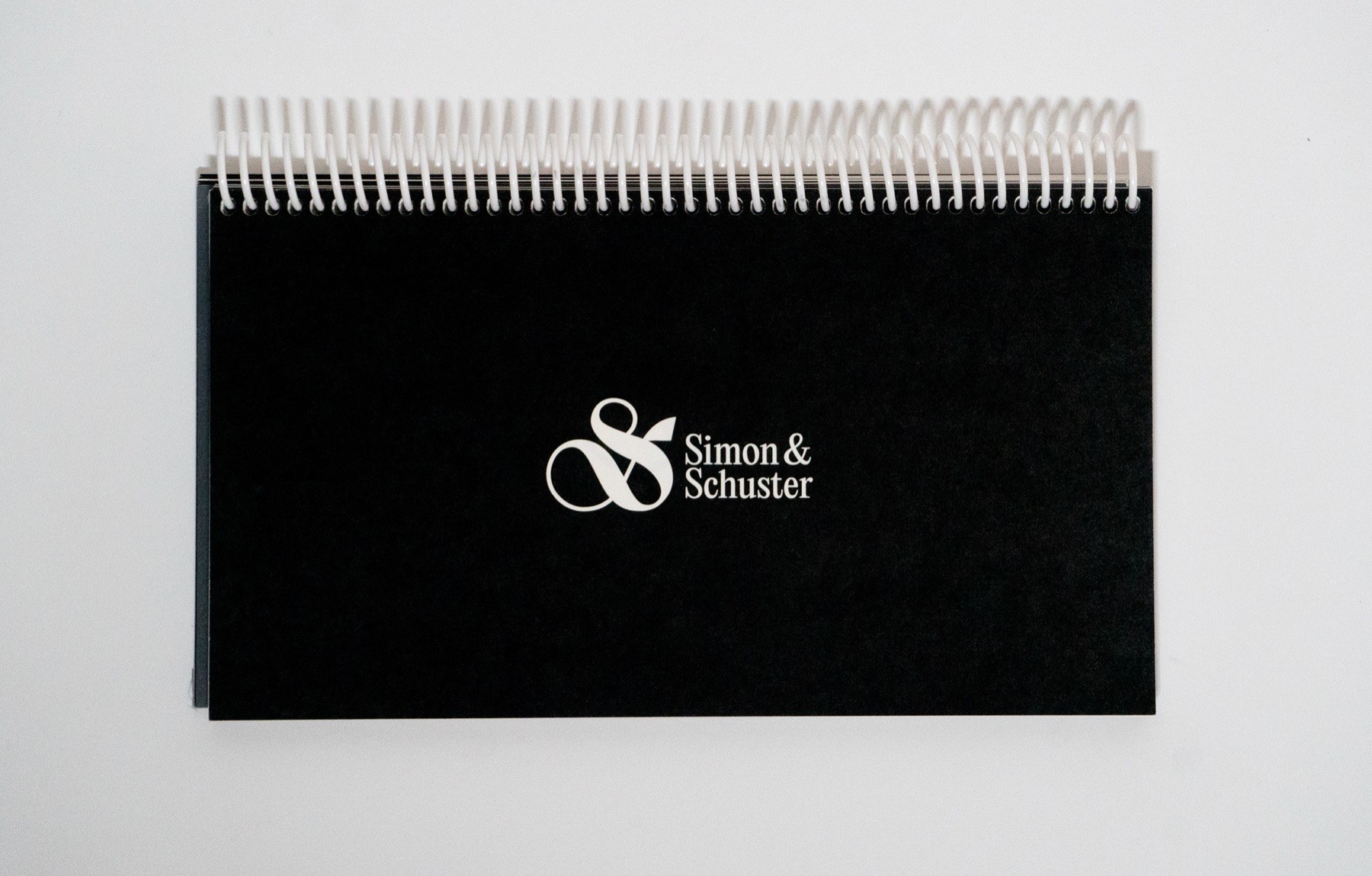
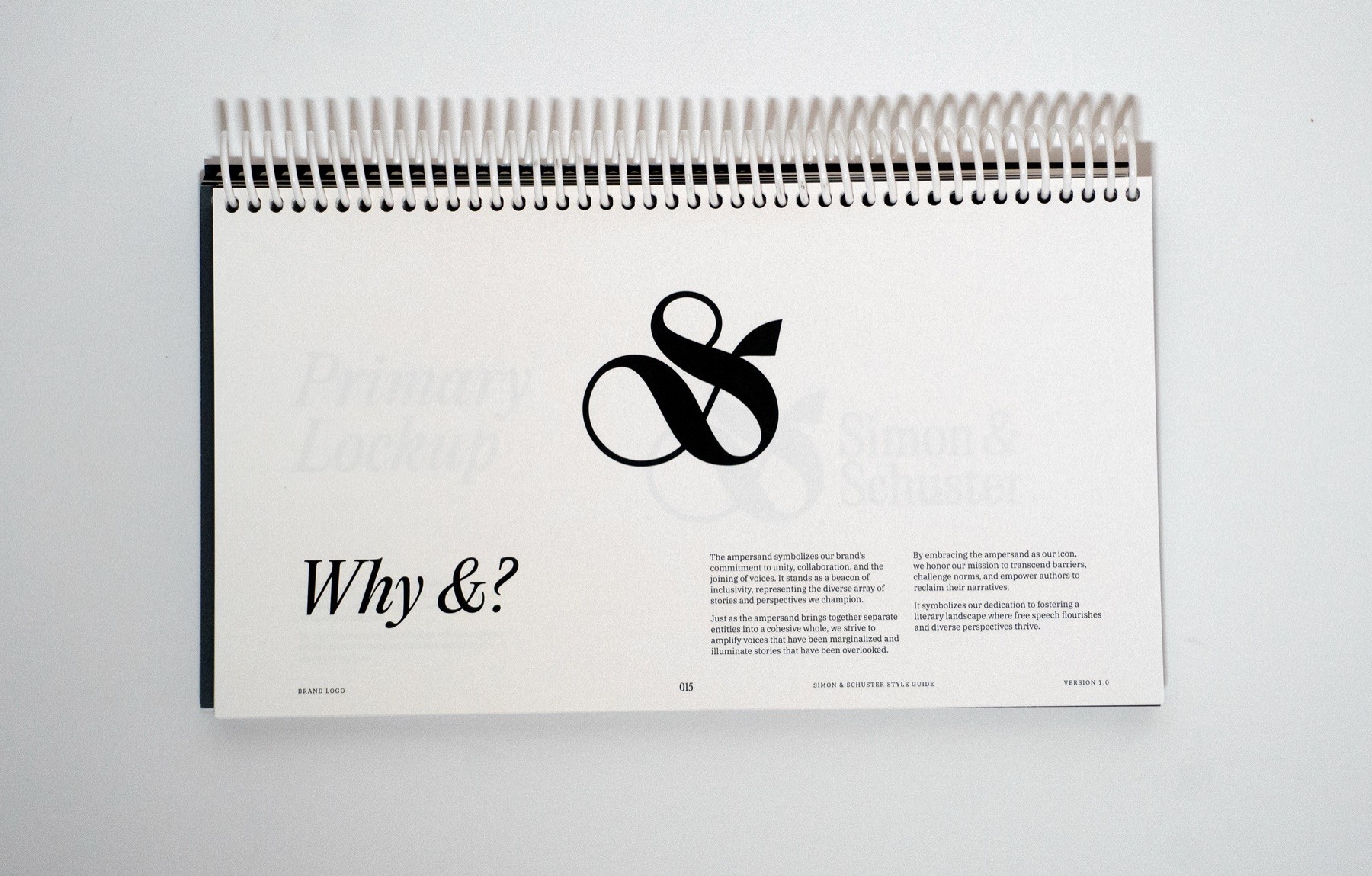
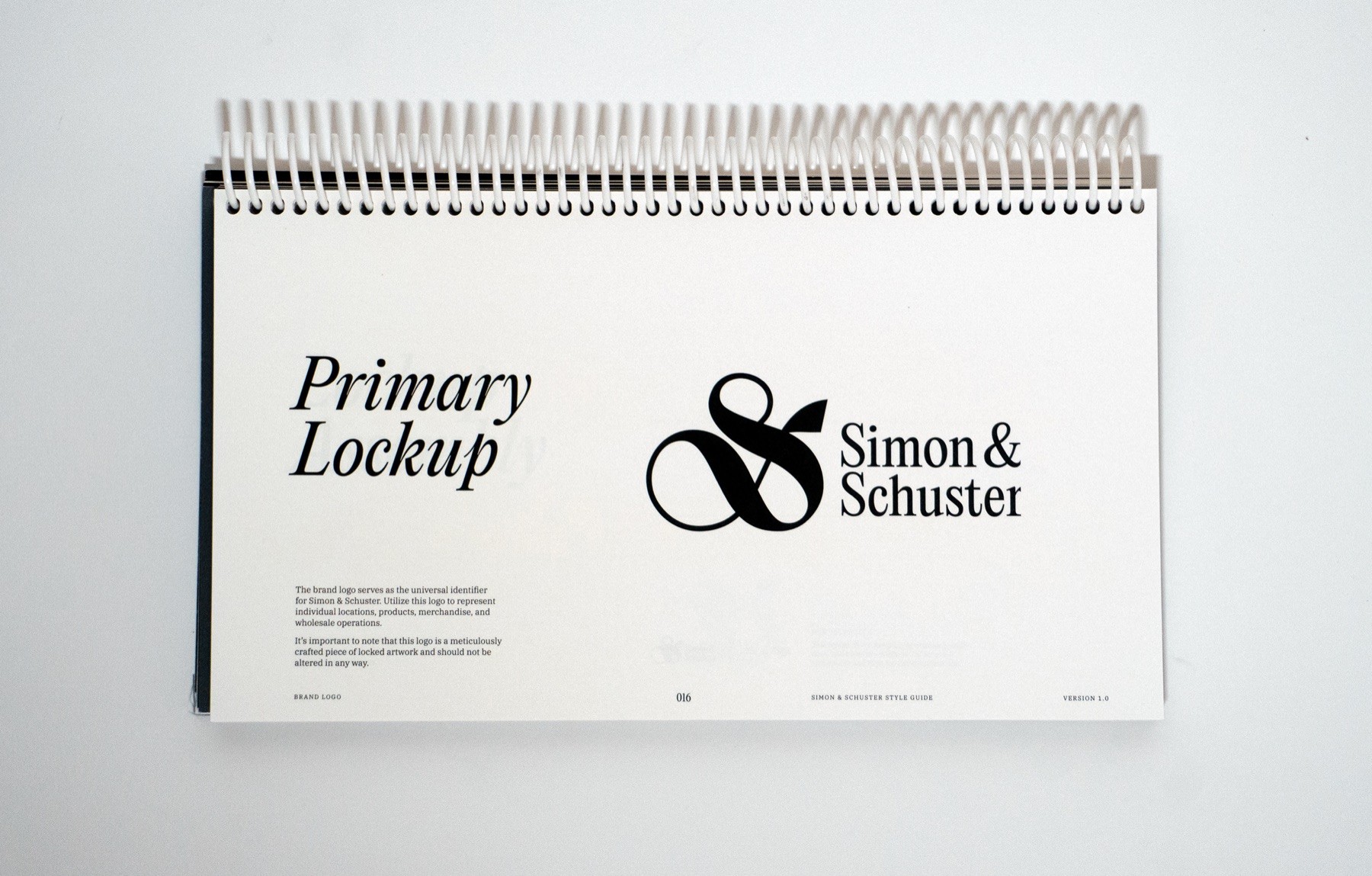
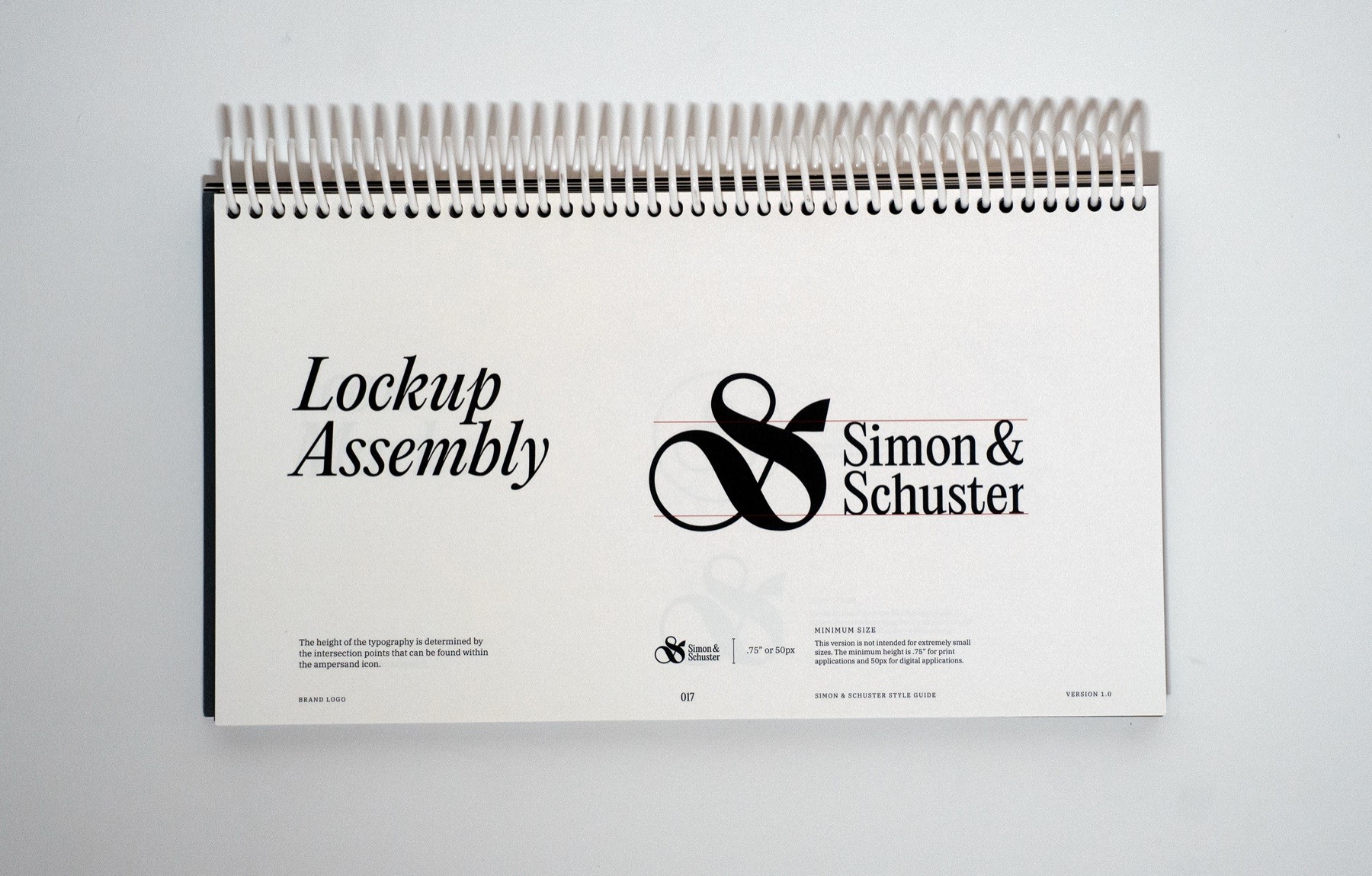
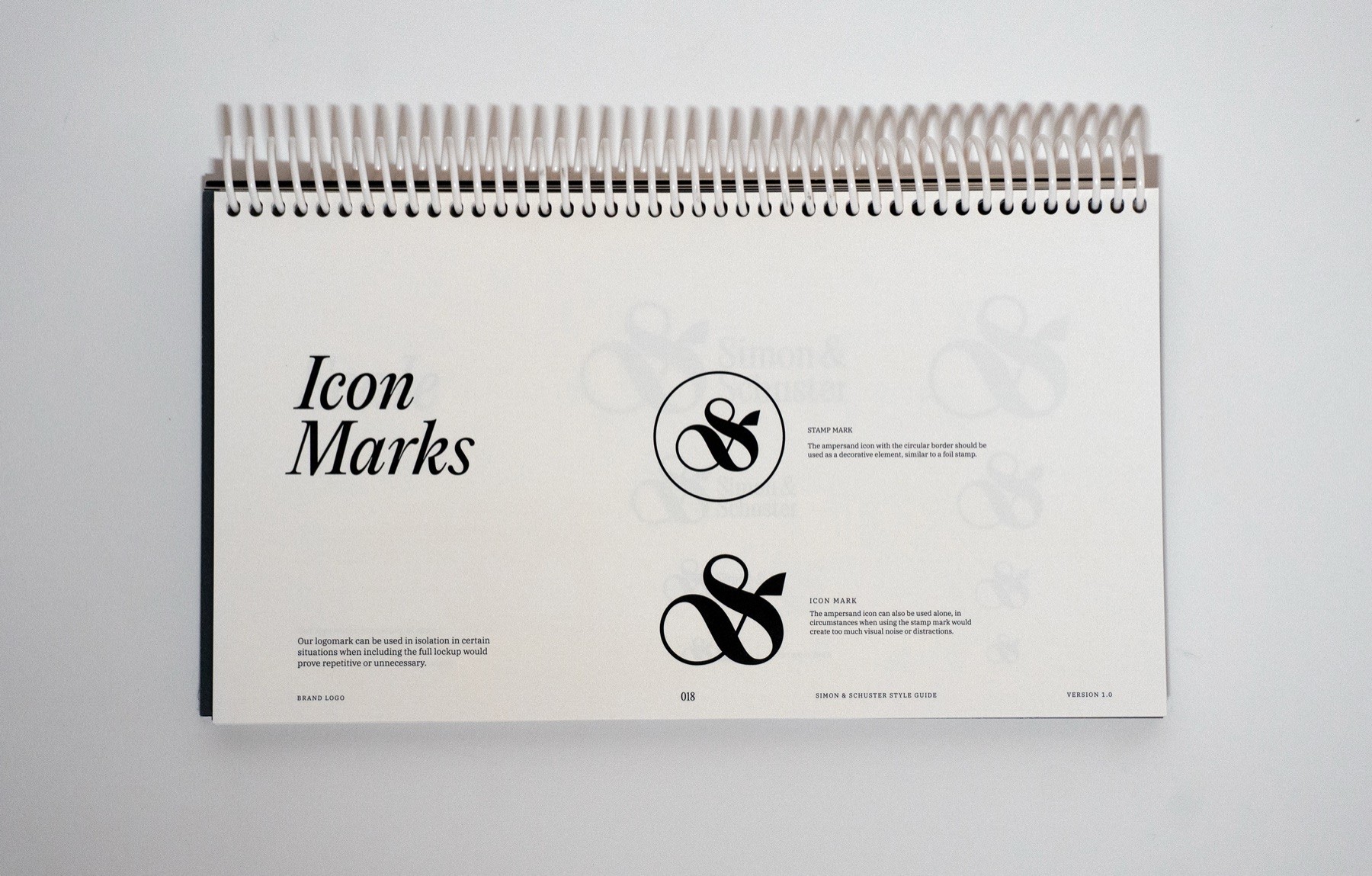
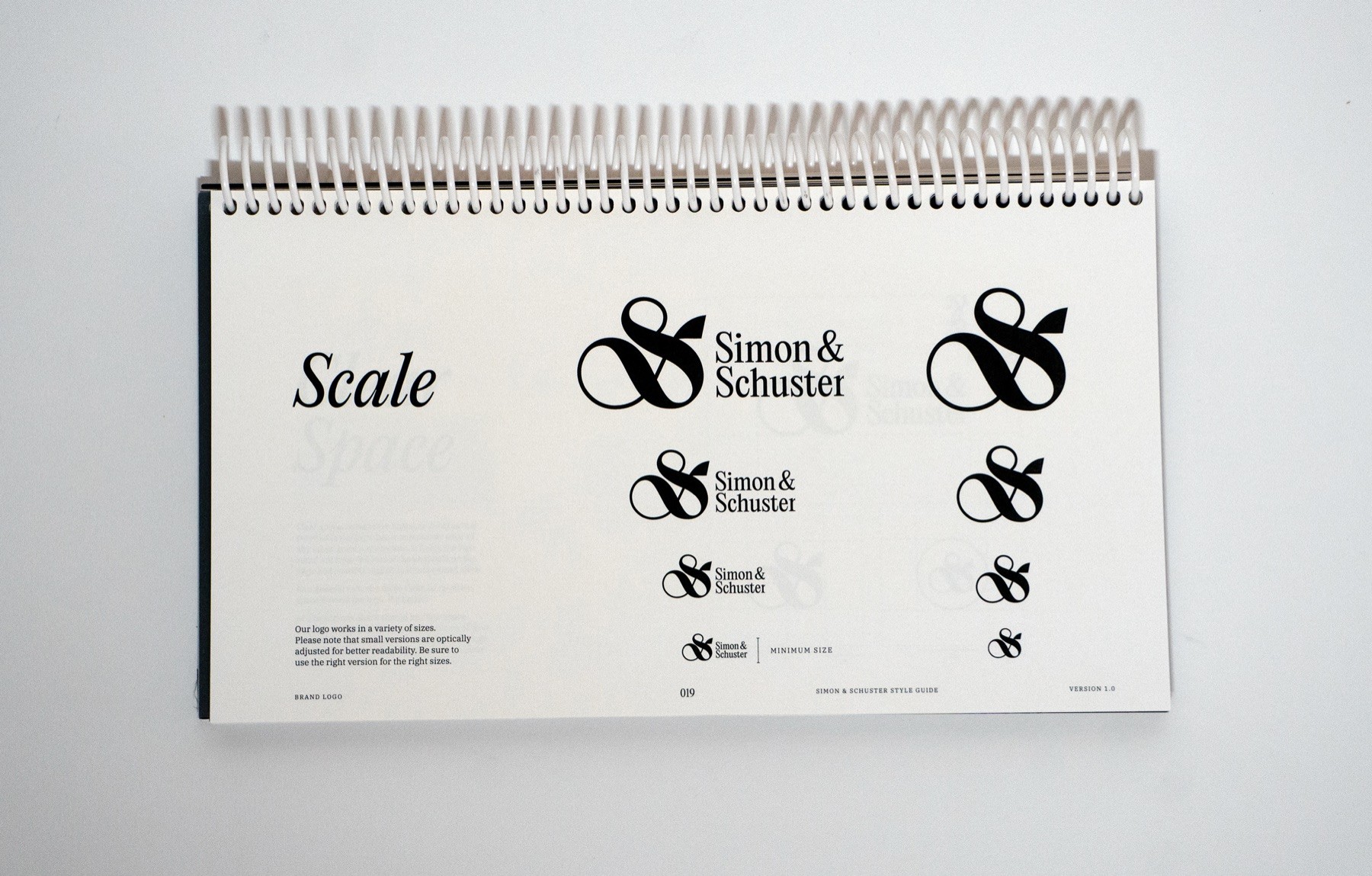
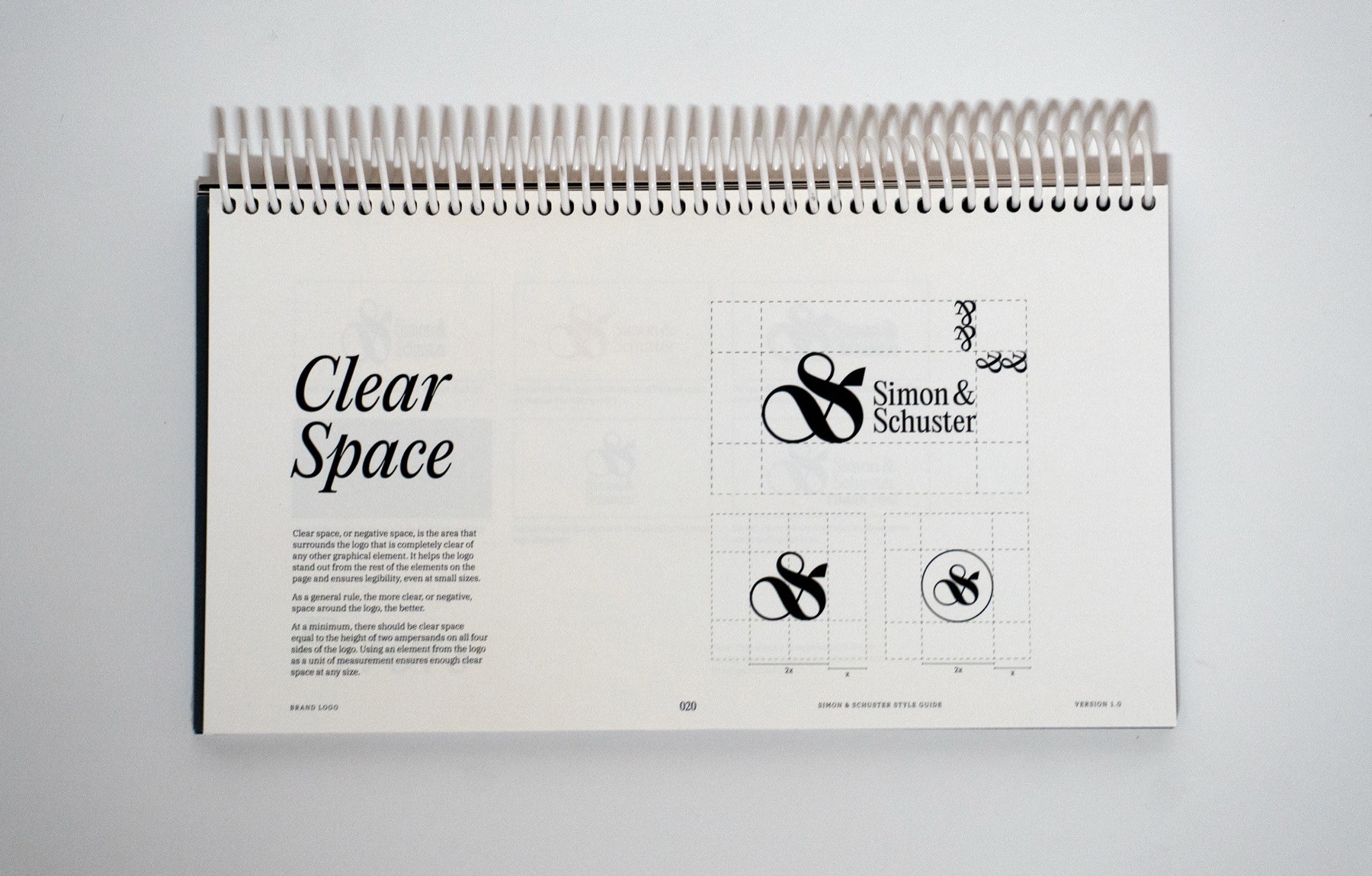
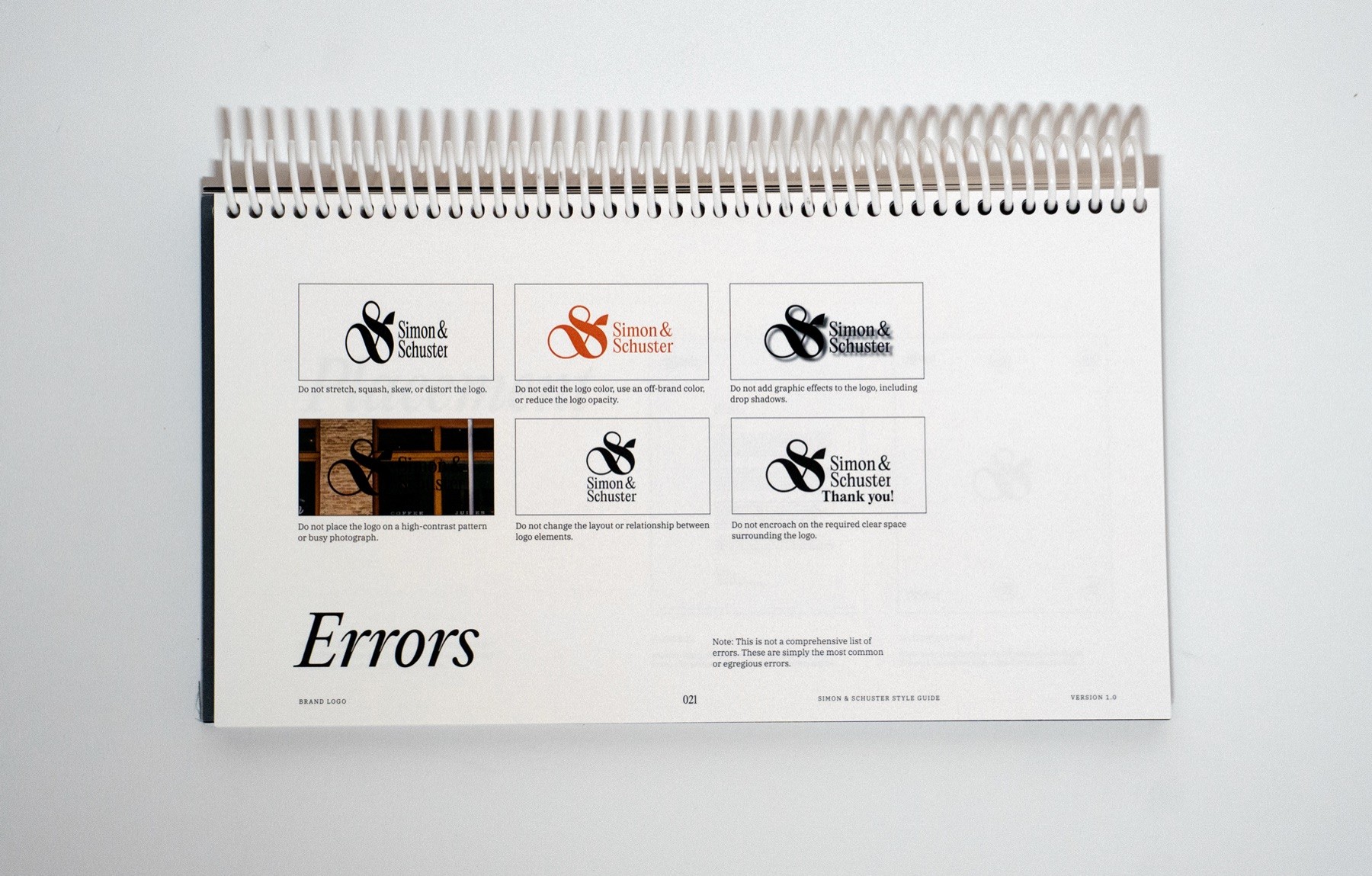
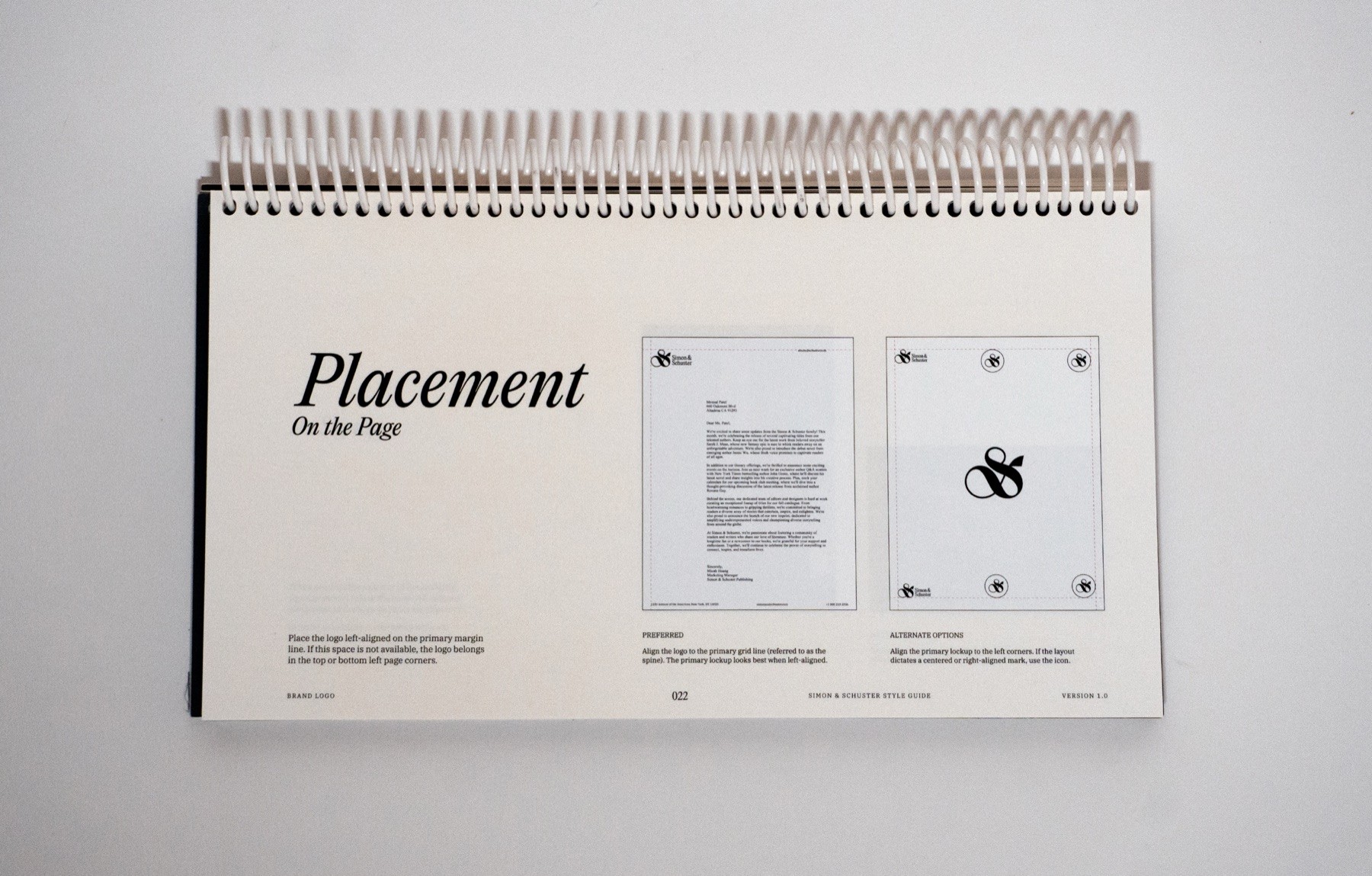
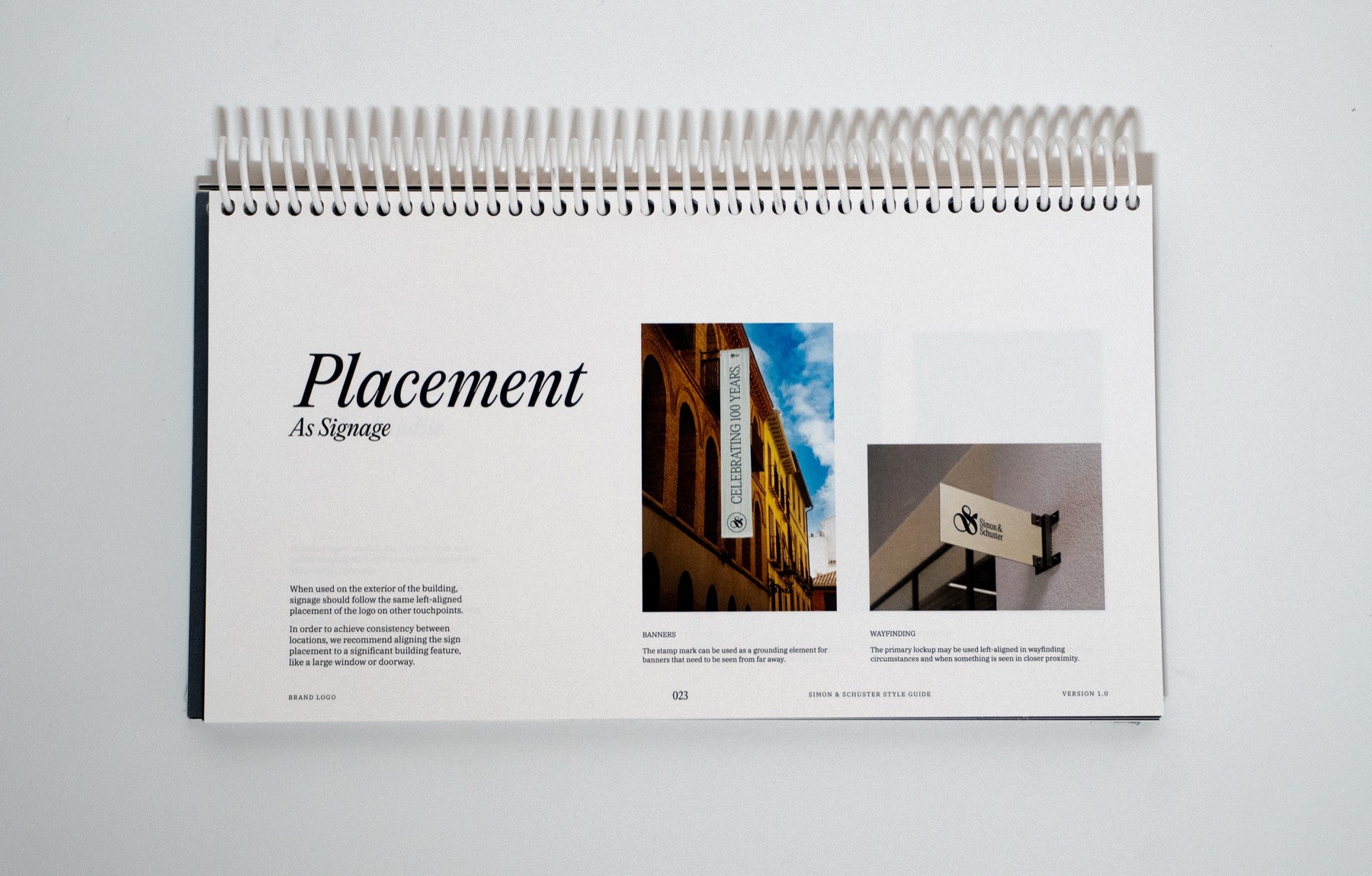
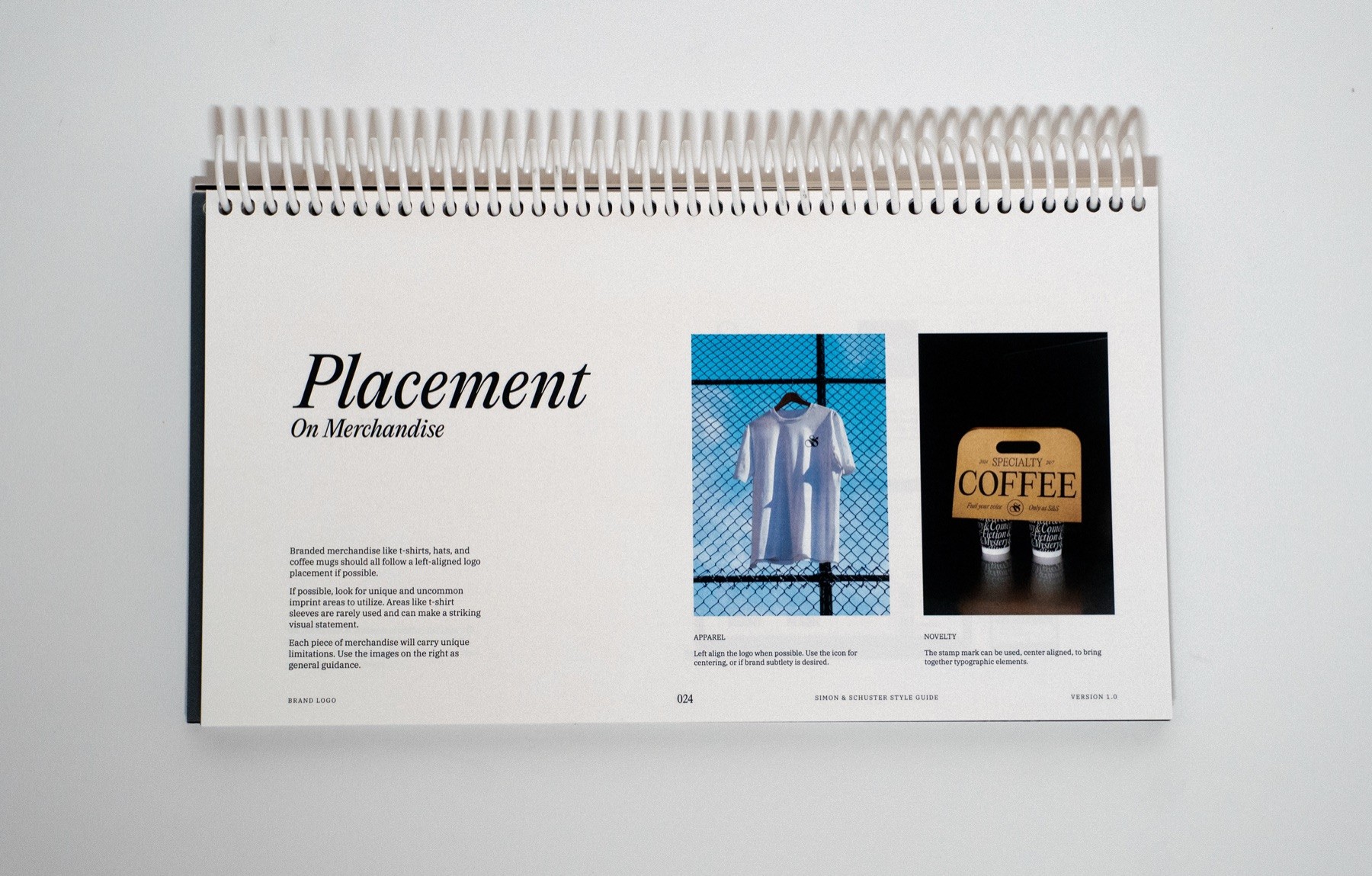
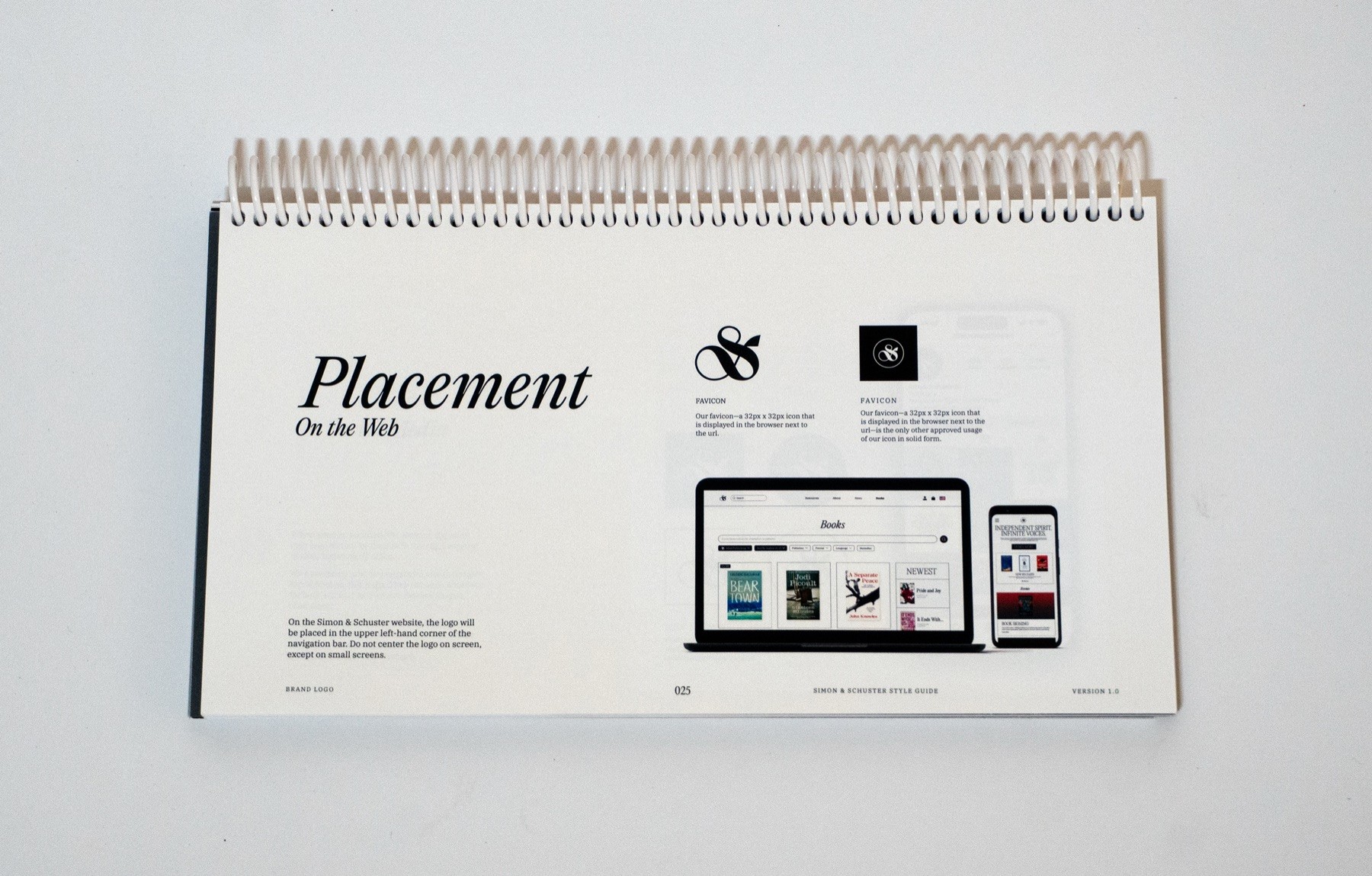
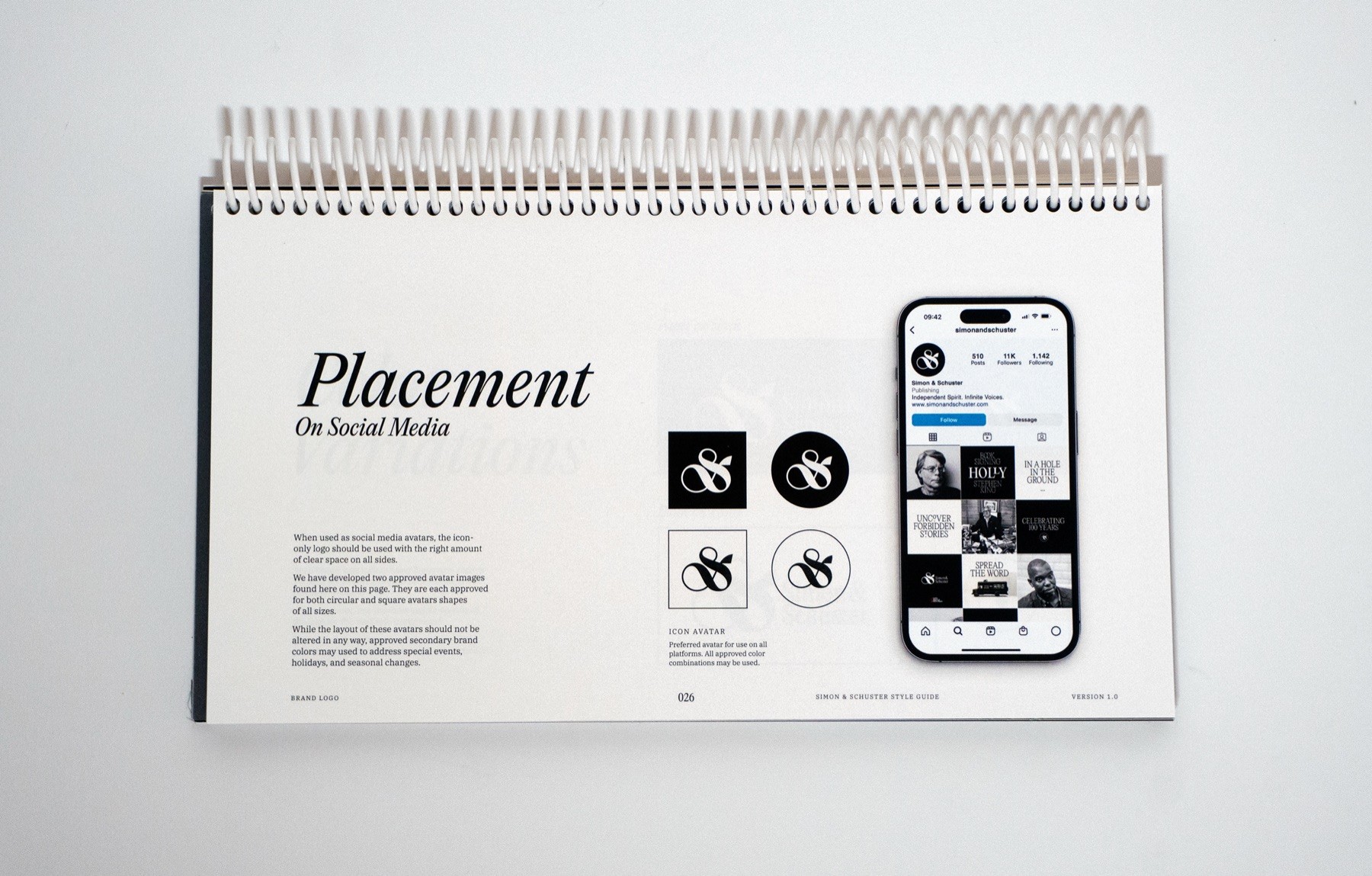
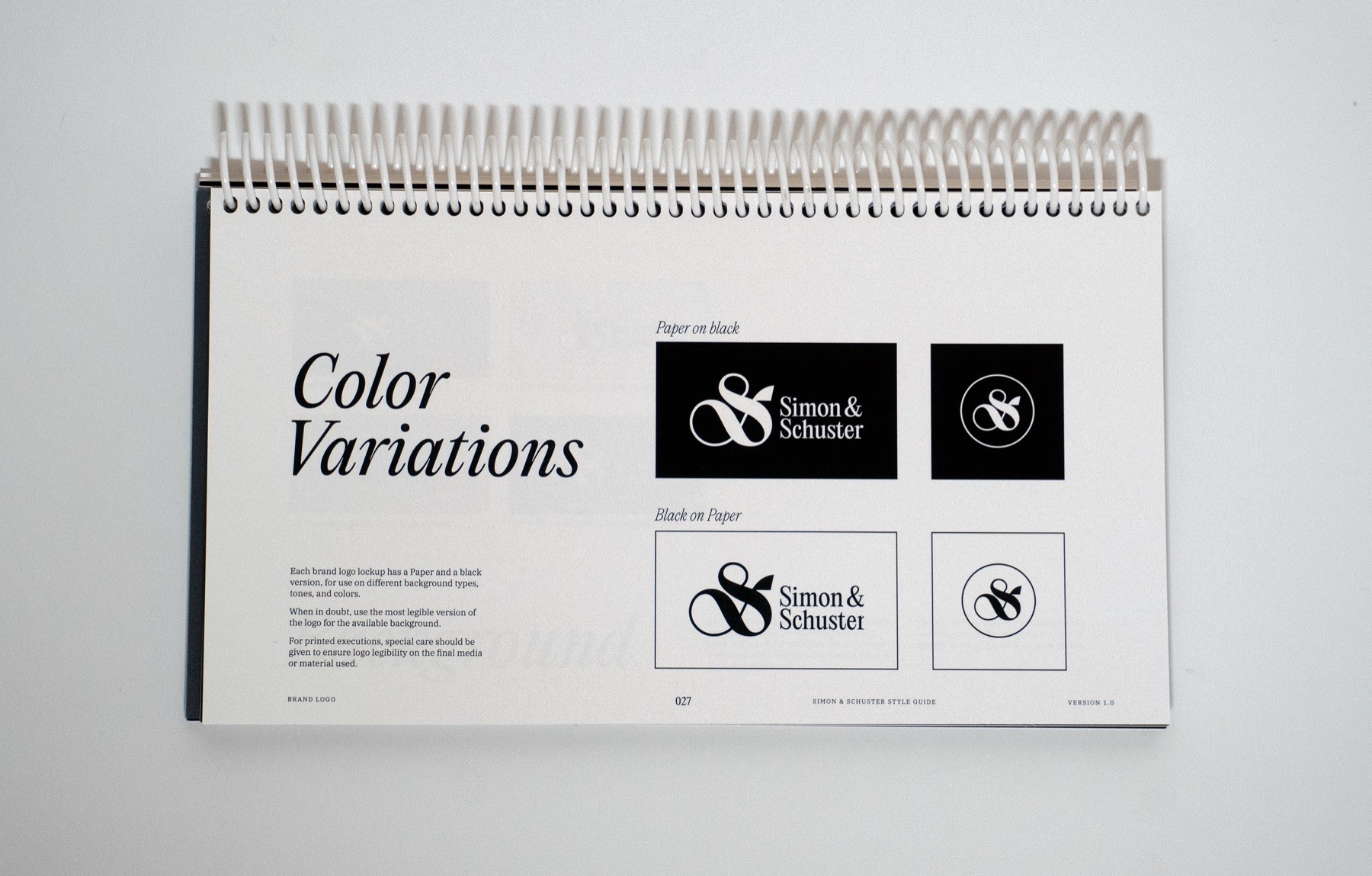
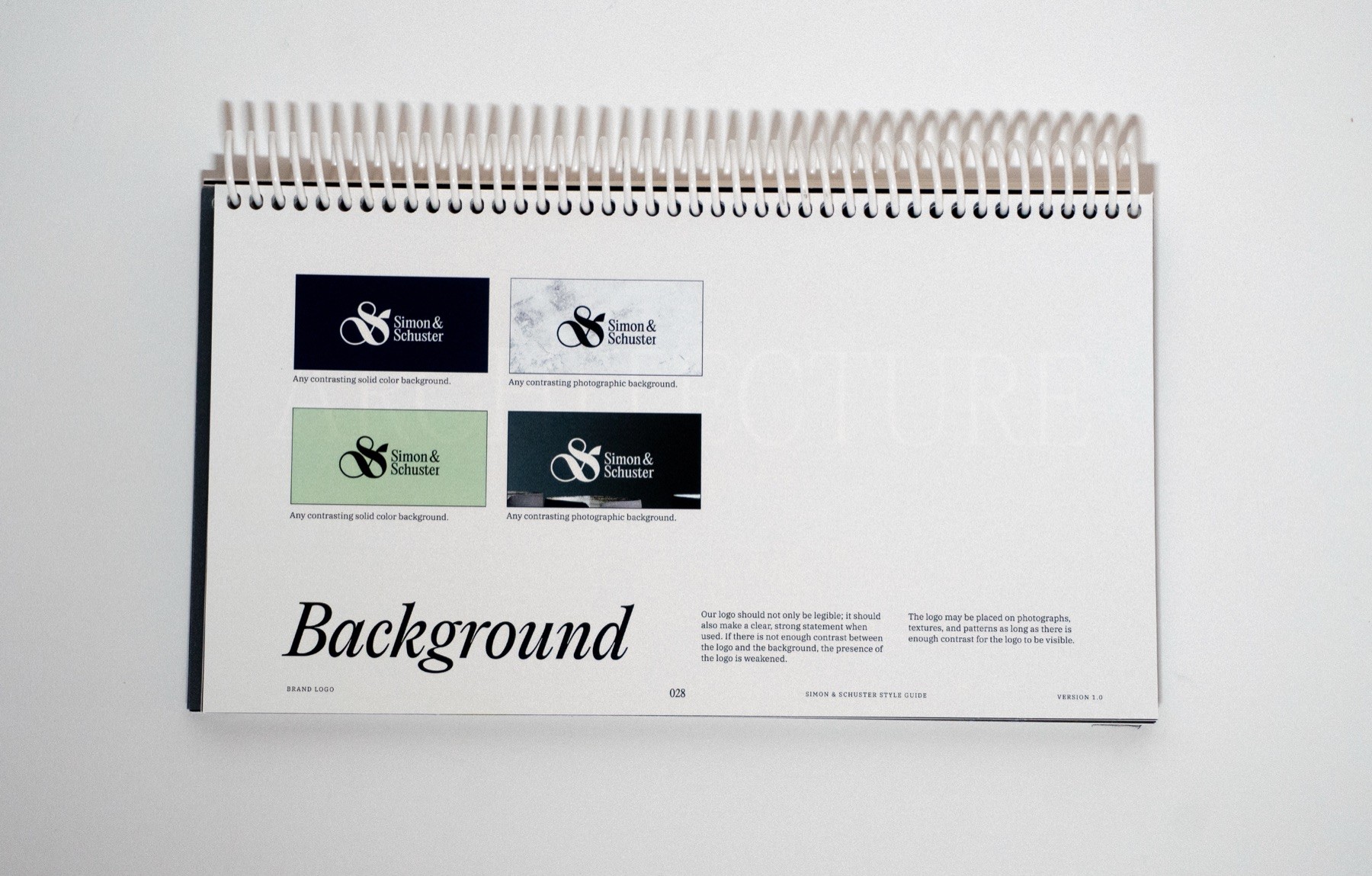
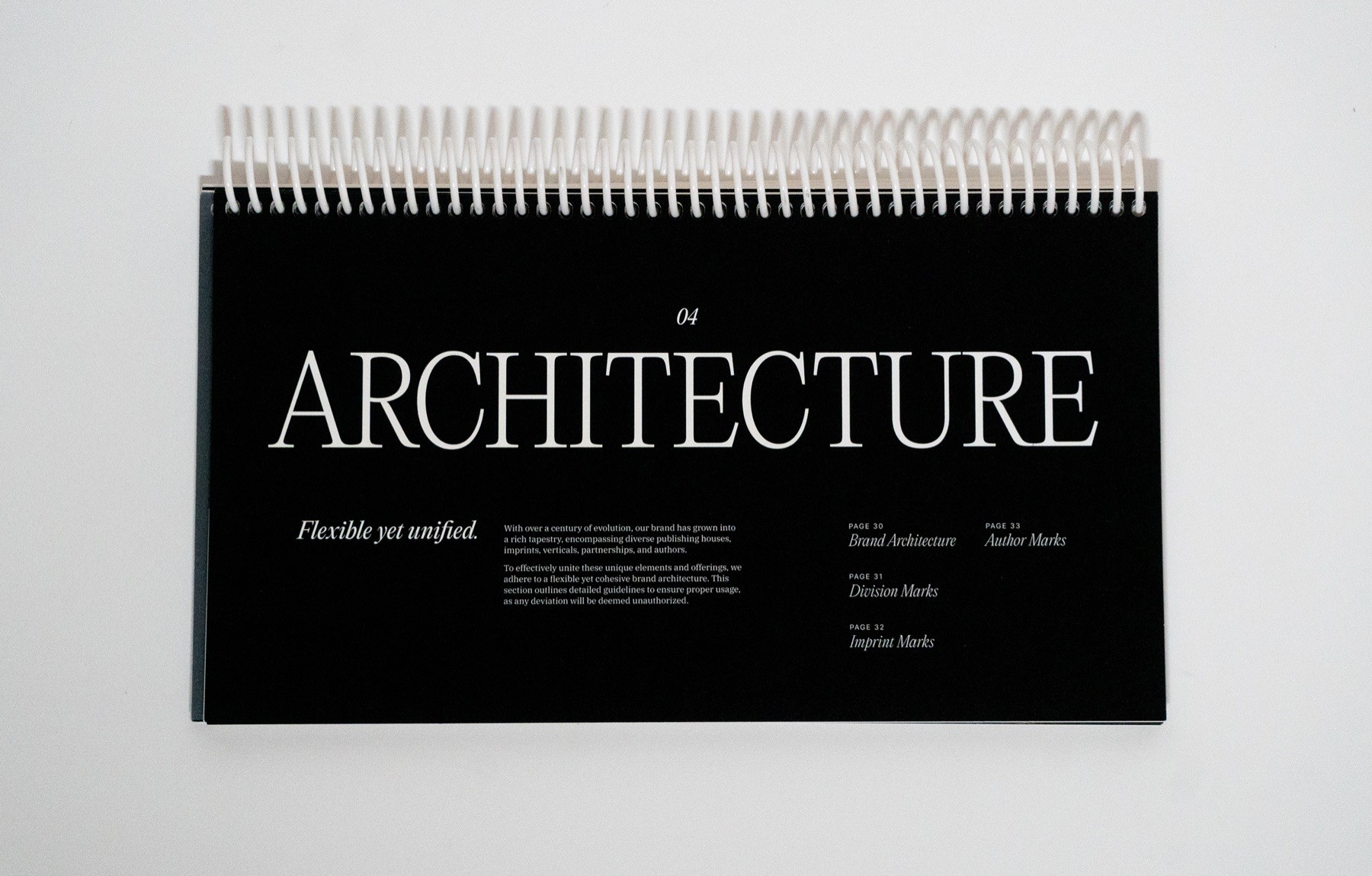
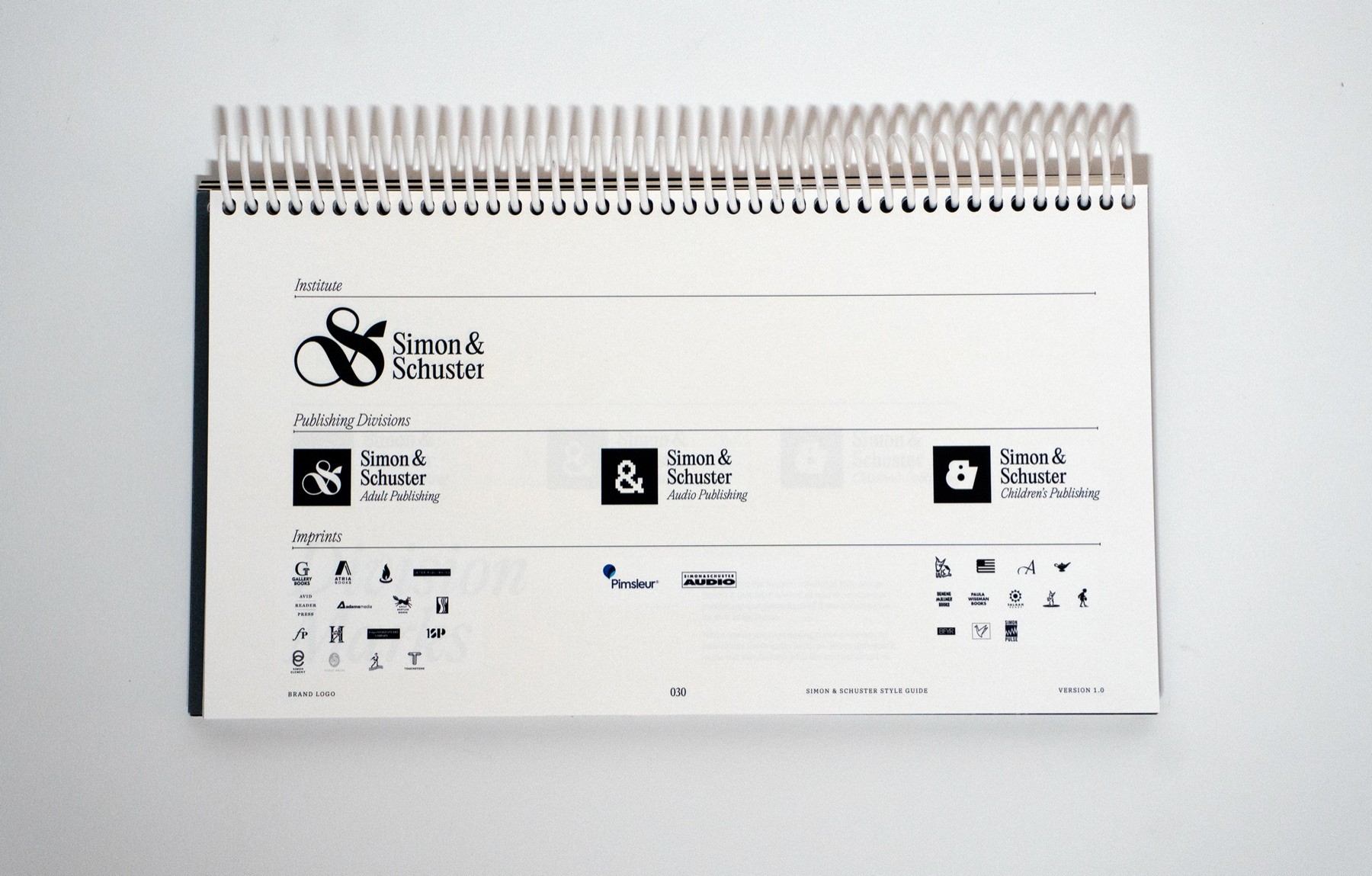
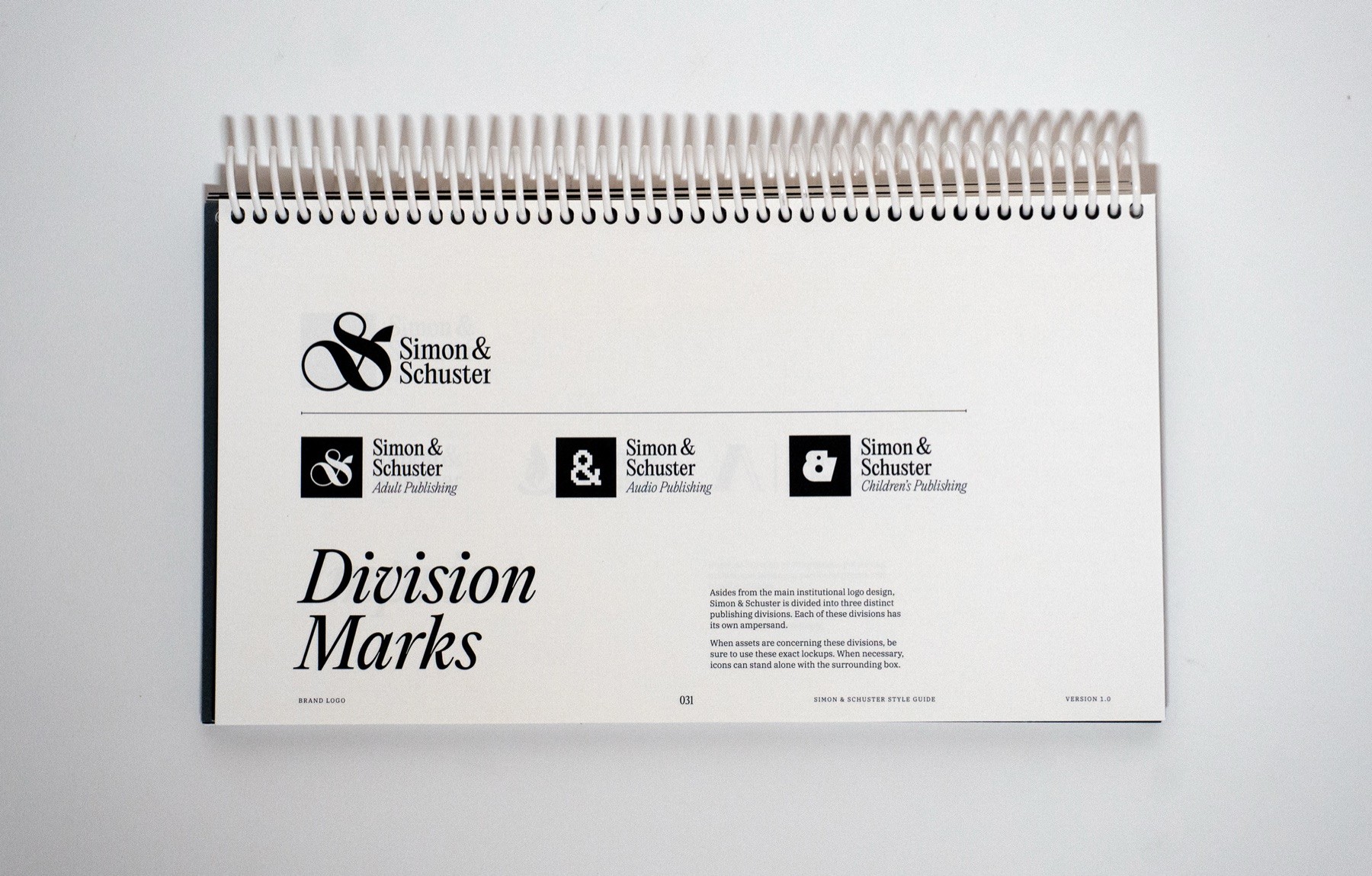
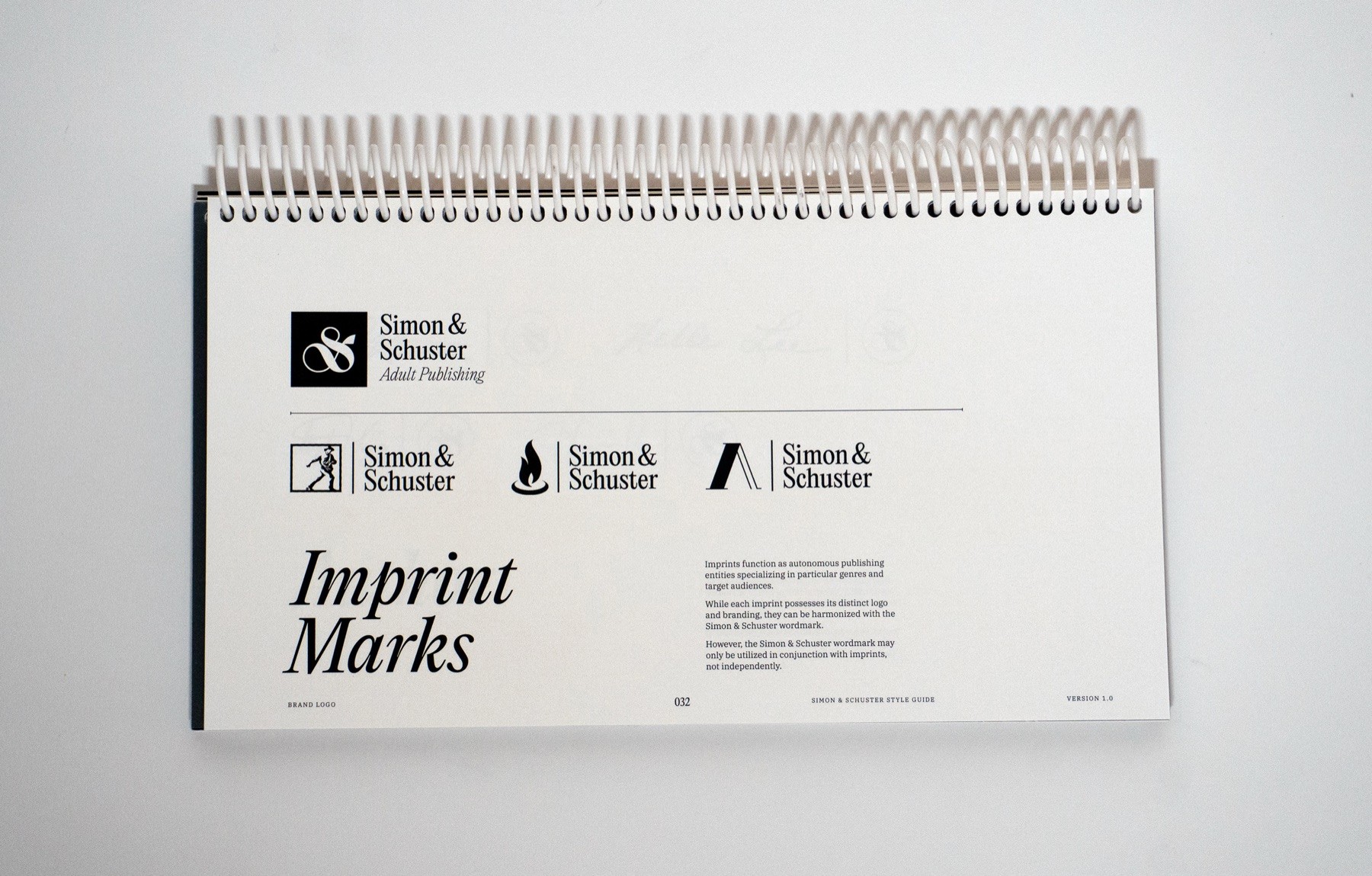
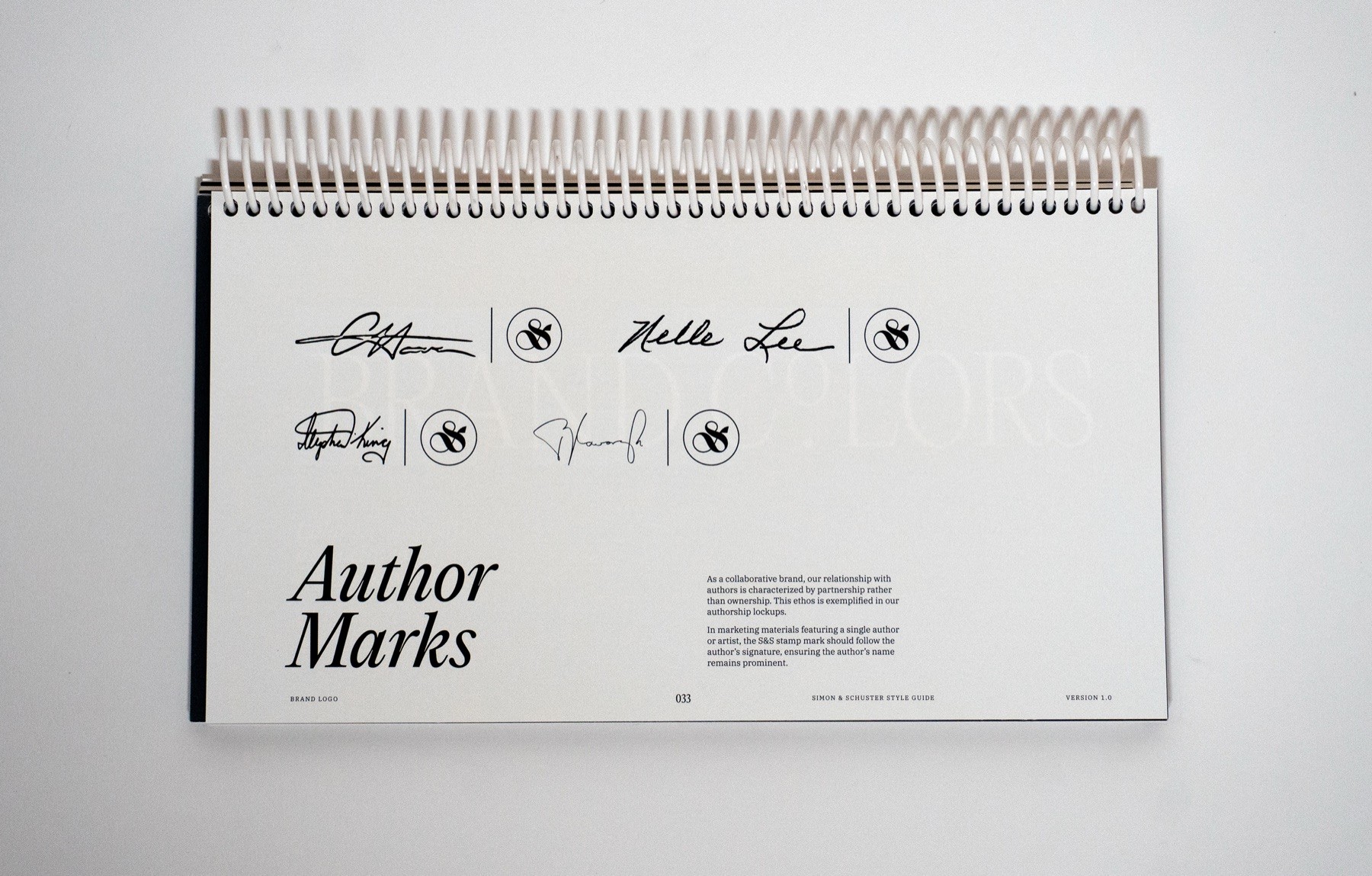
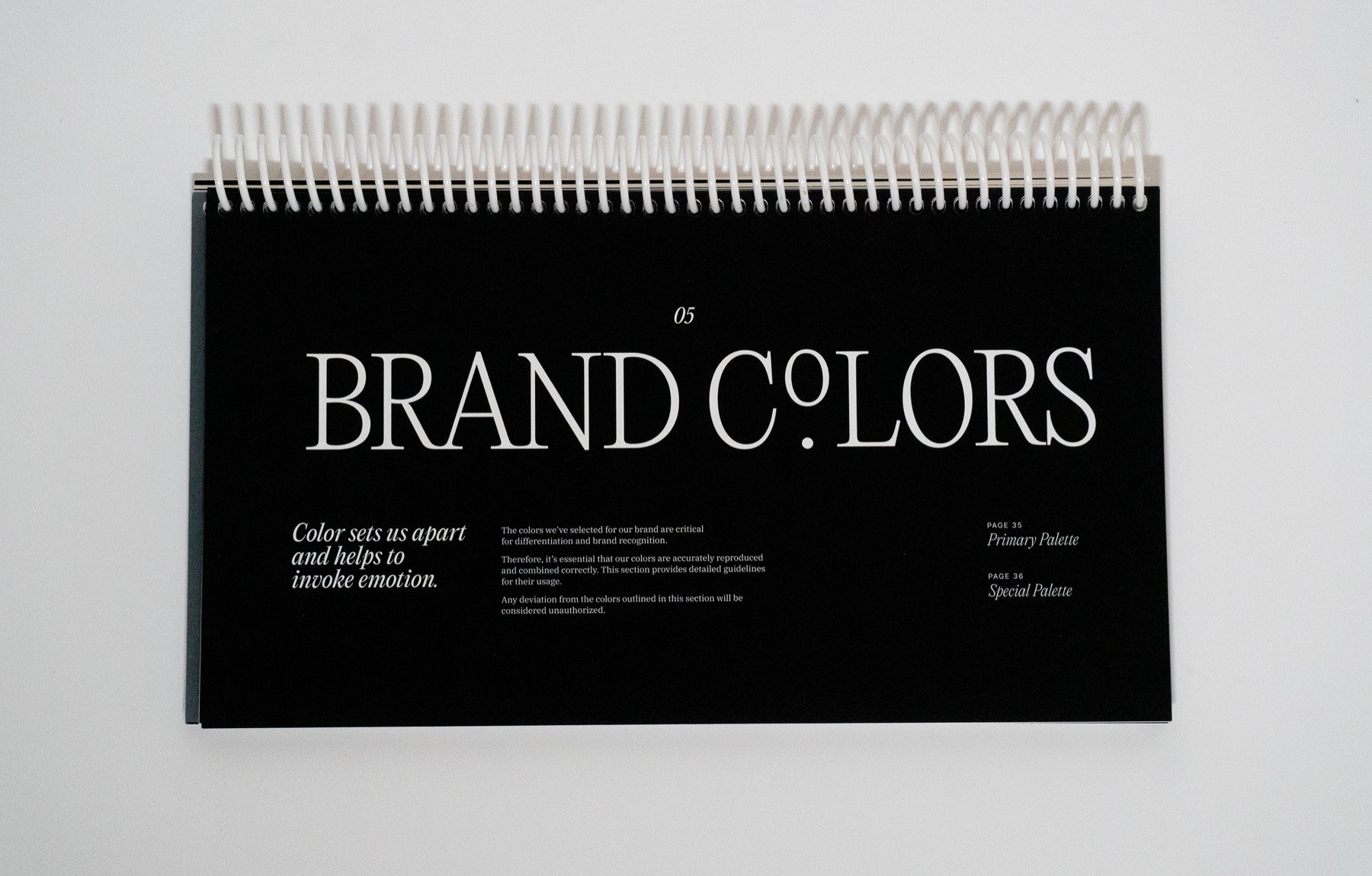
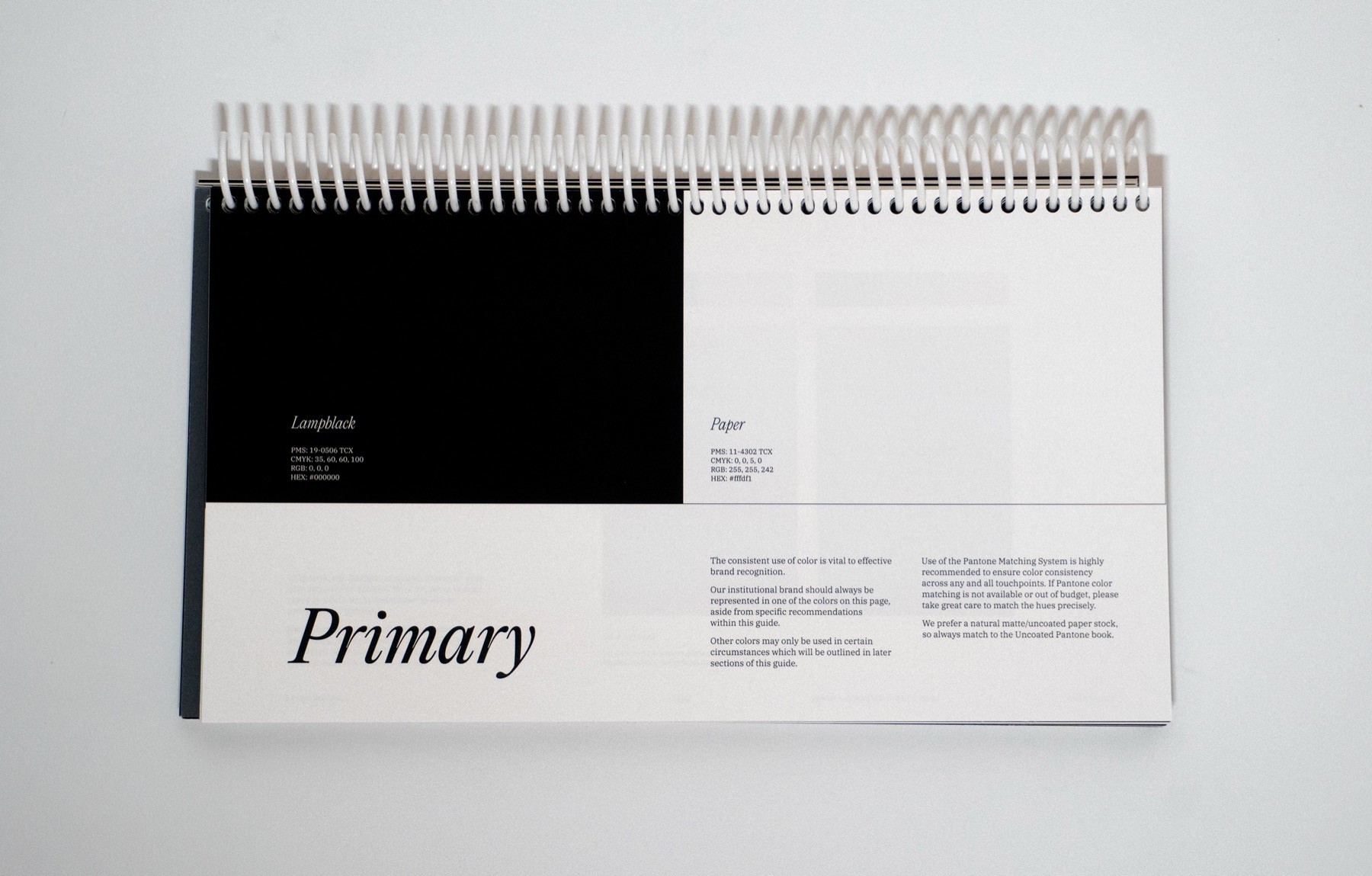
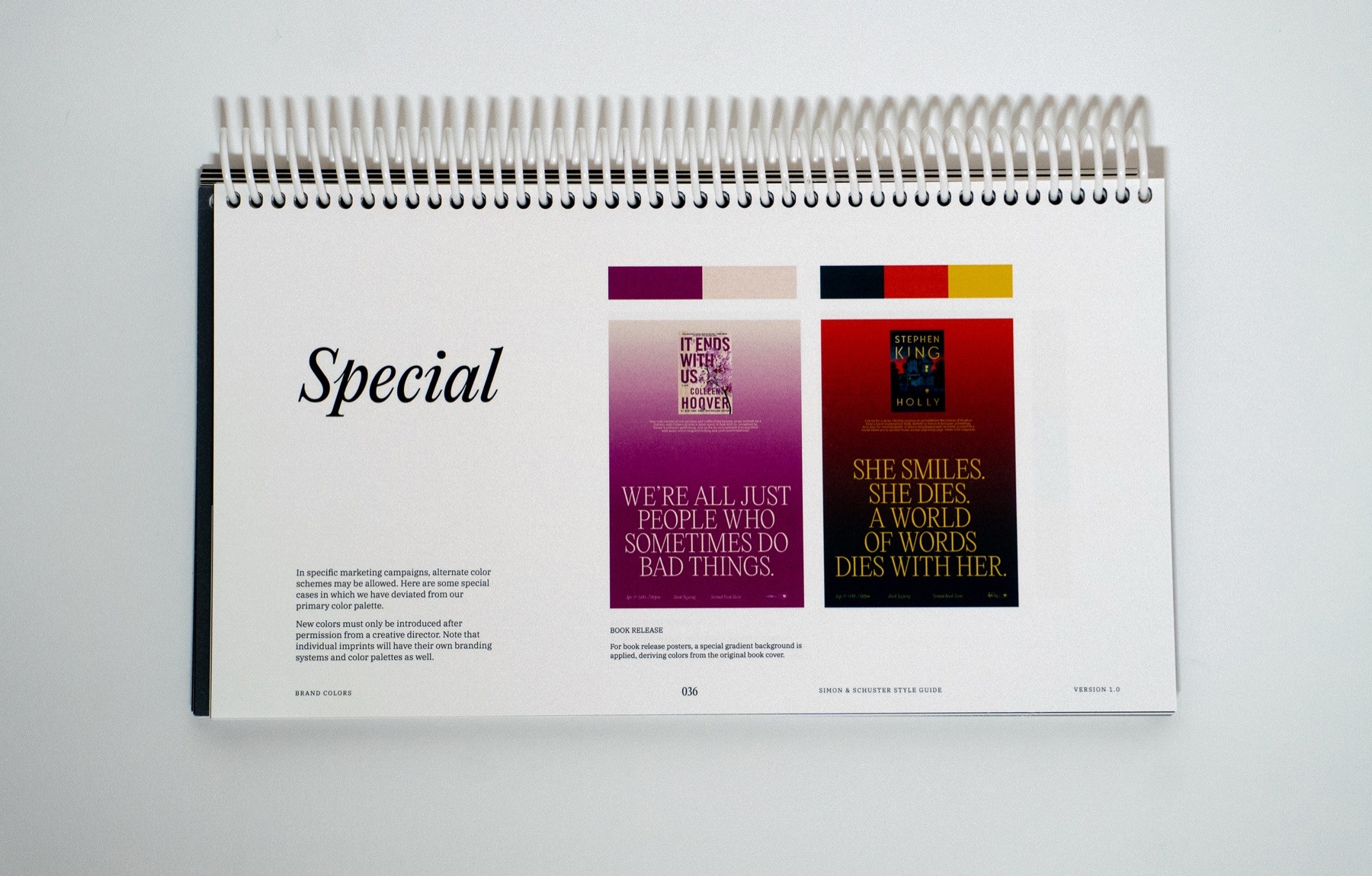
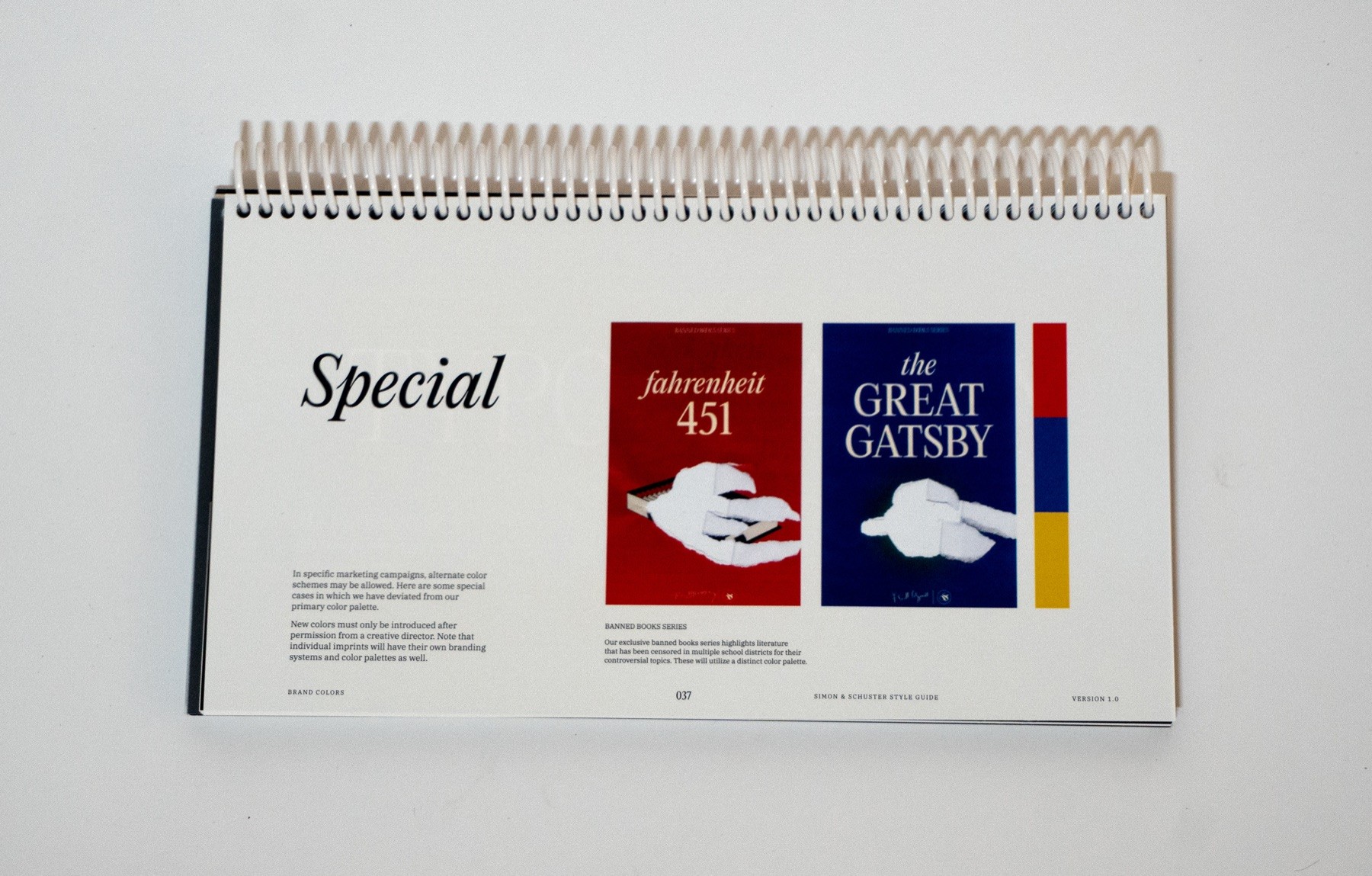
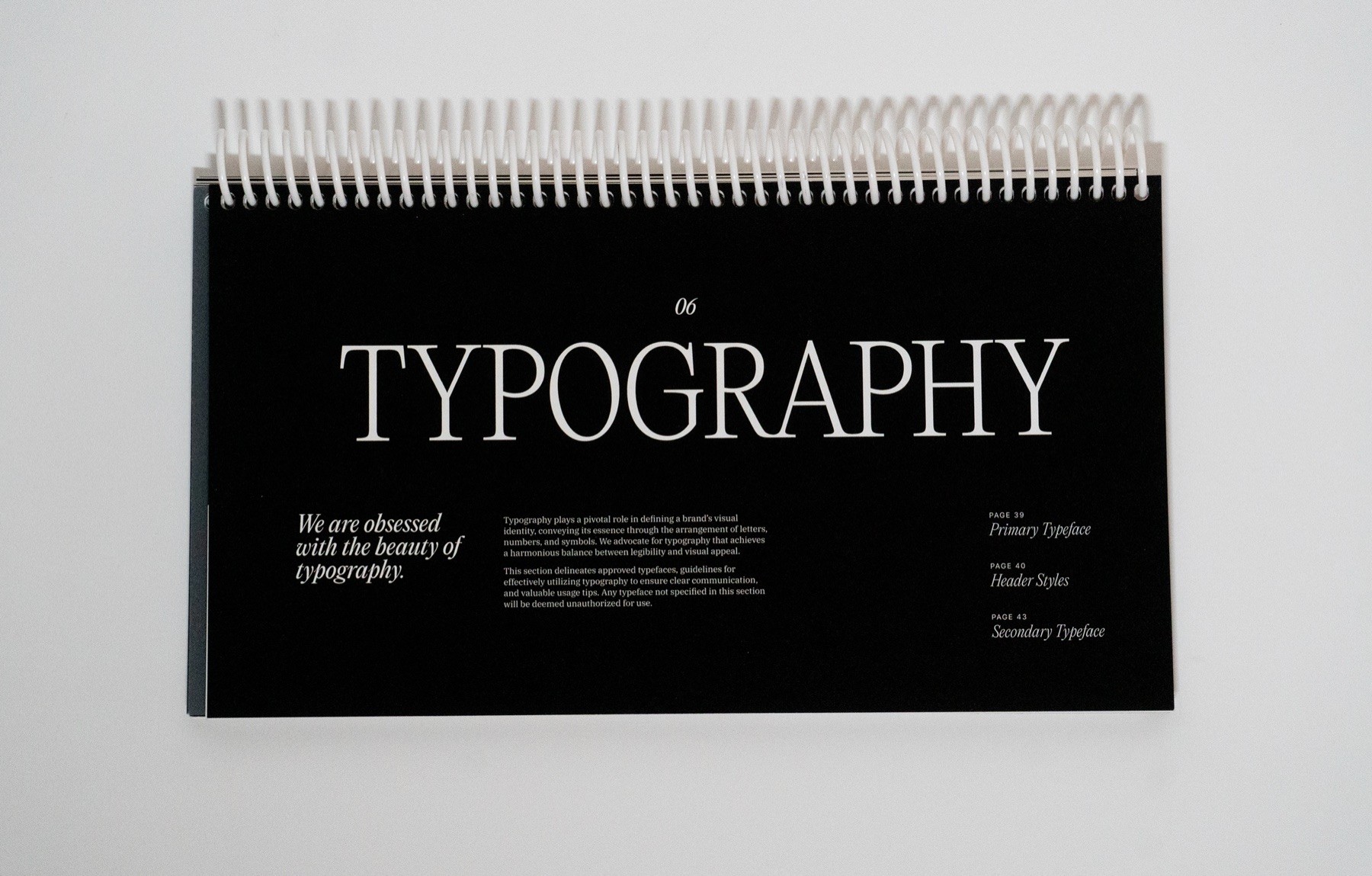
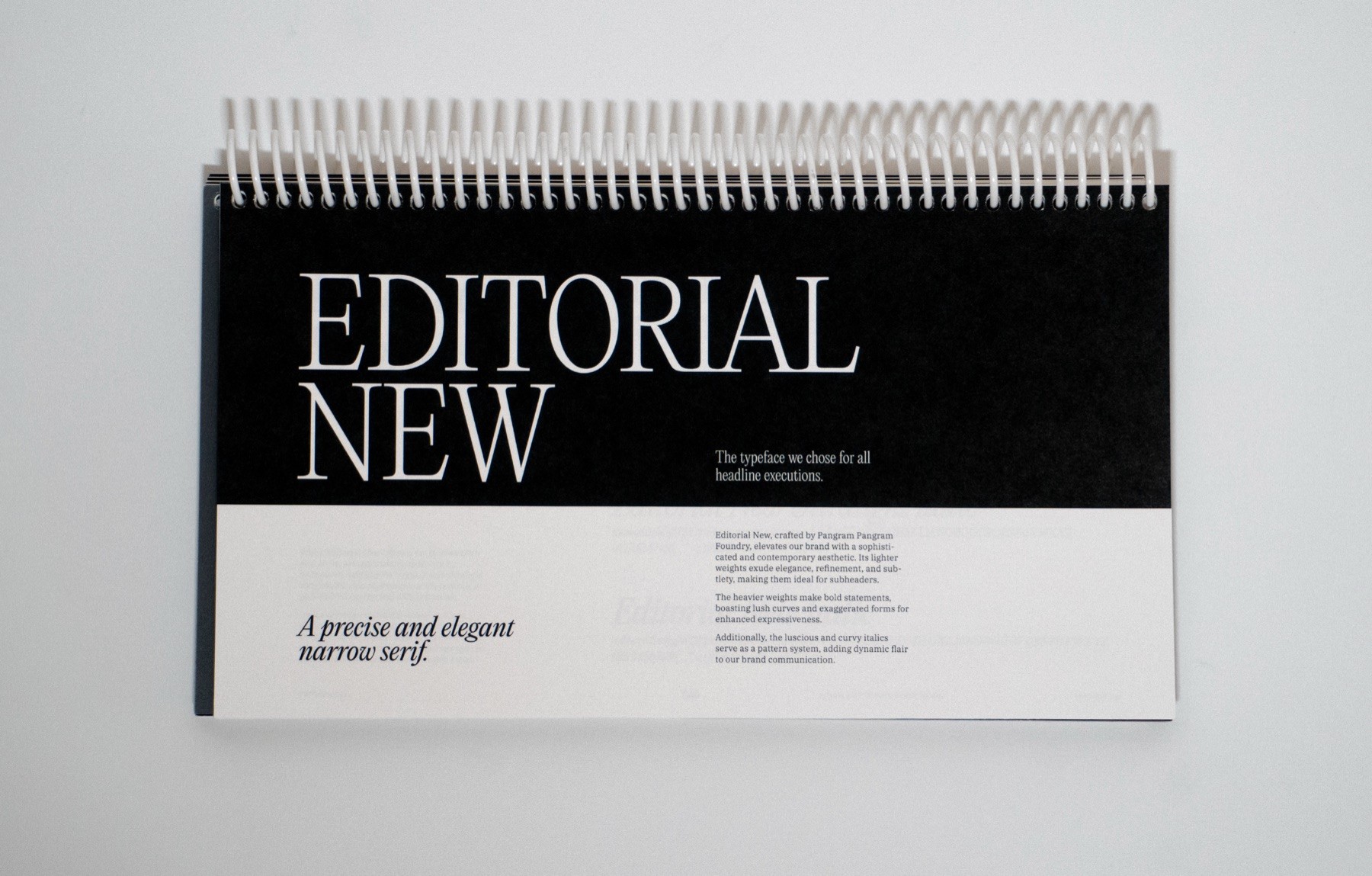
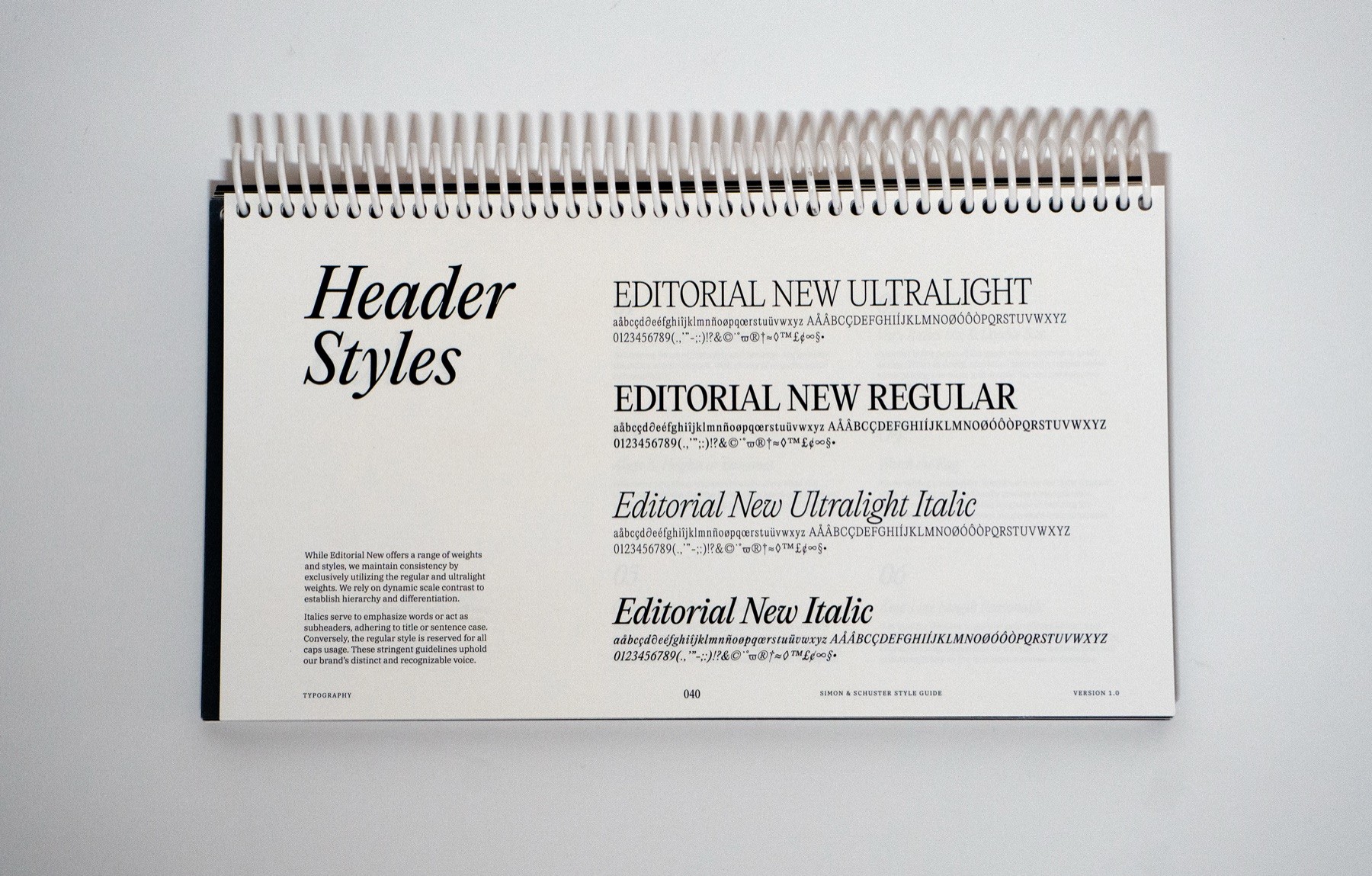
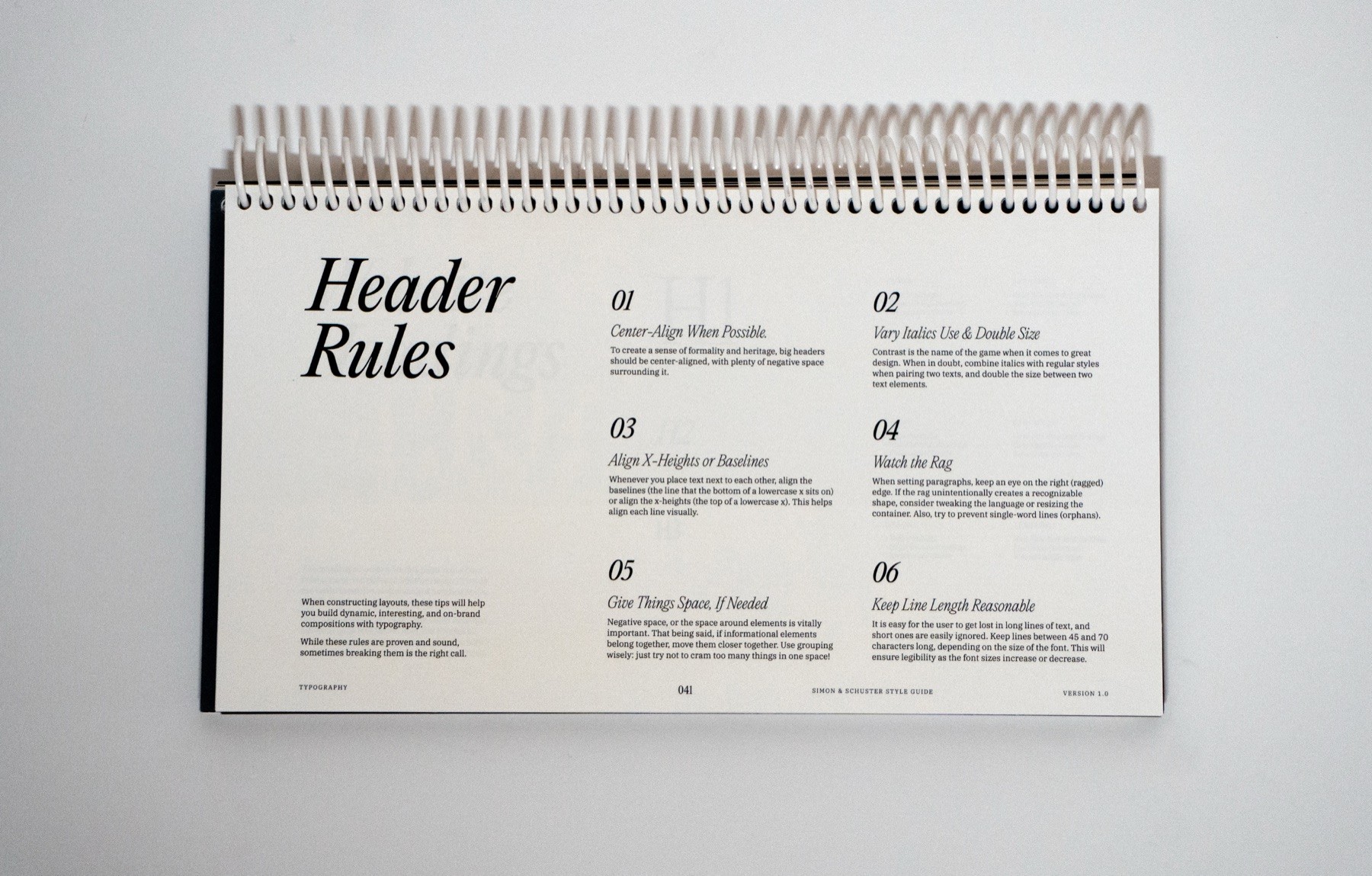
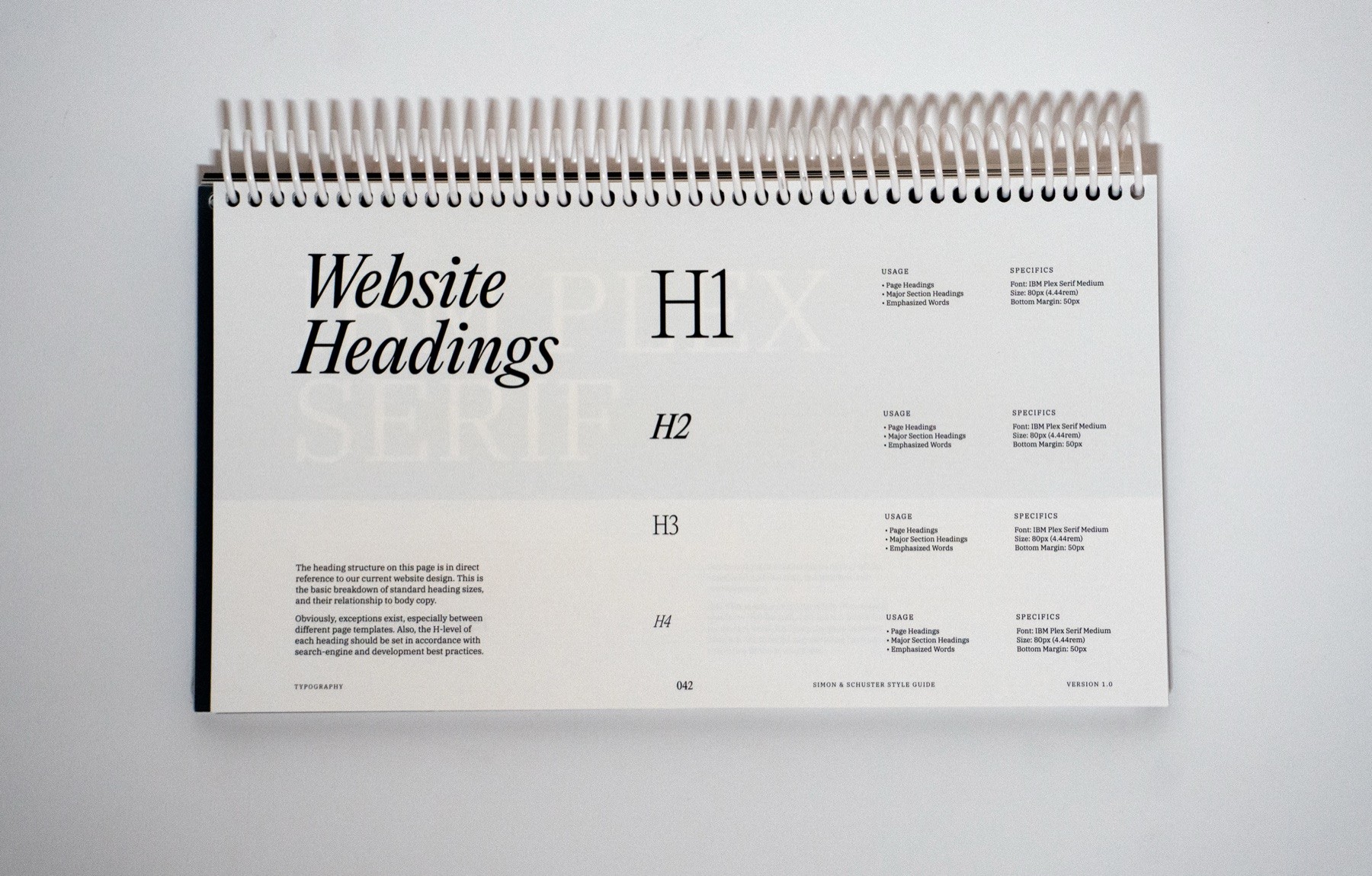
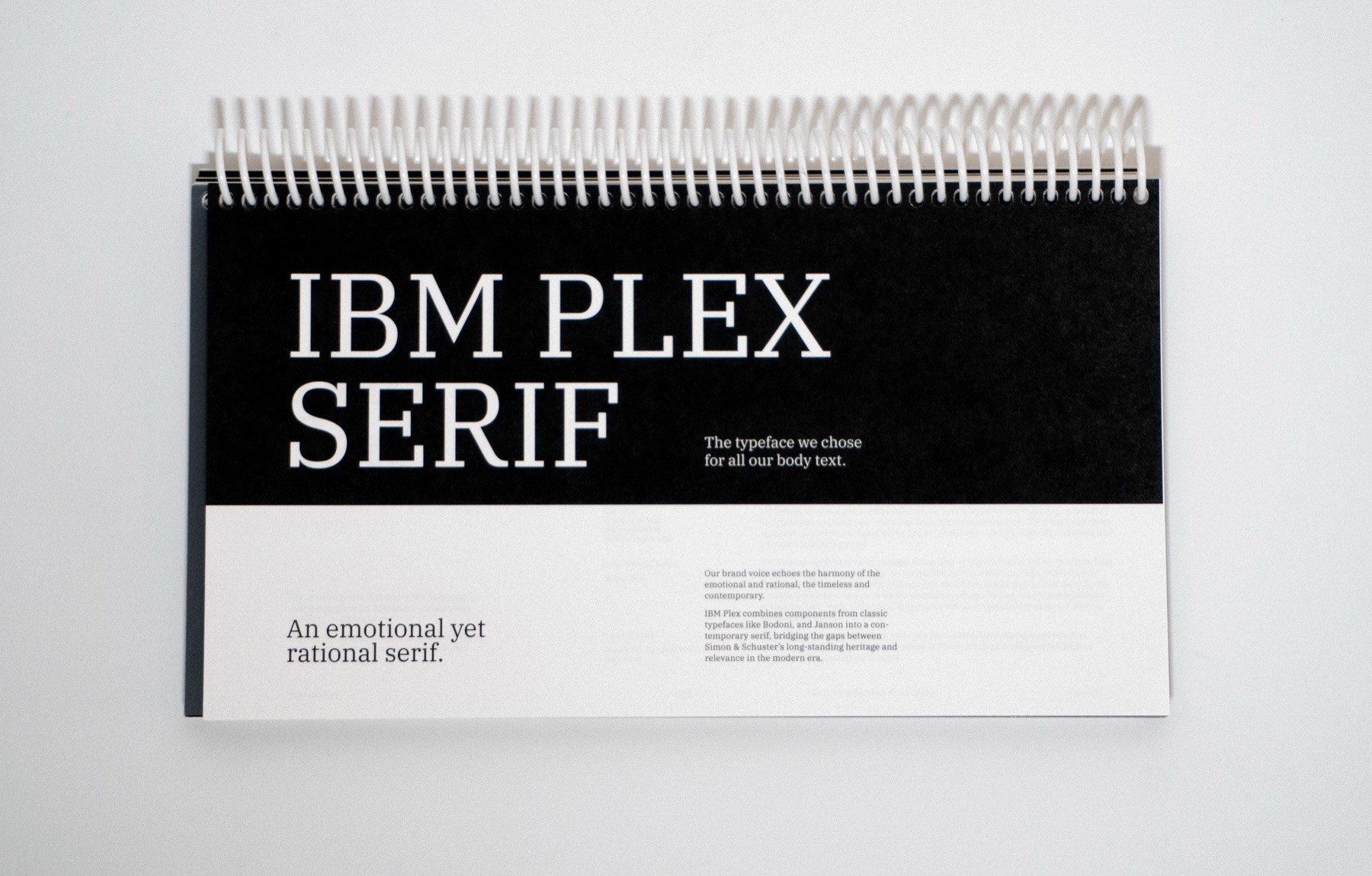
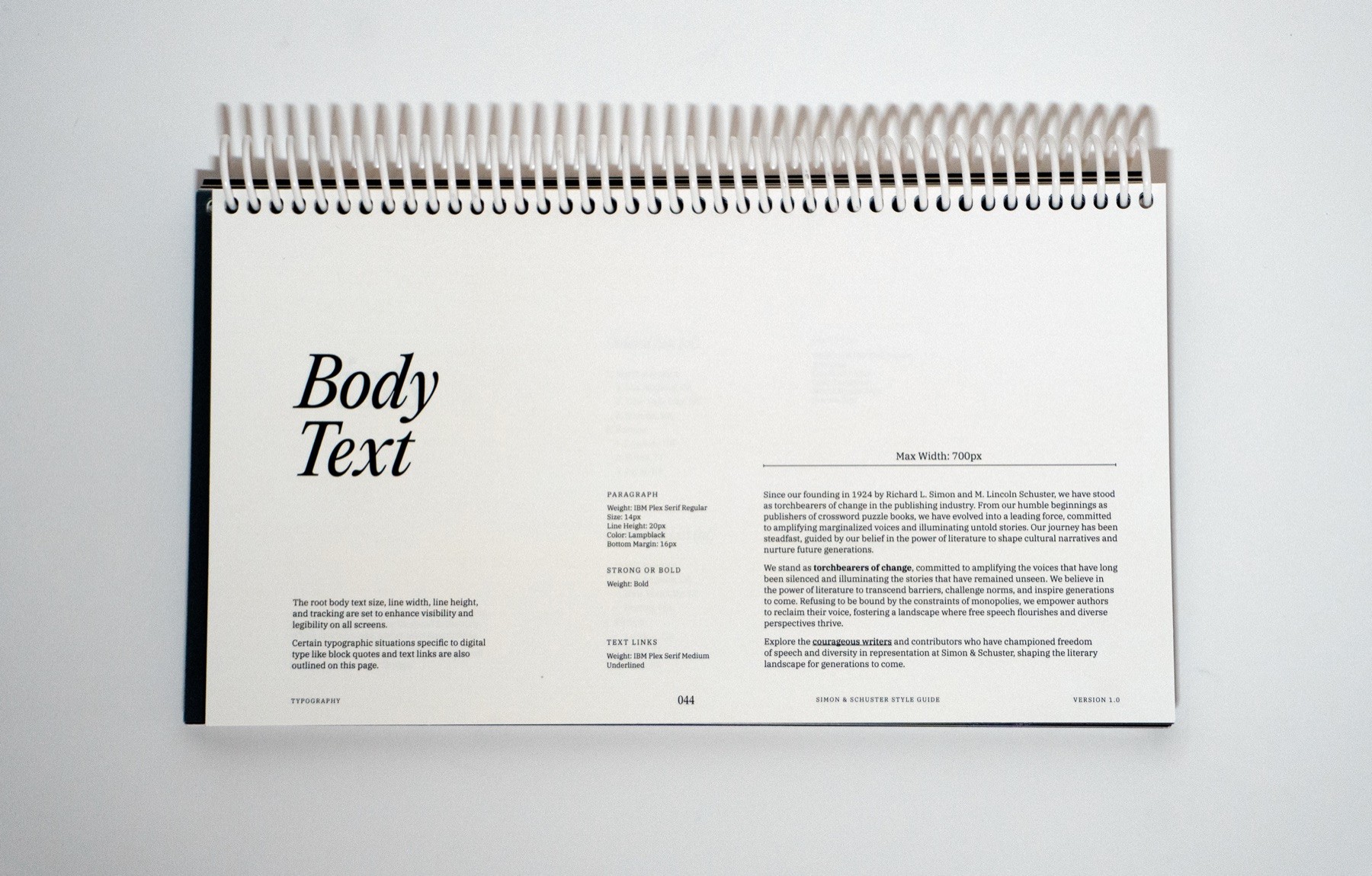
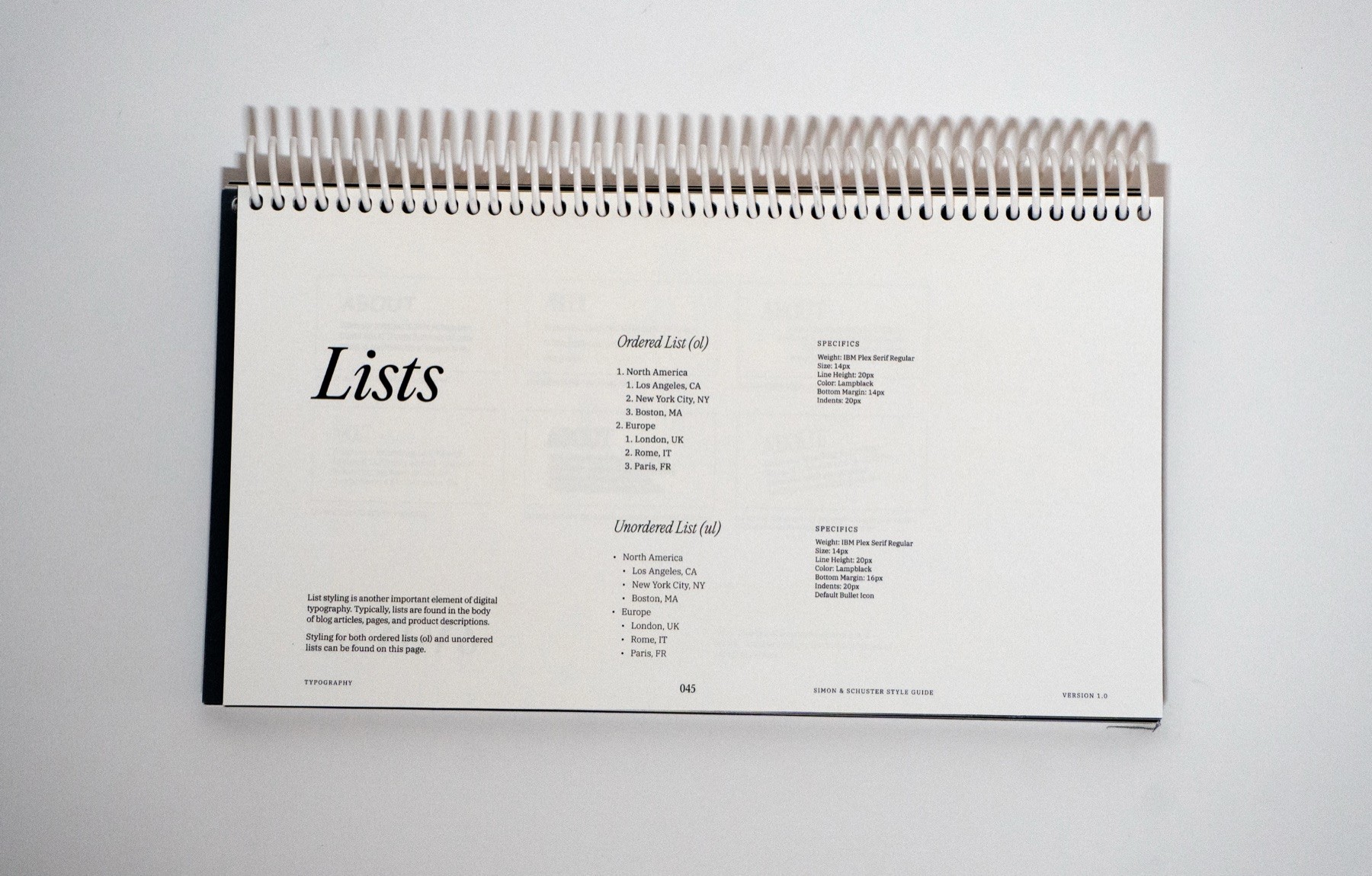
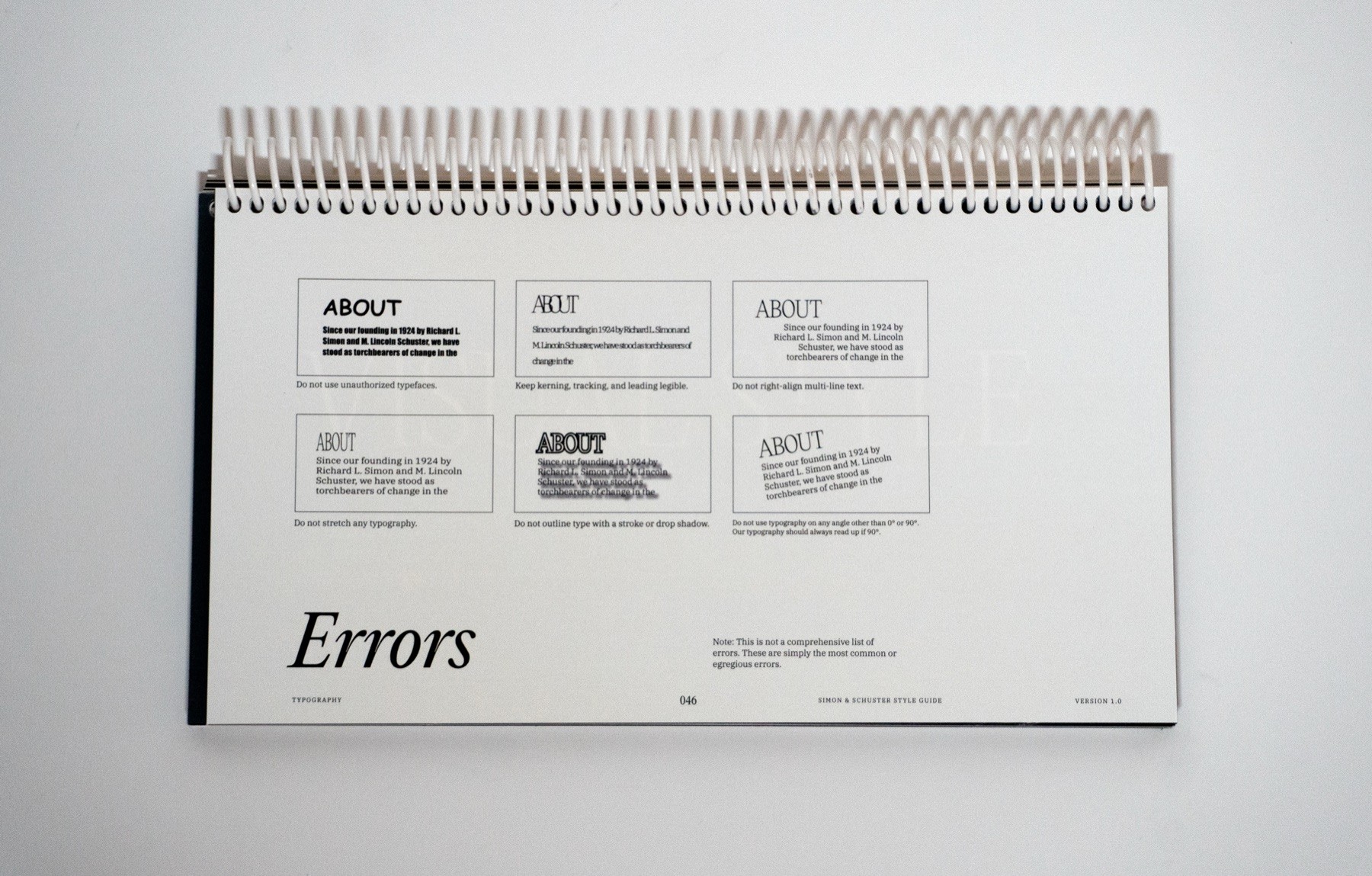
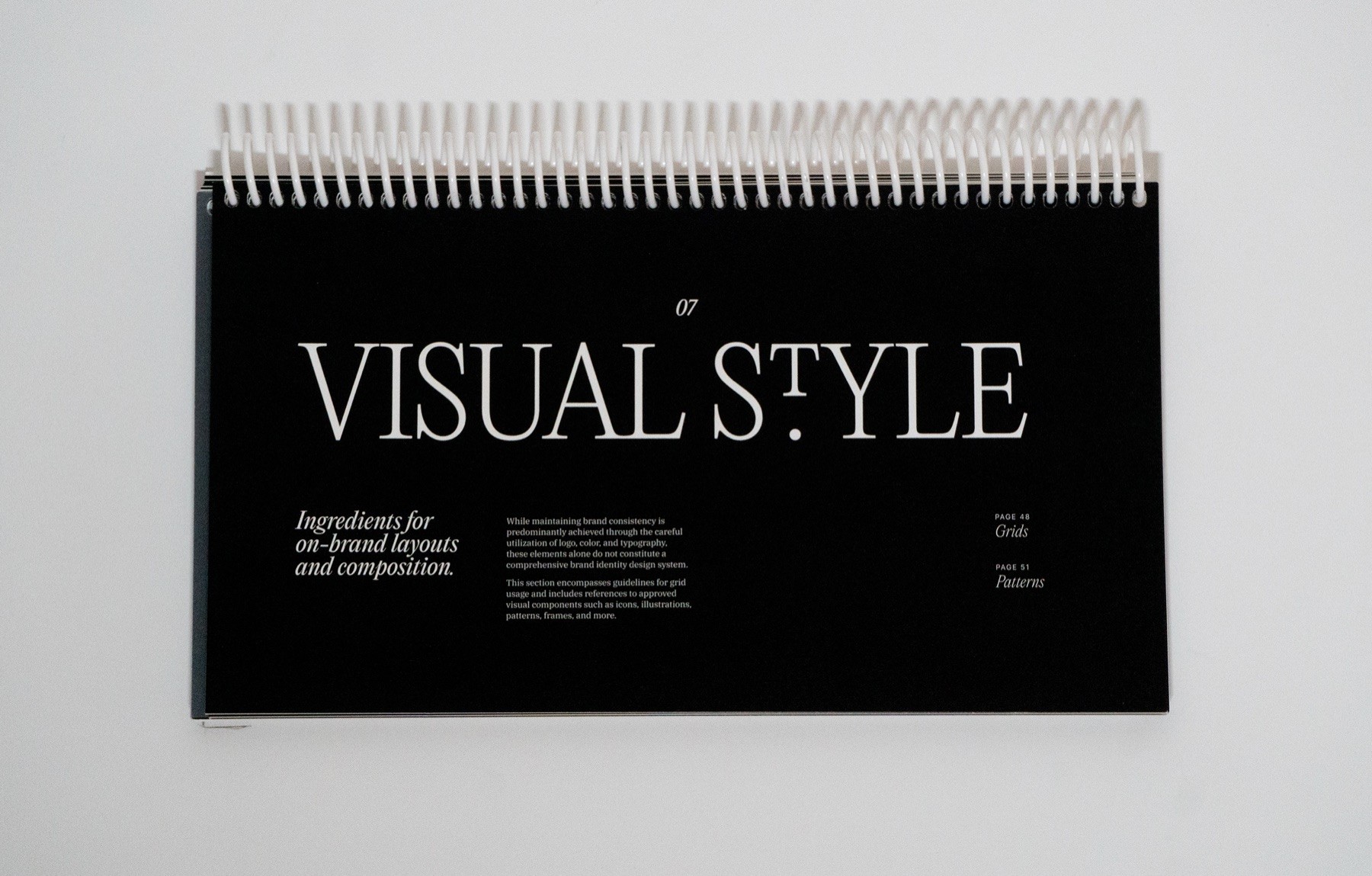
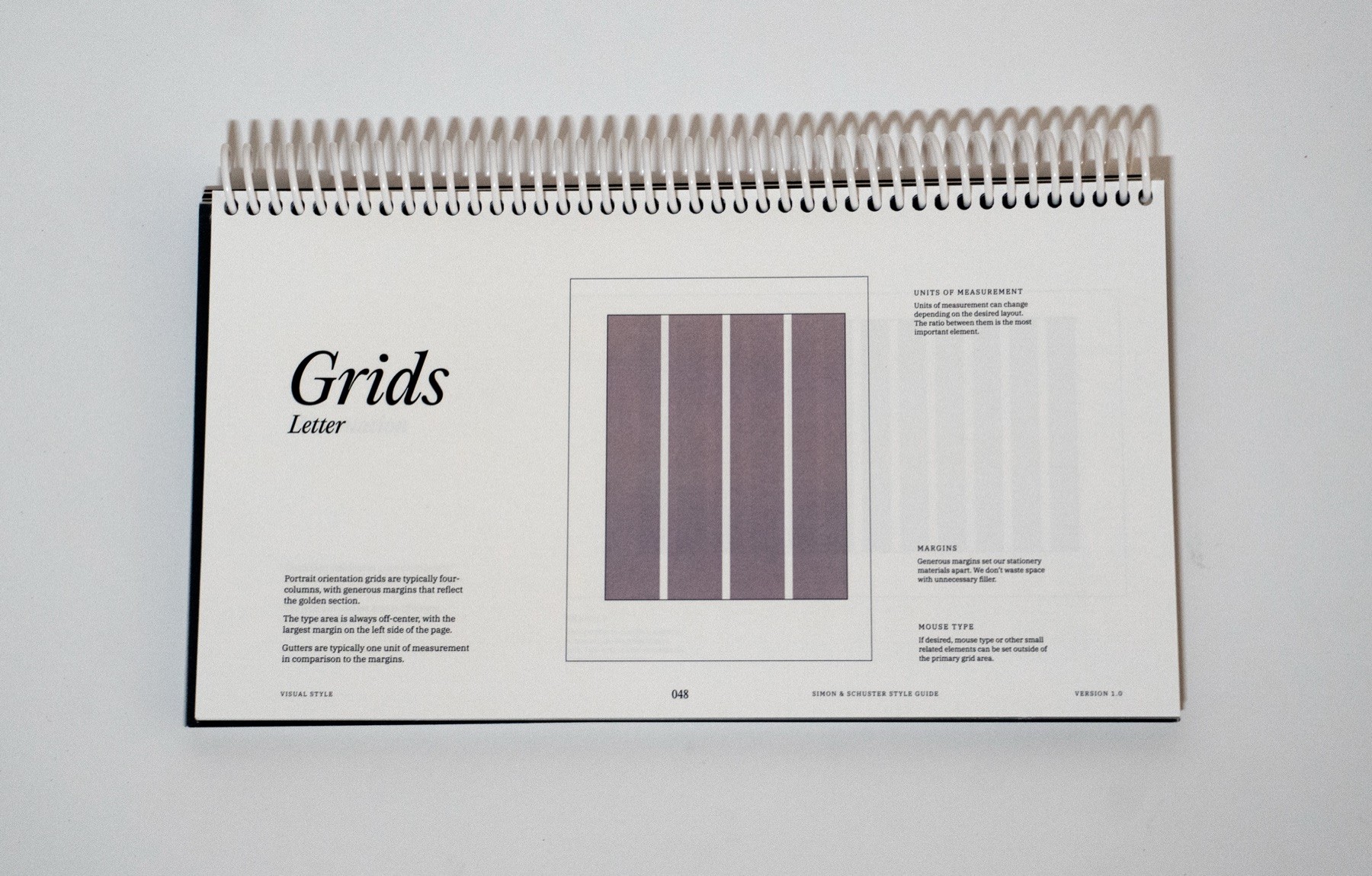
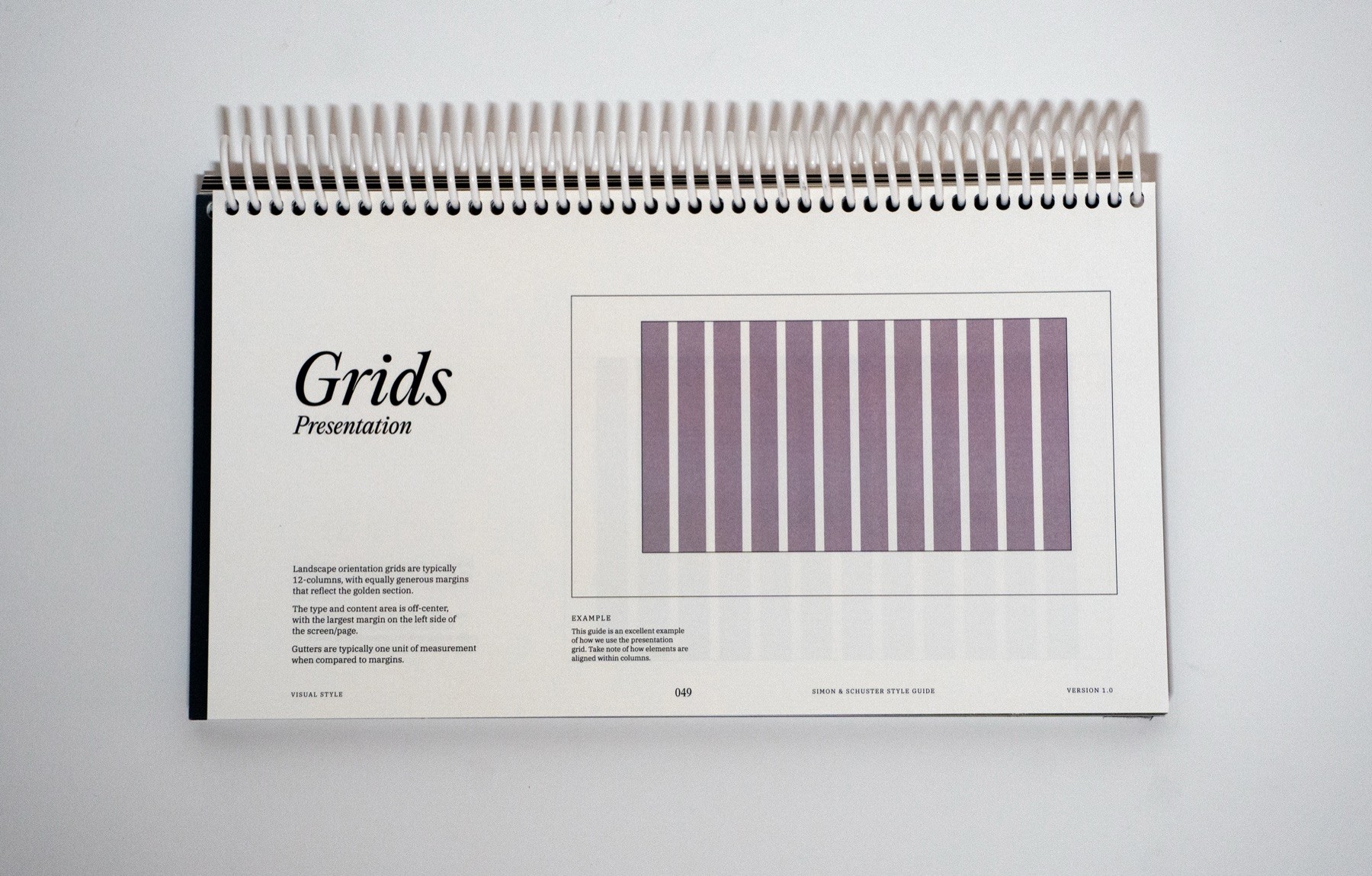
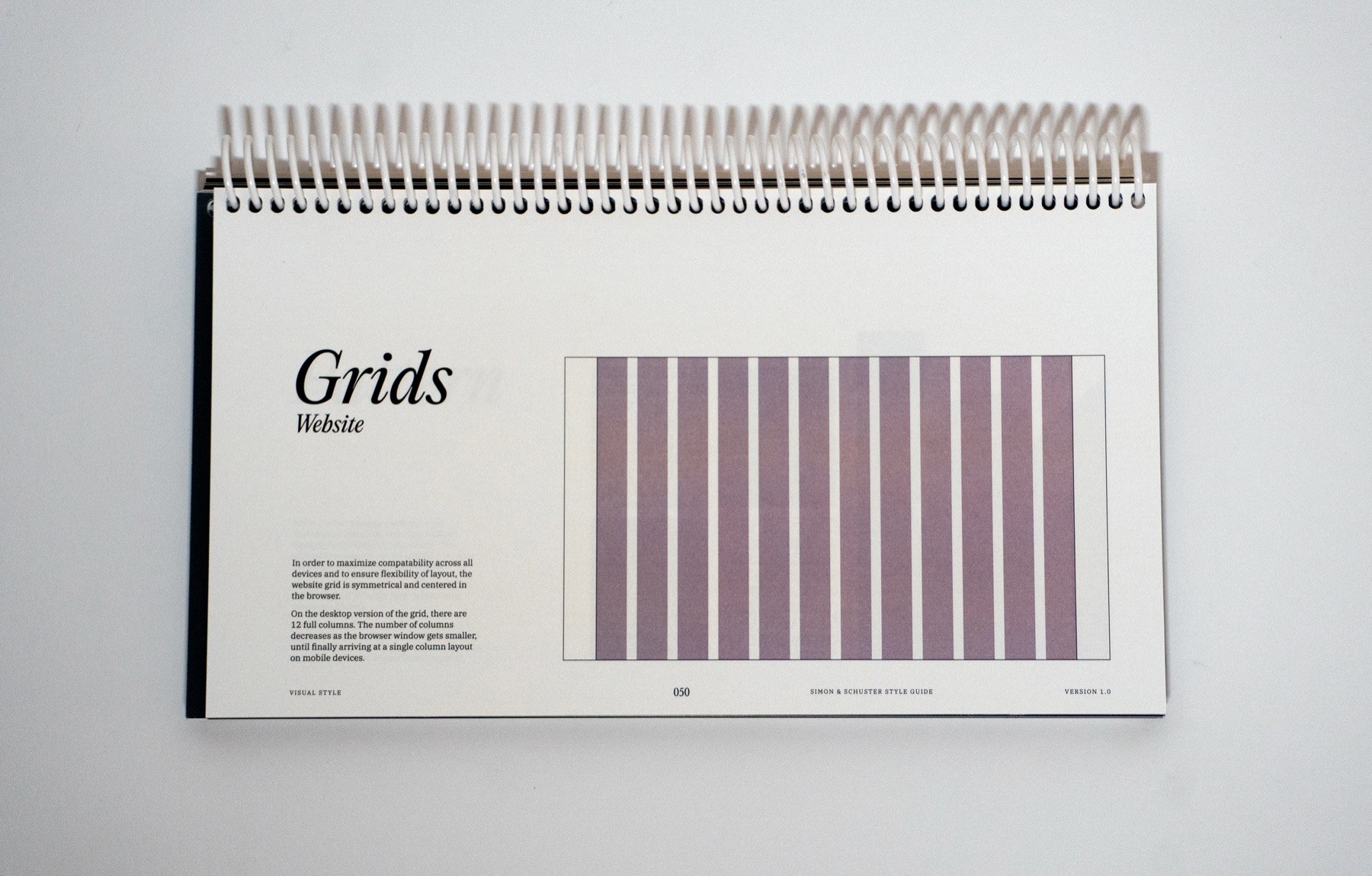
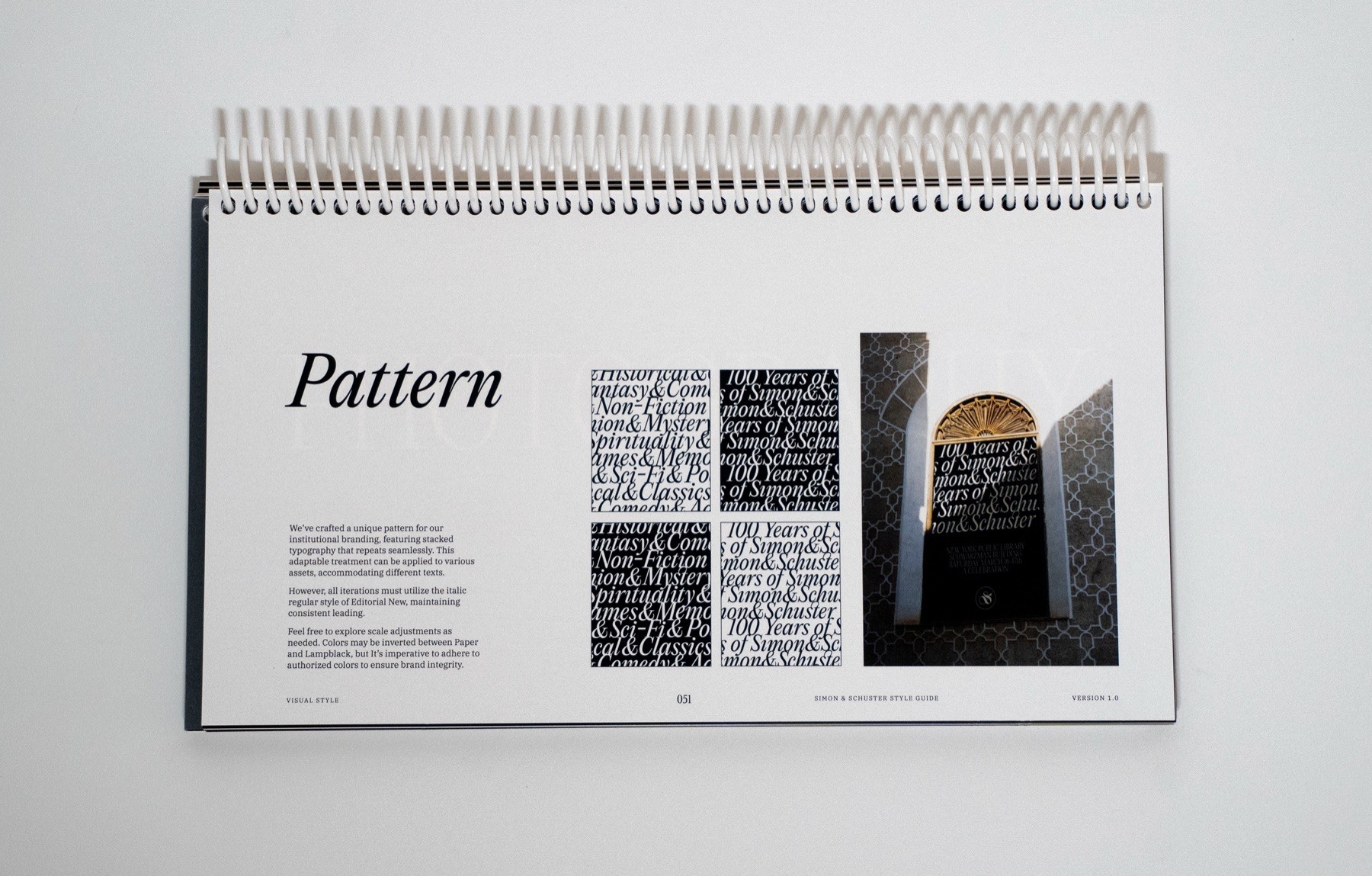
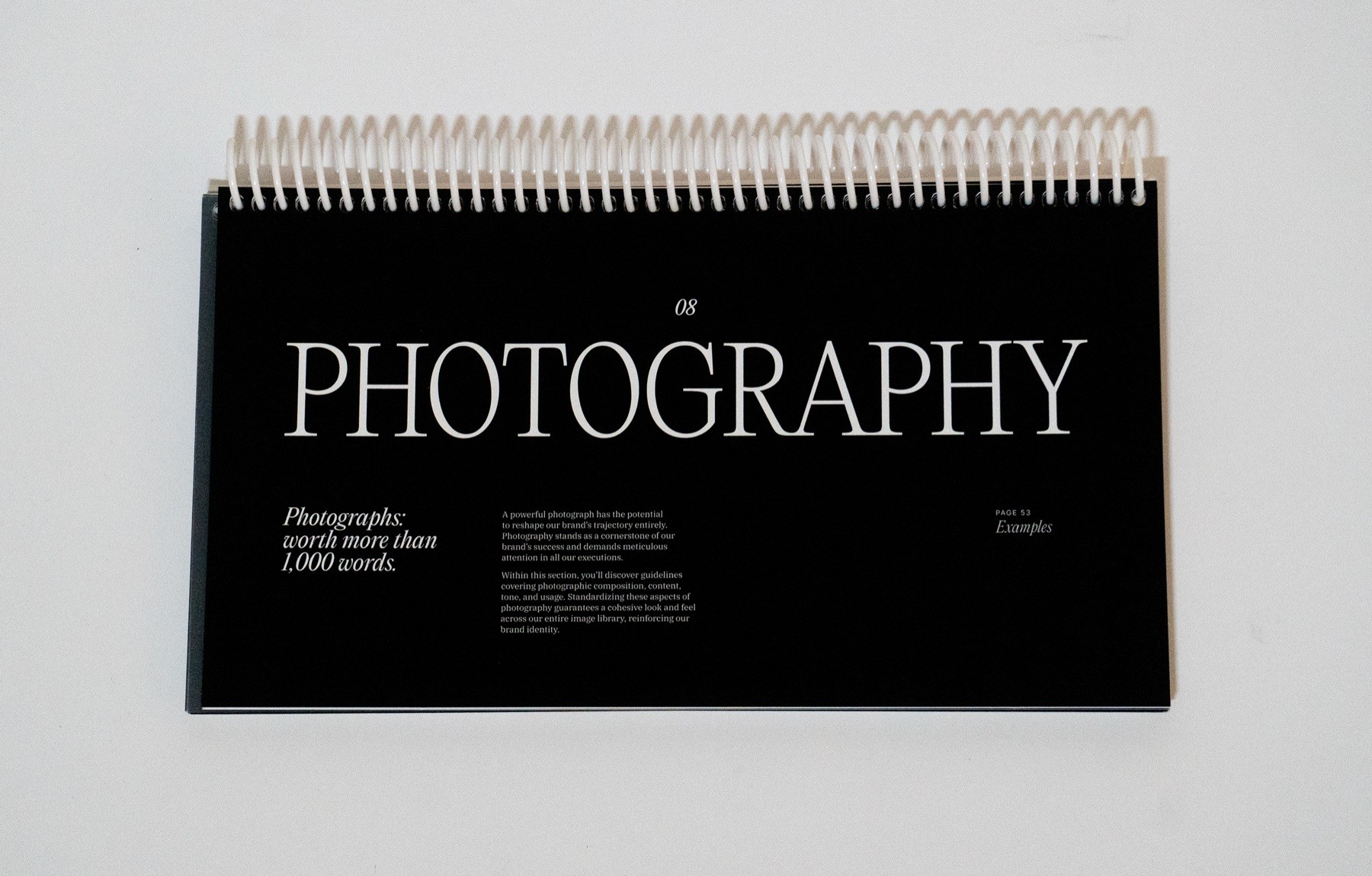
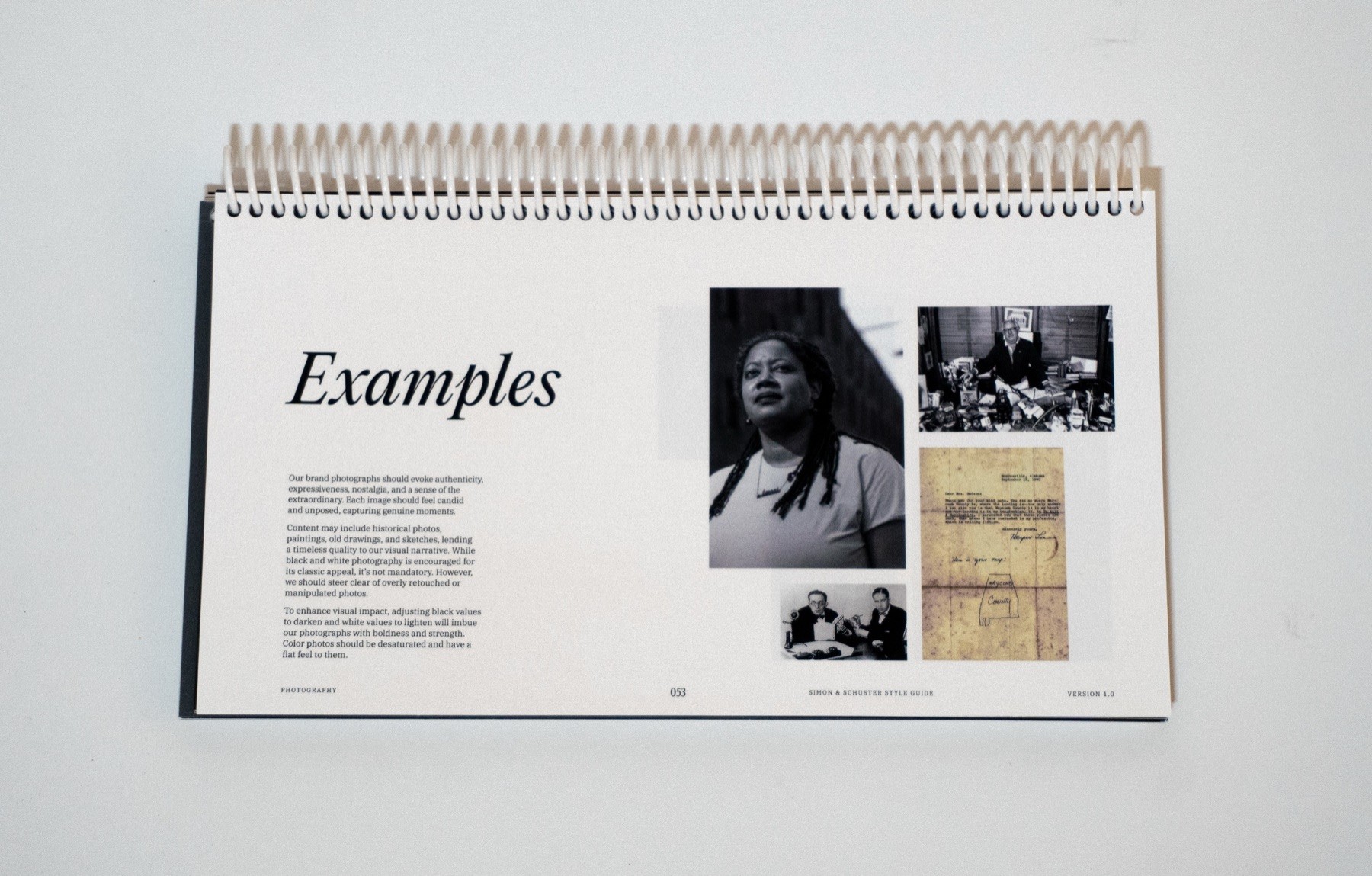
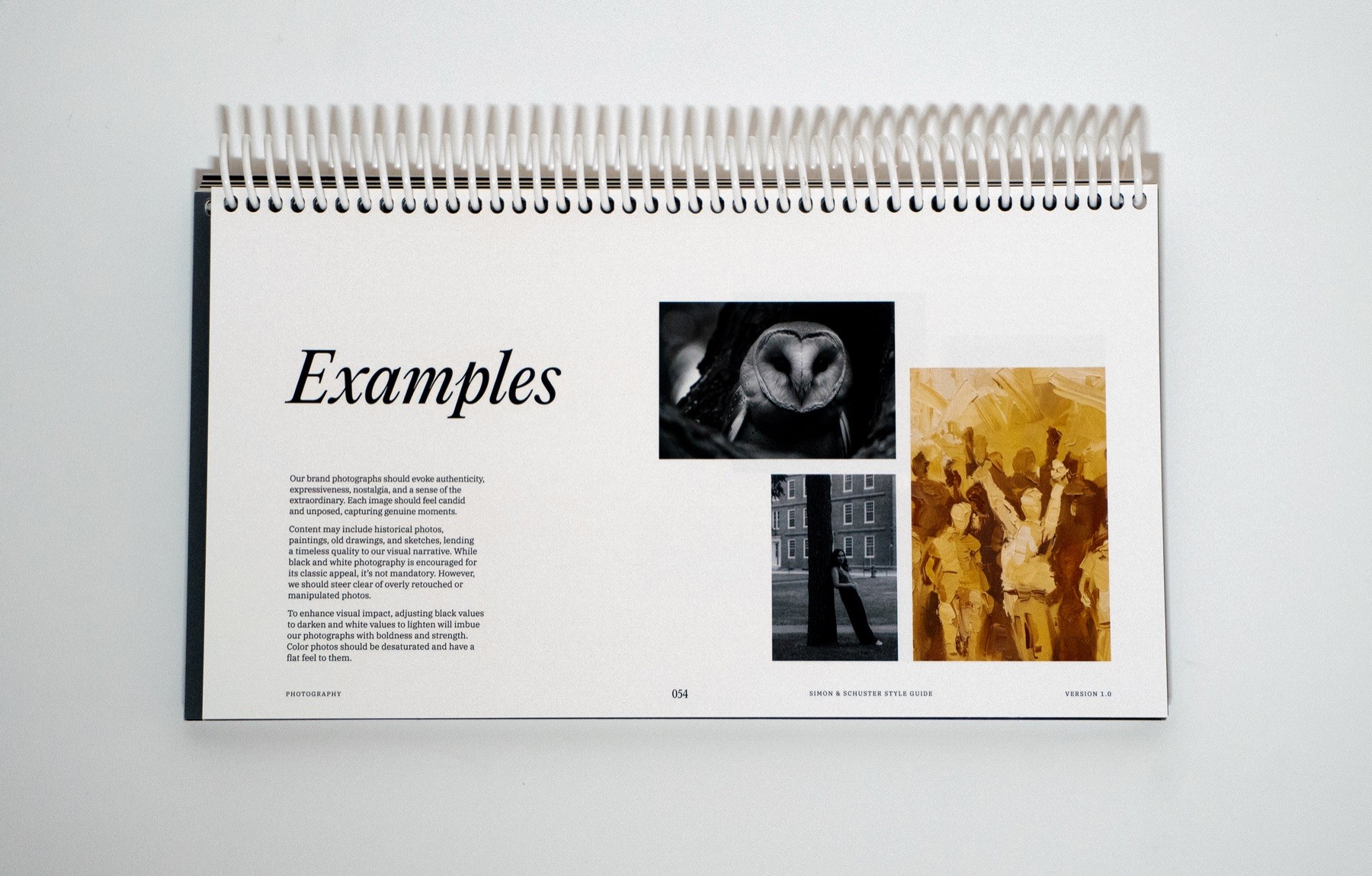
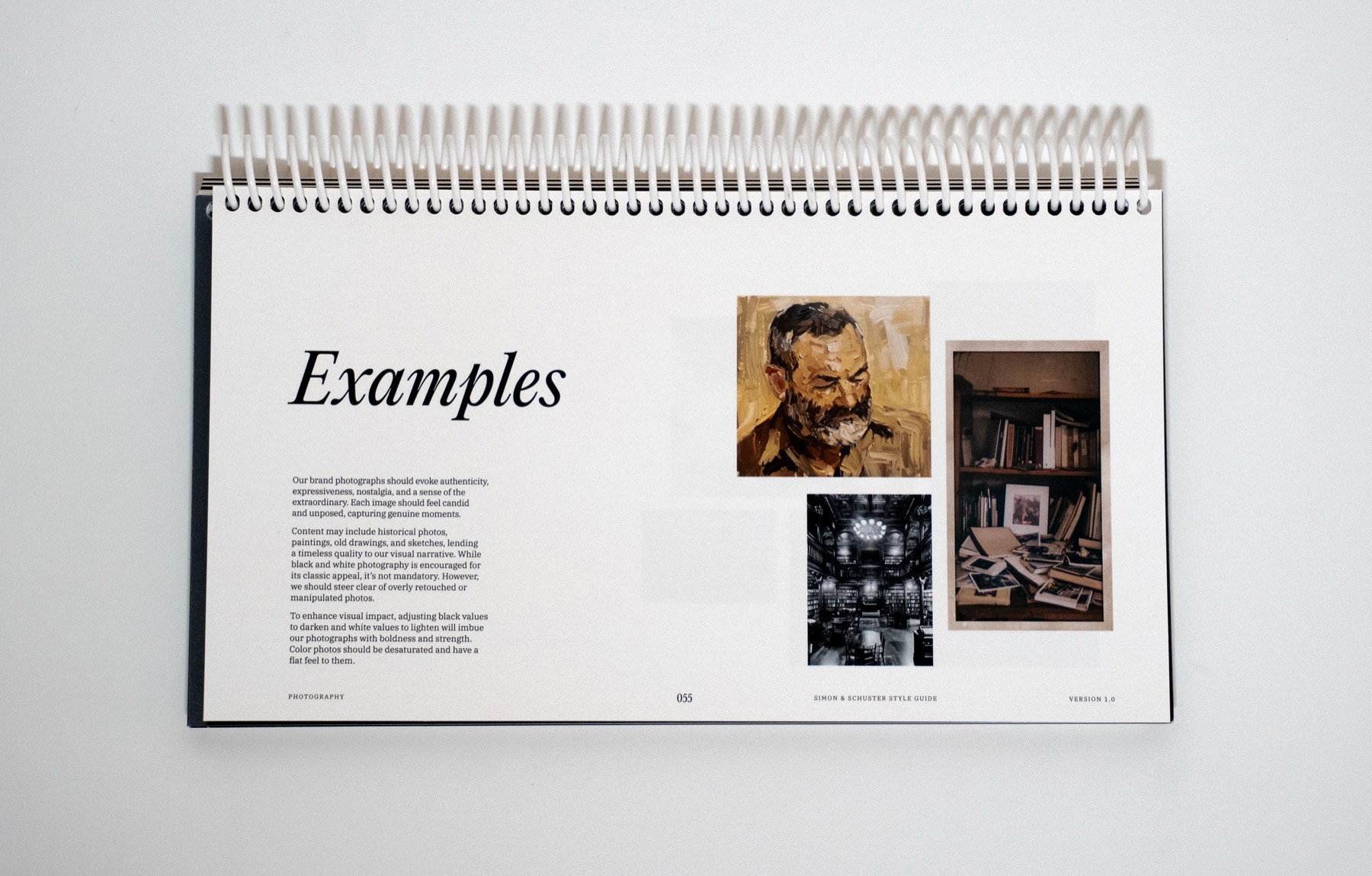
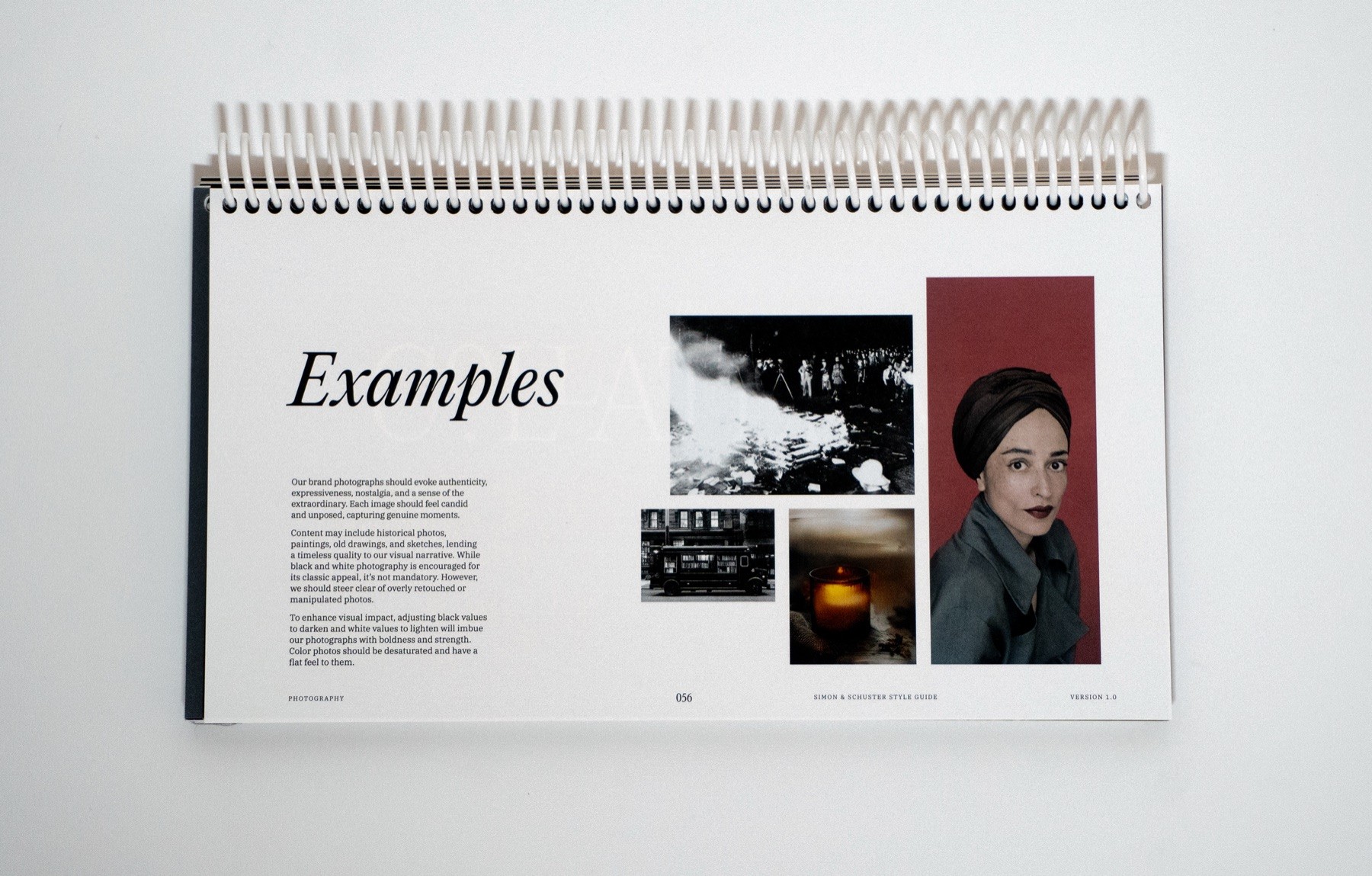
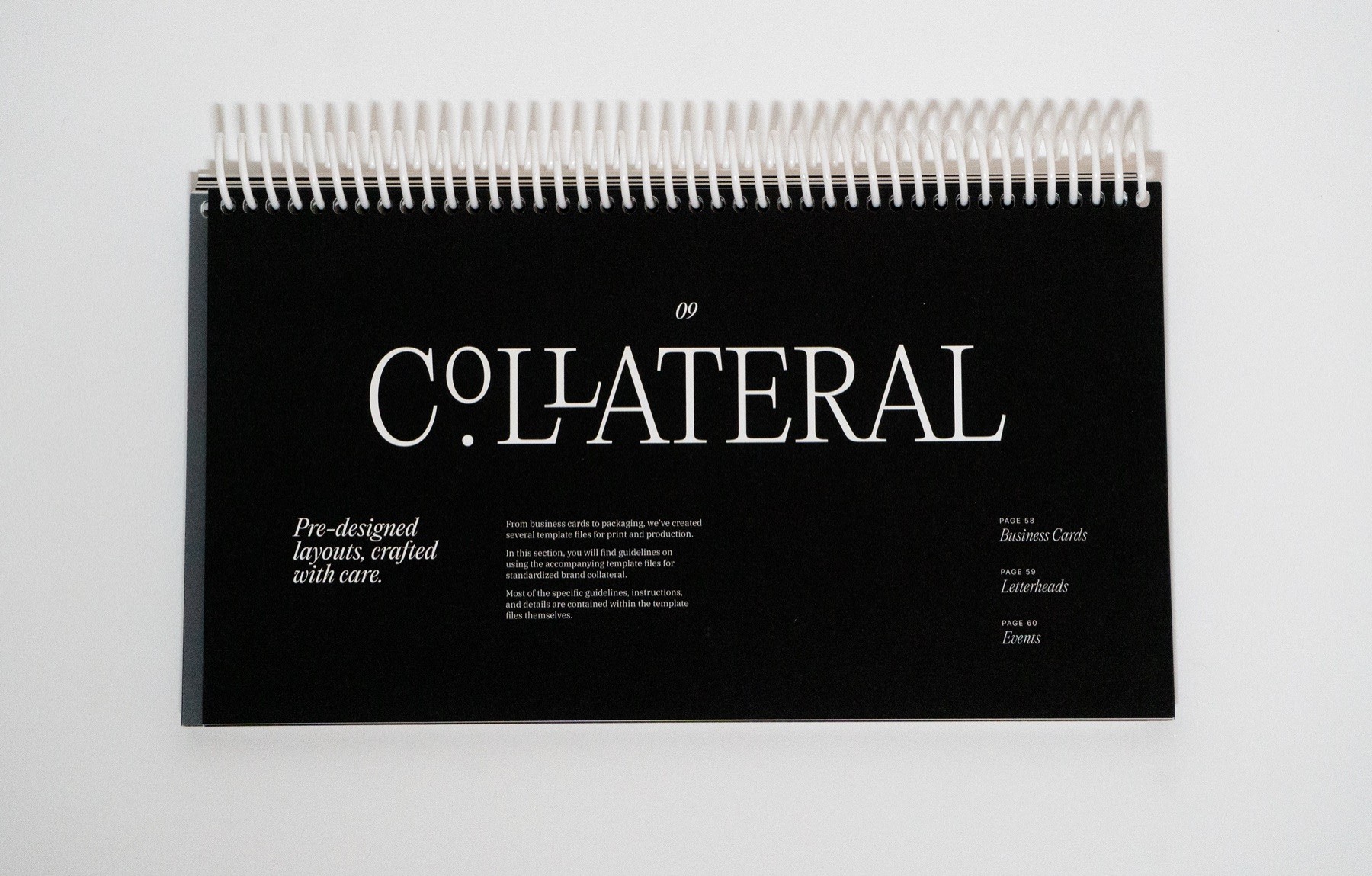
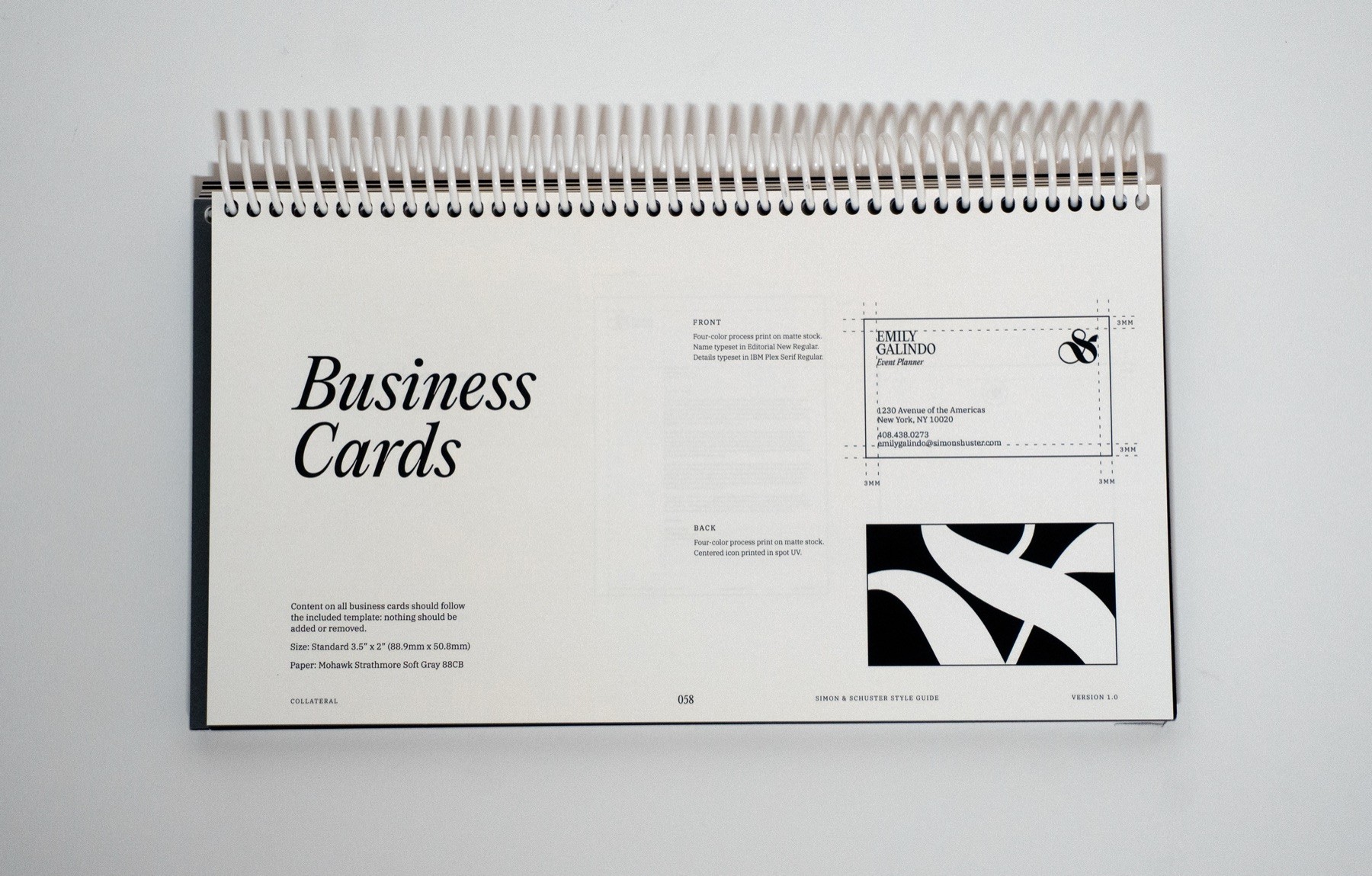
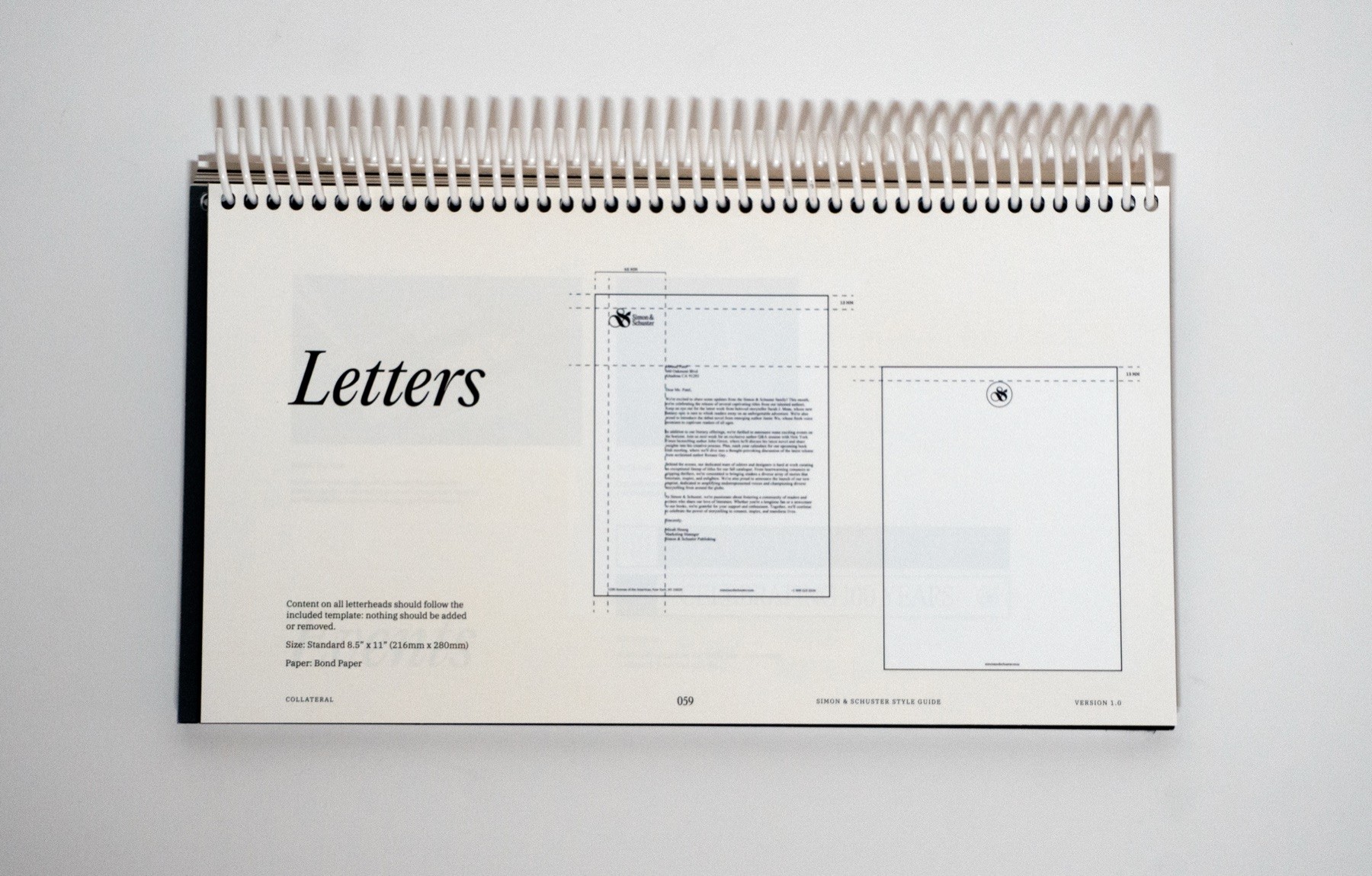
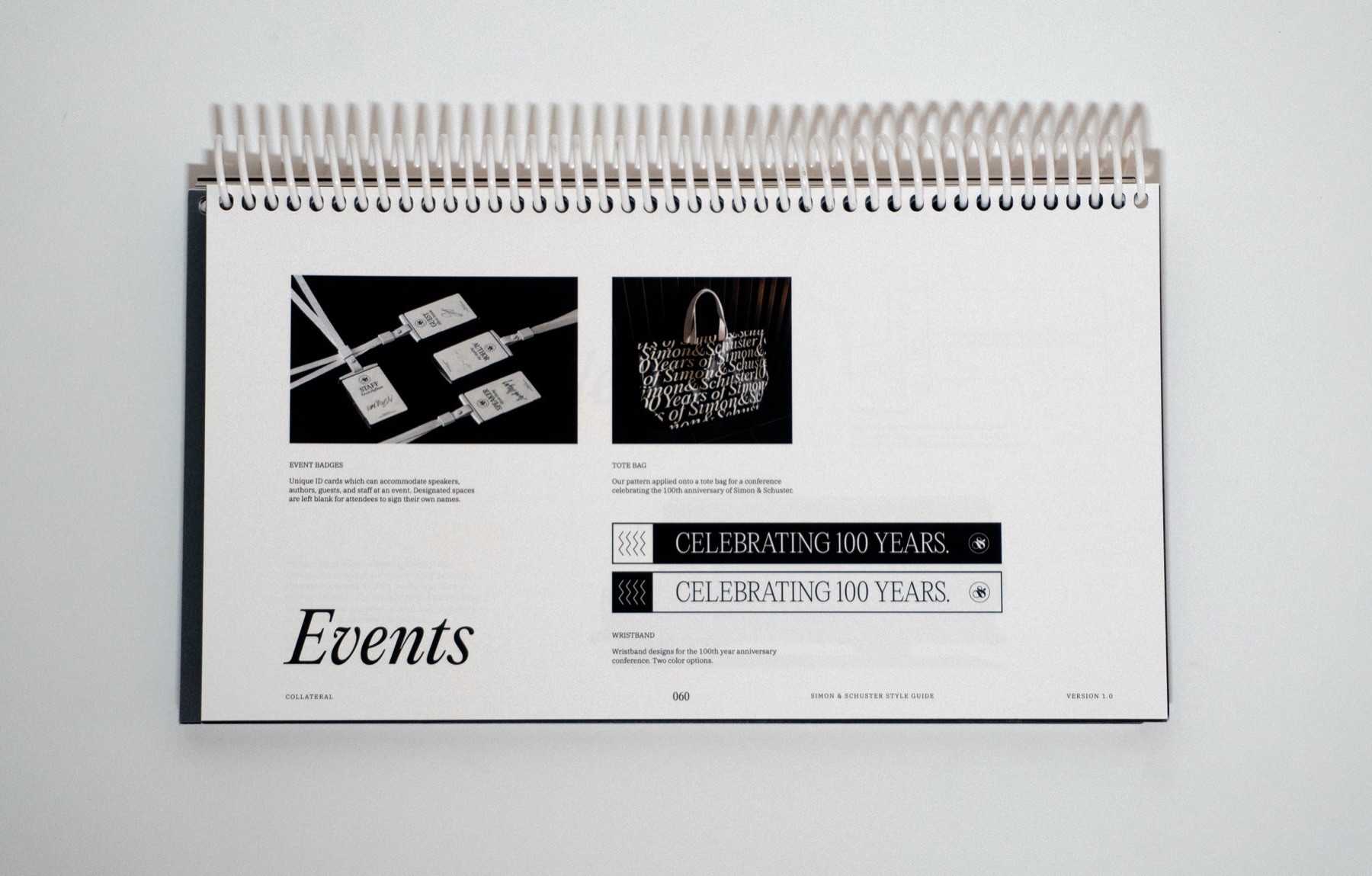
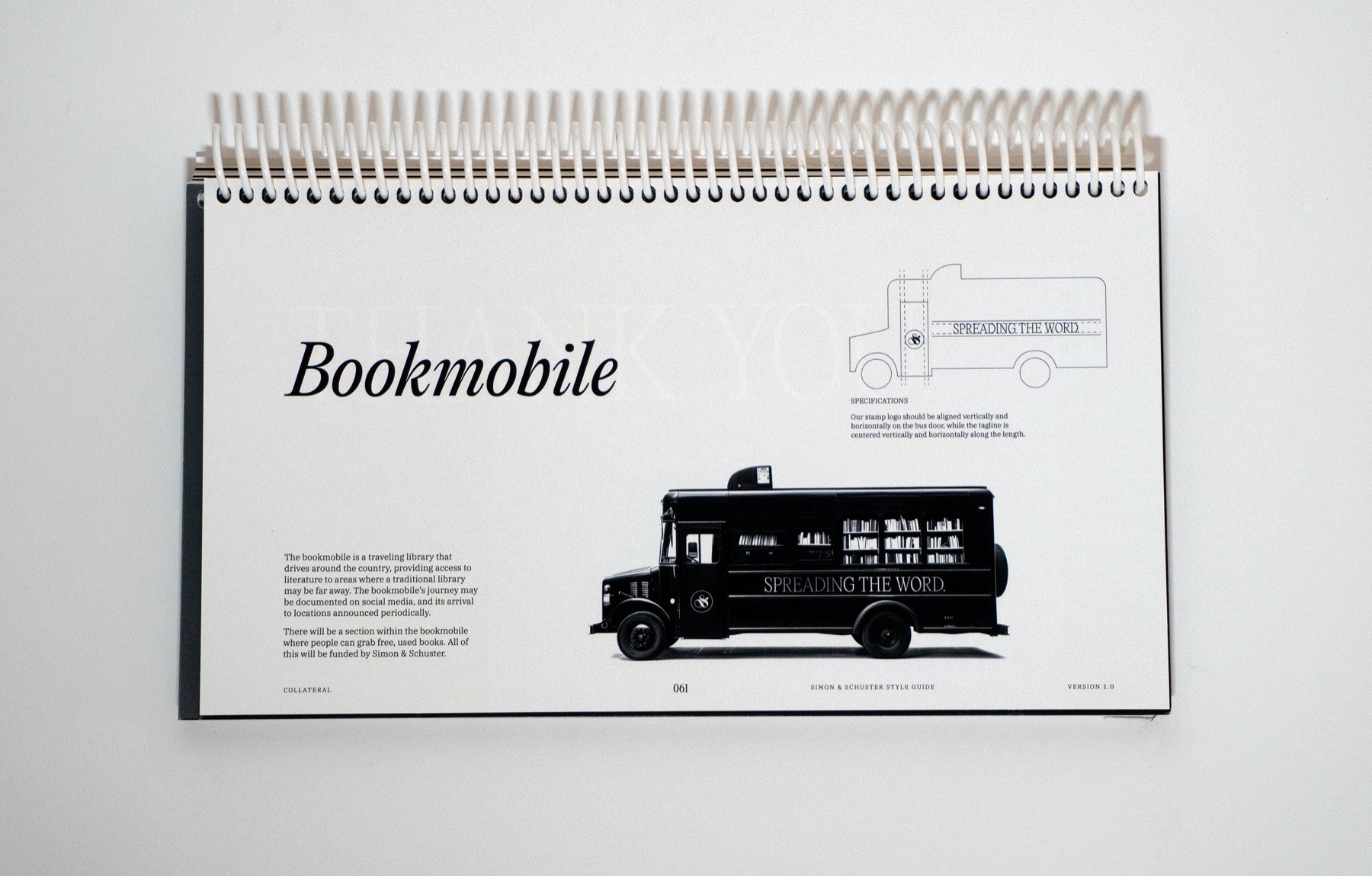
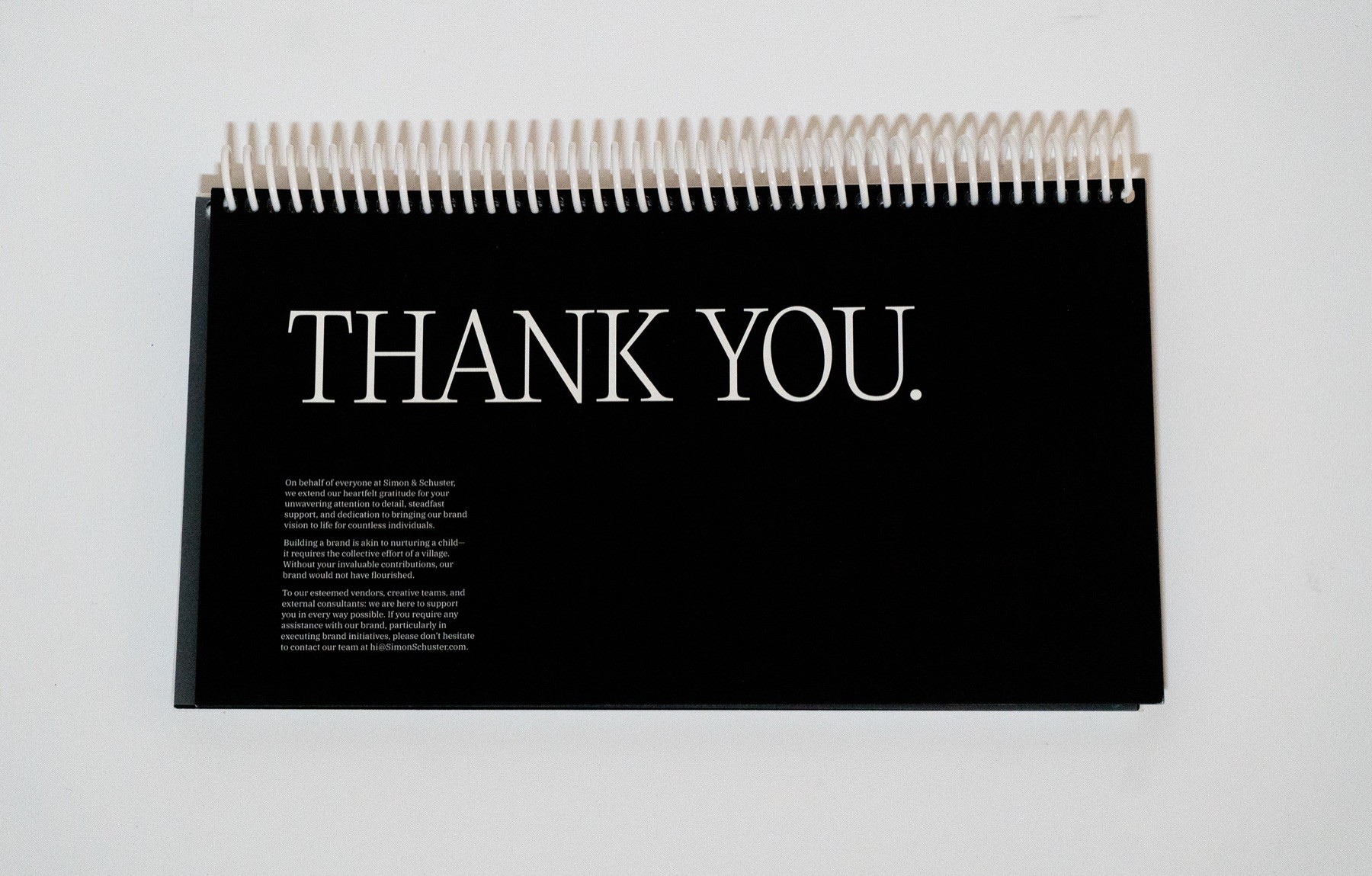
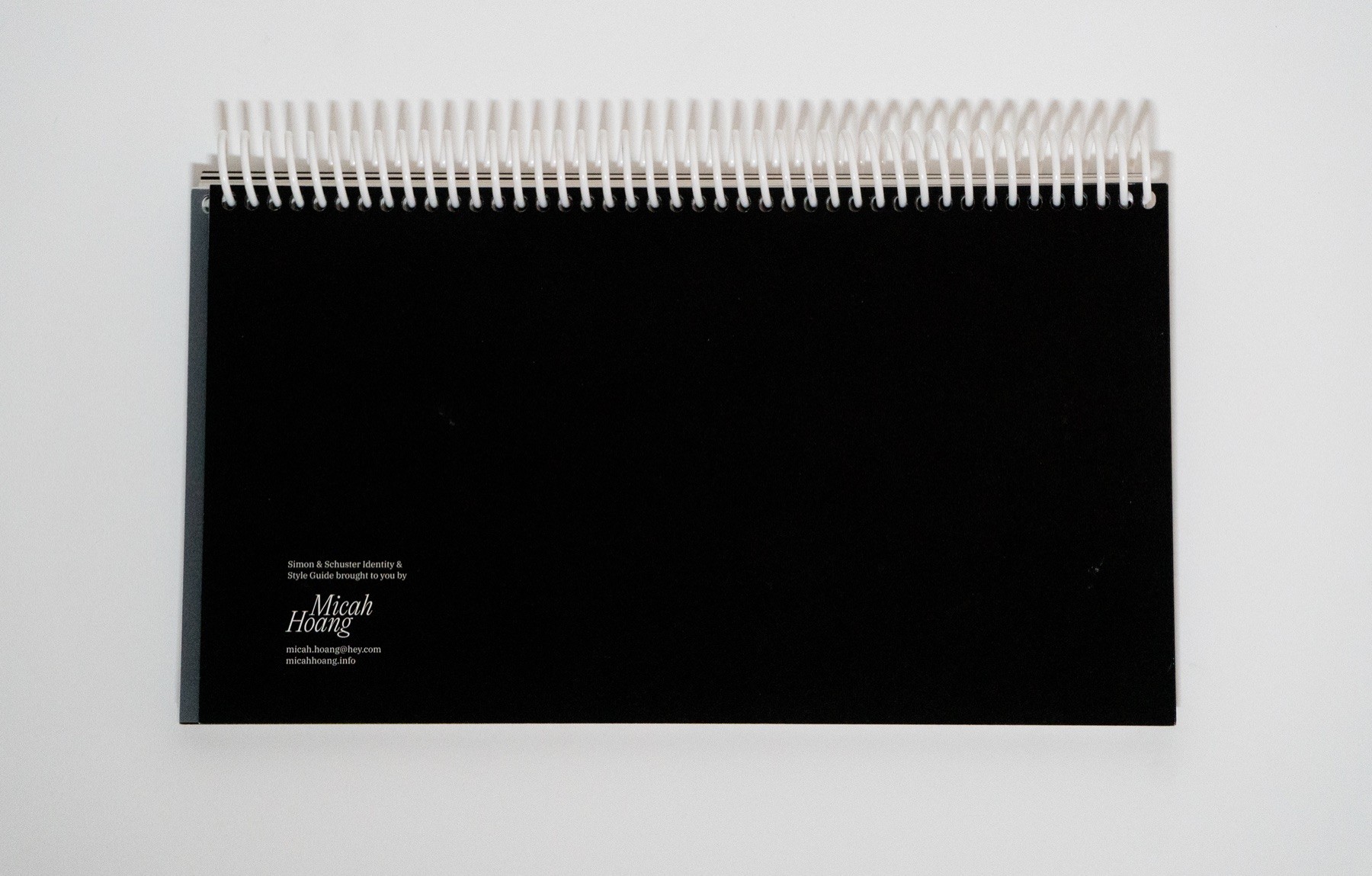
A 65-page book to govern 2,000 titles a year across dozens of imprints. These spreads show the load-bearing rules: the imprint lockup, the signature-collaboration system, the grid that holds both. The rest of the book just applies them.
Brand Architecture


Three divisions, more than 50 imprints. I paired the new wordmark with each imprint logo instead of replacing it, so every imprint retains its identity while still reading as part of one house. The hardest cases were imprints with strong marks of their own. Each lockup had to defer to those marks while still signaling the parent brand.


Digital

I built the storefront to beat the marketplaces on the one axis they can't match: curation. Independence only counts if a reader feels it while browsing, so the experience leads with editorial spotlights for small and diverse authors.
Event

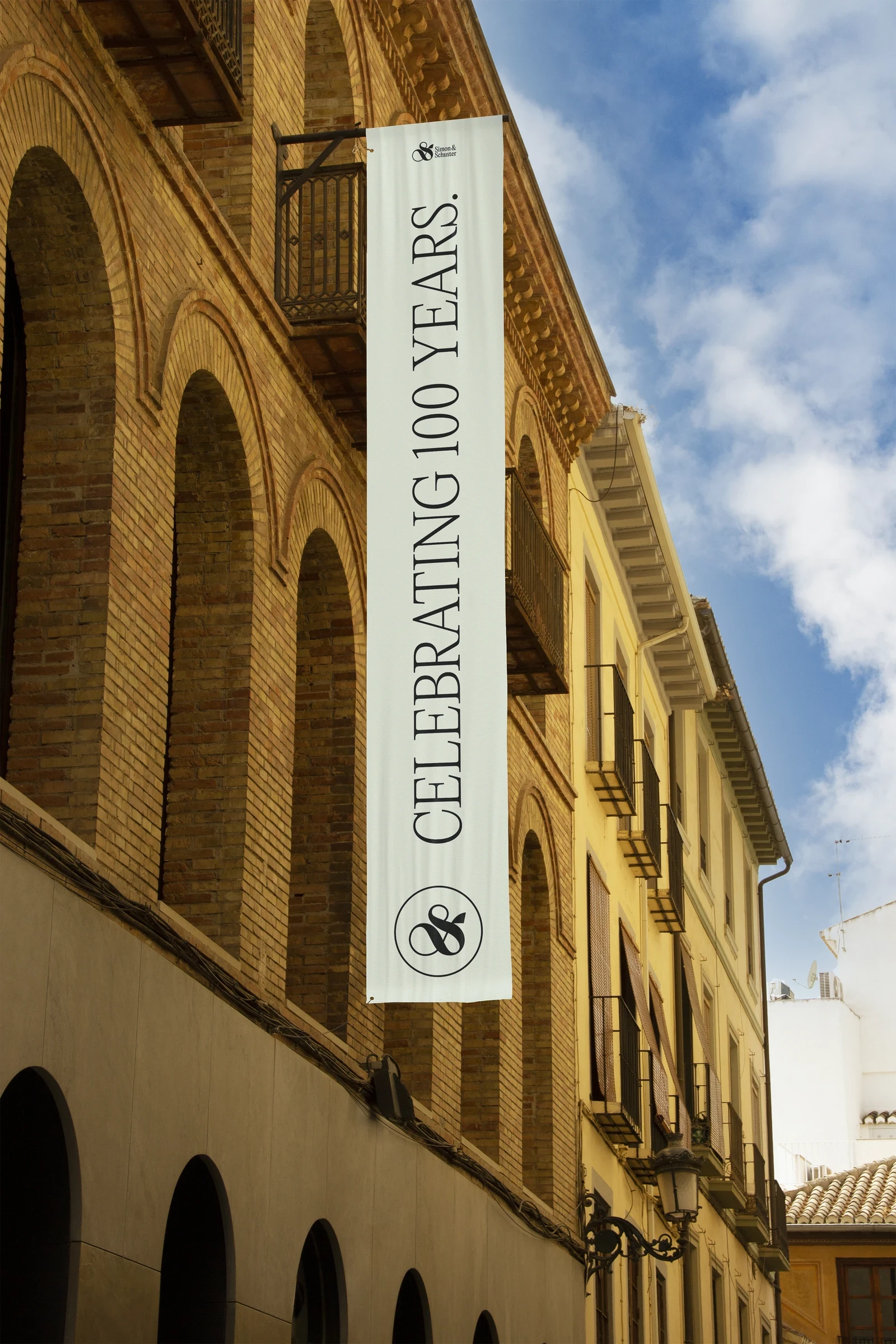


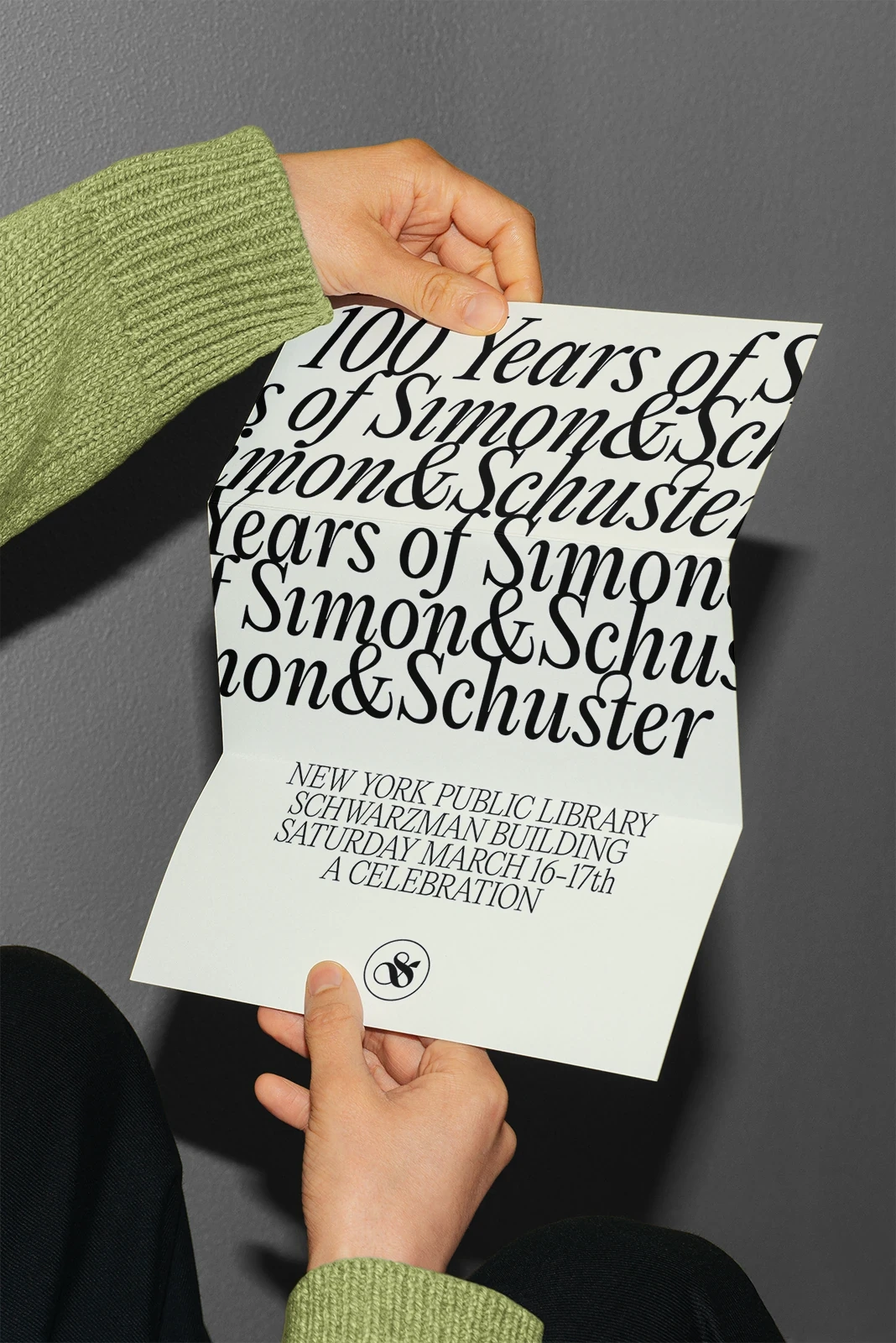
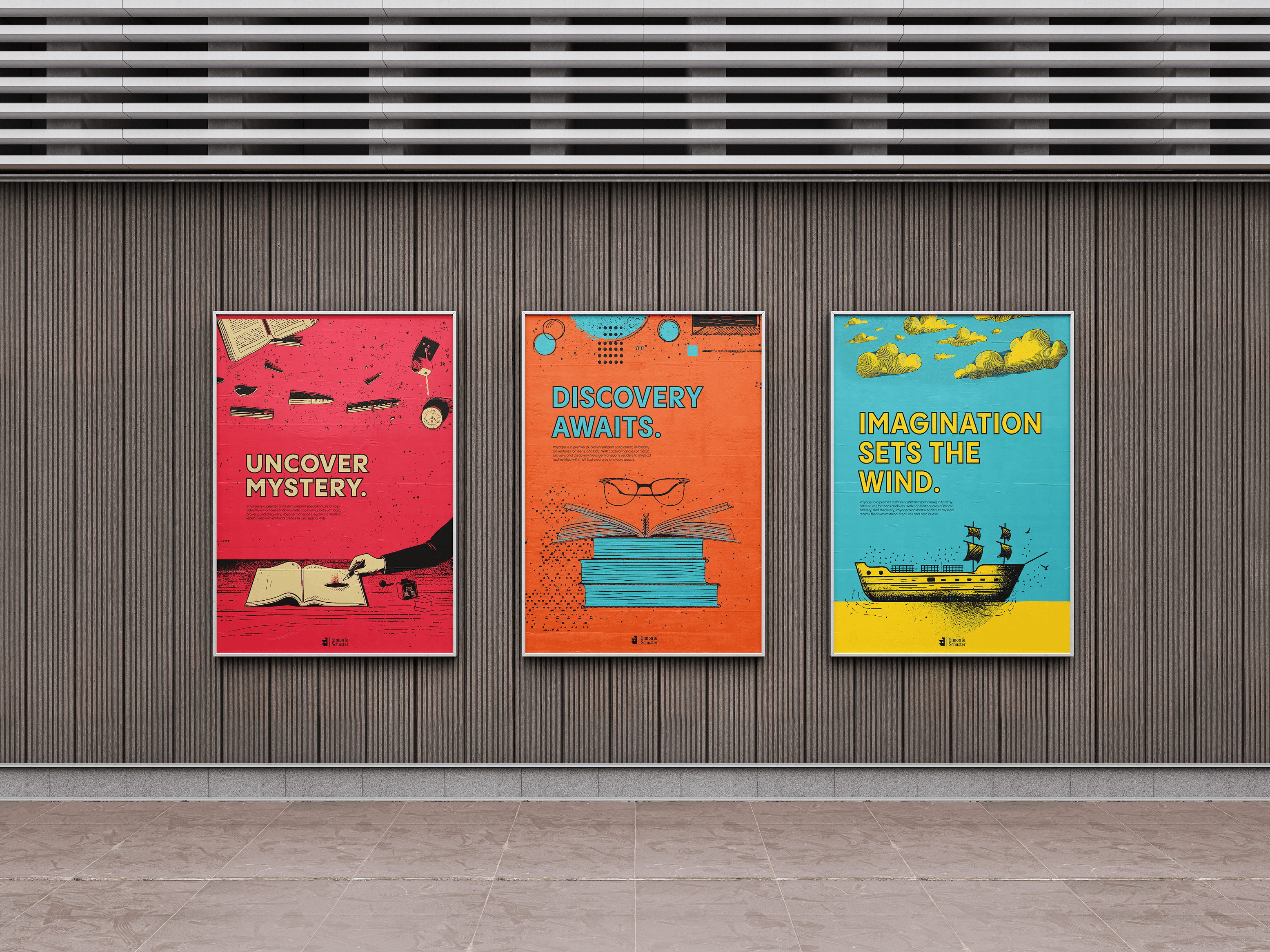
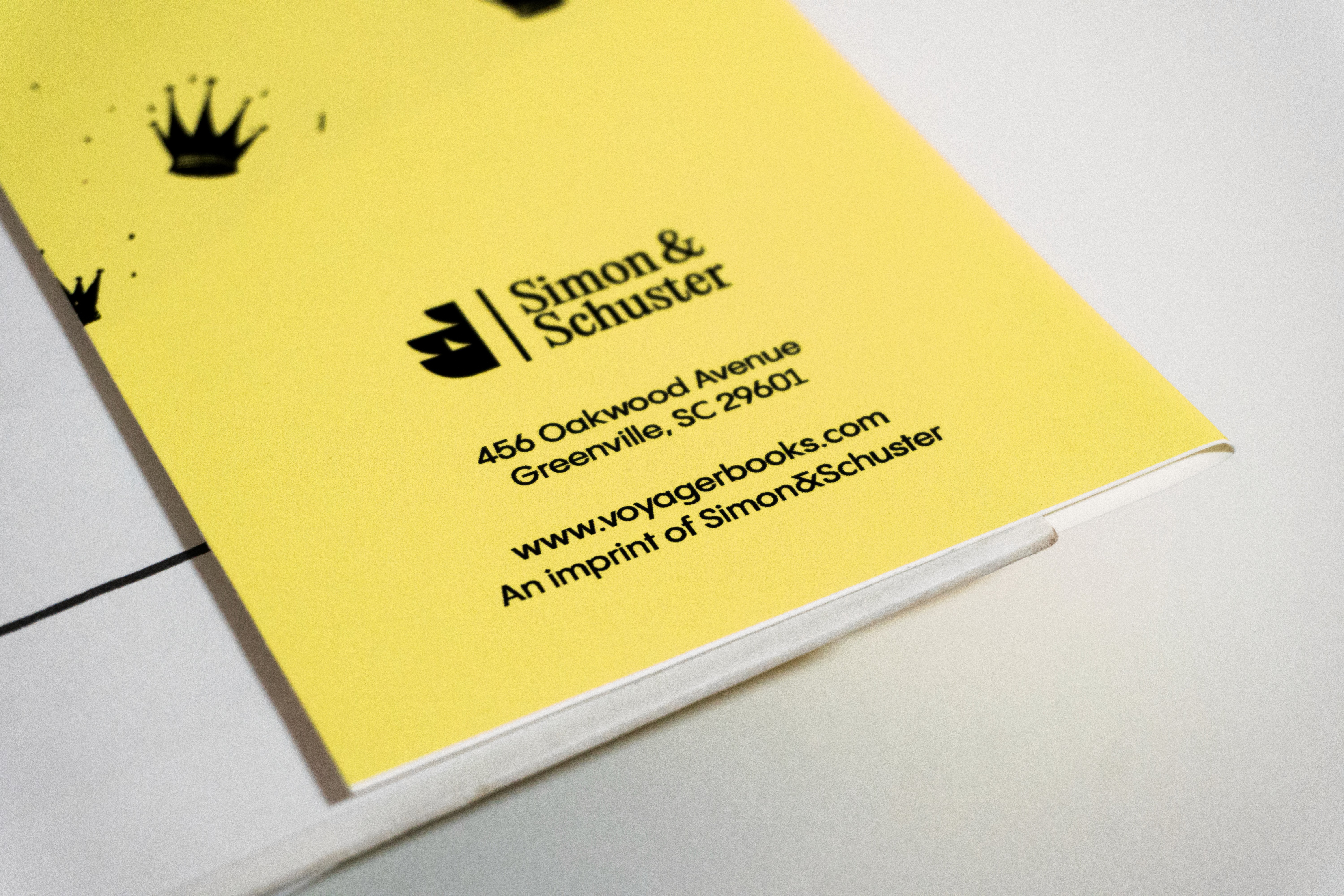
I launched a new Children's imprint, Voyager, to stress-test the architecture. It uses the lockup rule with no exceptions.
Collaborations
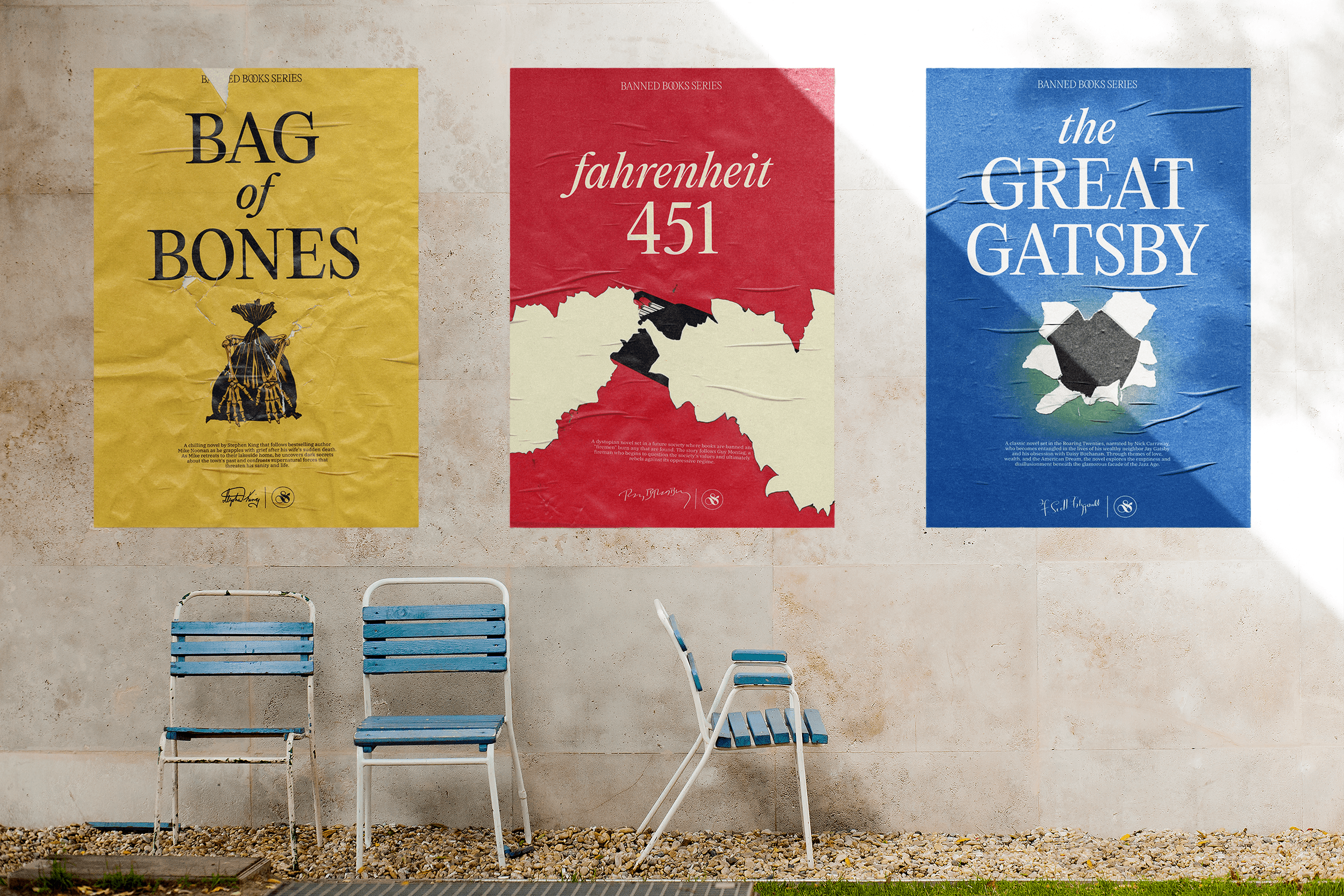
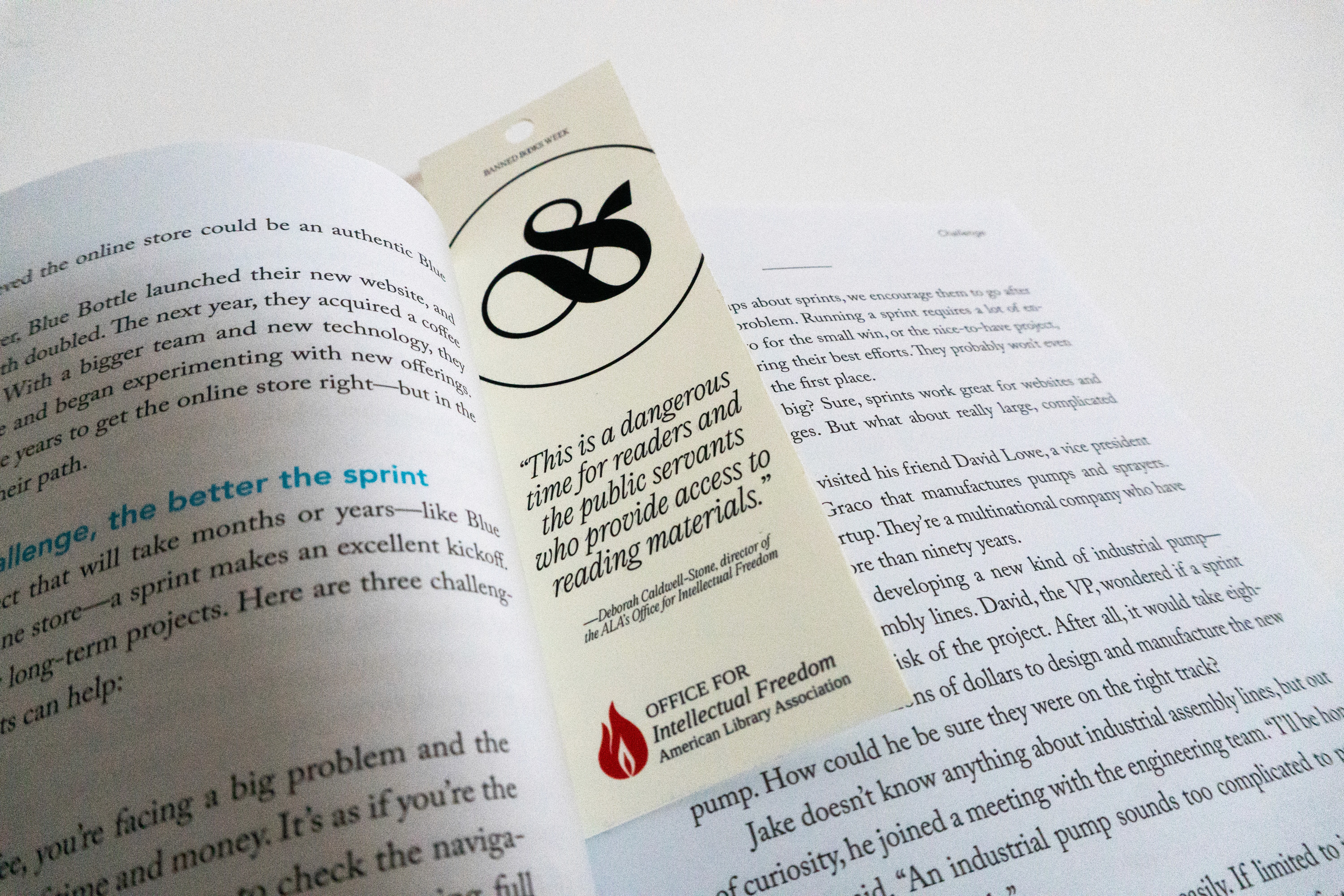
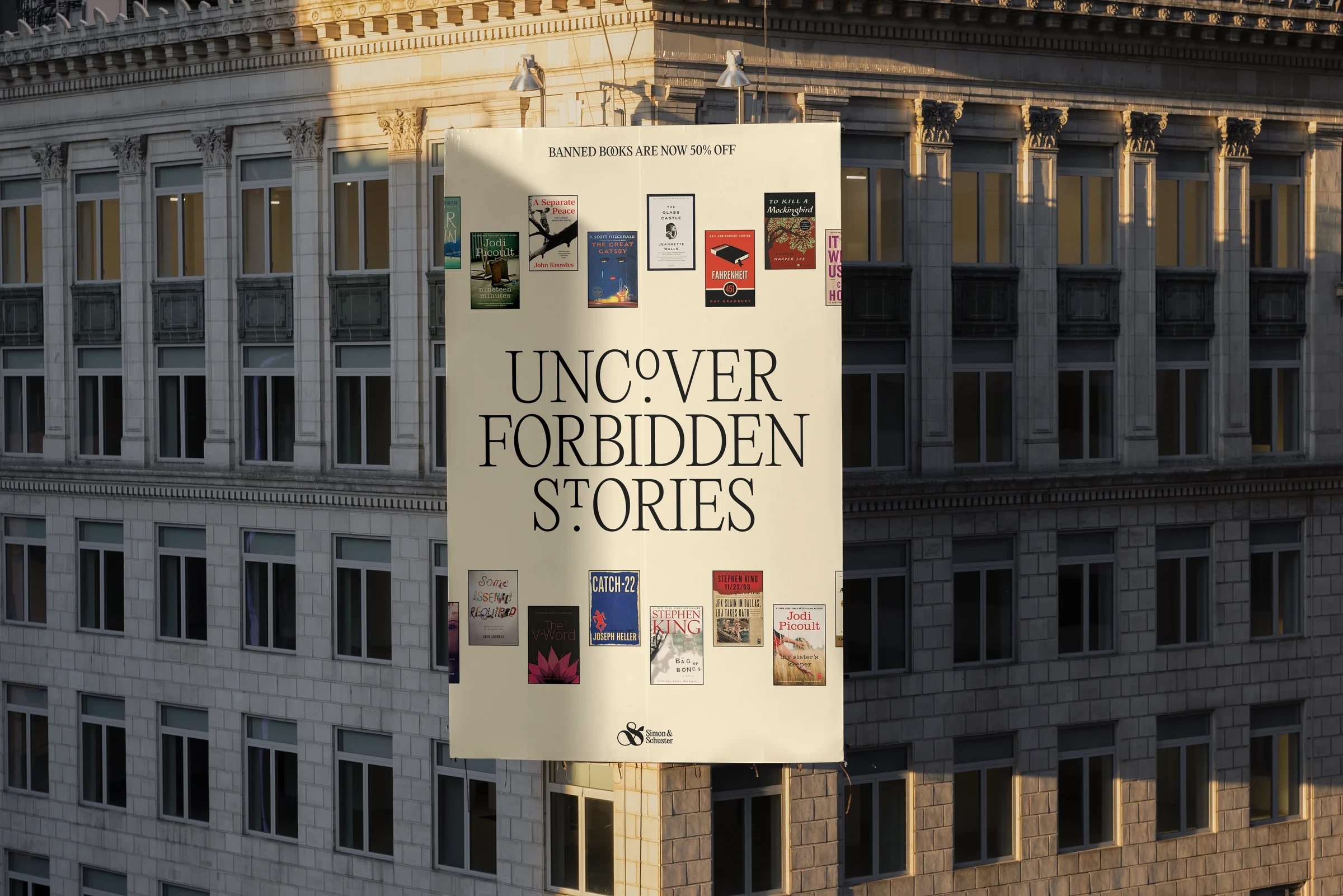
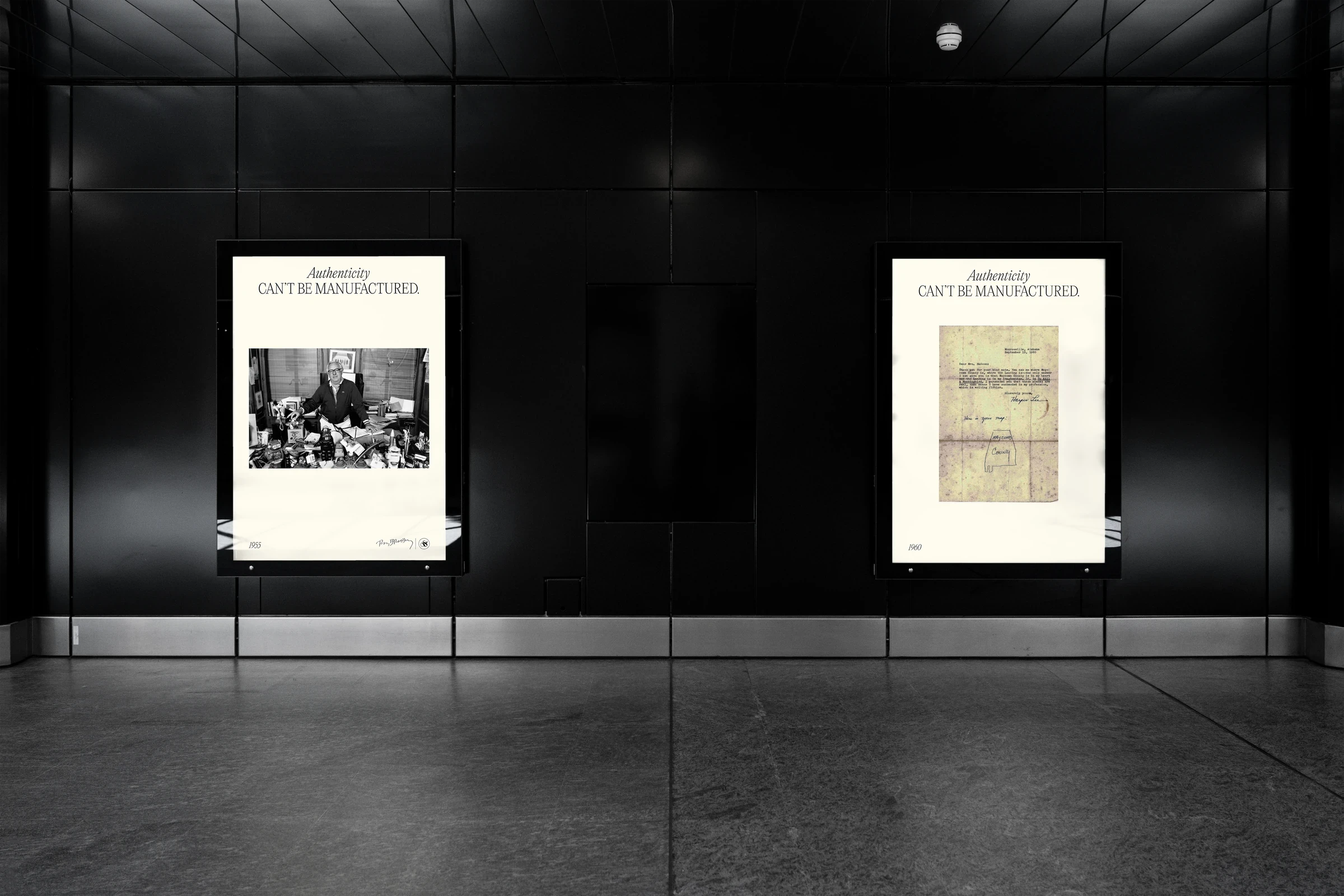
I designed a campaign with the ALA's Office for Intellectual Freedom that offered historically banned books at 50% off. Each release received a custom poster that blended the title's identity with the institutional mark. A publisher built on independence should speak loudly for the books others tried to remove.