
/ About the project
National Park Playing Cards started as a passion project and became a small business I still run today. What began as a tribute to U.S. national parks earned a place on the shelves of more than 200 stores nationwide, including REI and six national park visitor centers. I designed every part of it: the cards, the box, the brand, and the storefront. Then I funded it on Kickstarter, built the business around it, and pitched it to retailers myself.
/ INDUSTRY
Nature
/ SCOPE
Packaging, Product
/ Credits
Client: Self-Initiated Proposal
Founder and Designer: Micah Hoang
Photography: Keaton Wong, Ethan Hosford
/ Year
2019
The Problem

The System

Each suit maps to a U.S. region: diamonds to the Southwest, spades to the Northwest, clubs to the East, and hearts to the South. Card values rank the parks by popularity, from aces for the most visited down to twos for the least visited.
The jokers depict two iconic North American animals: the American black bear and American elk.
Card Craft


Playability
The deck is engineered as a working deck, not a decorative object. The stock, finish, and registration are specified to a standard that lets the cards handle, fan, and spring well enough for card magic and sleight of hand, not just display.
Box Design
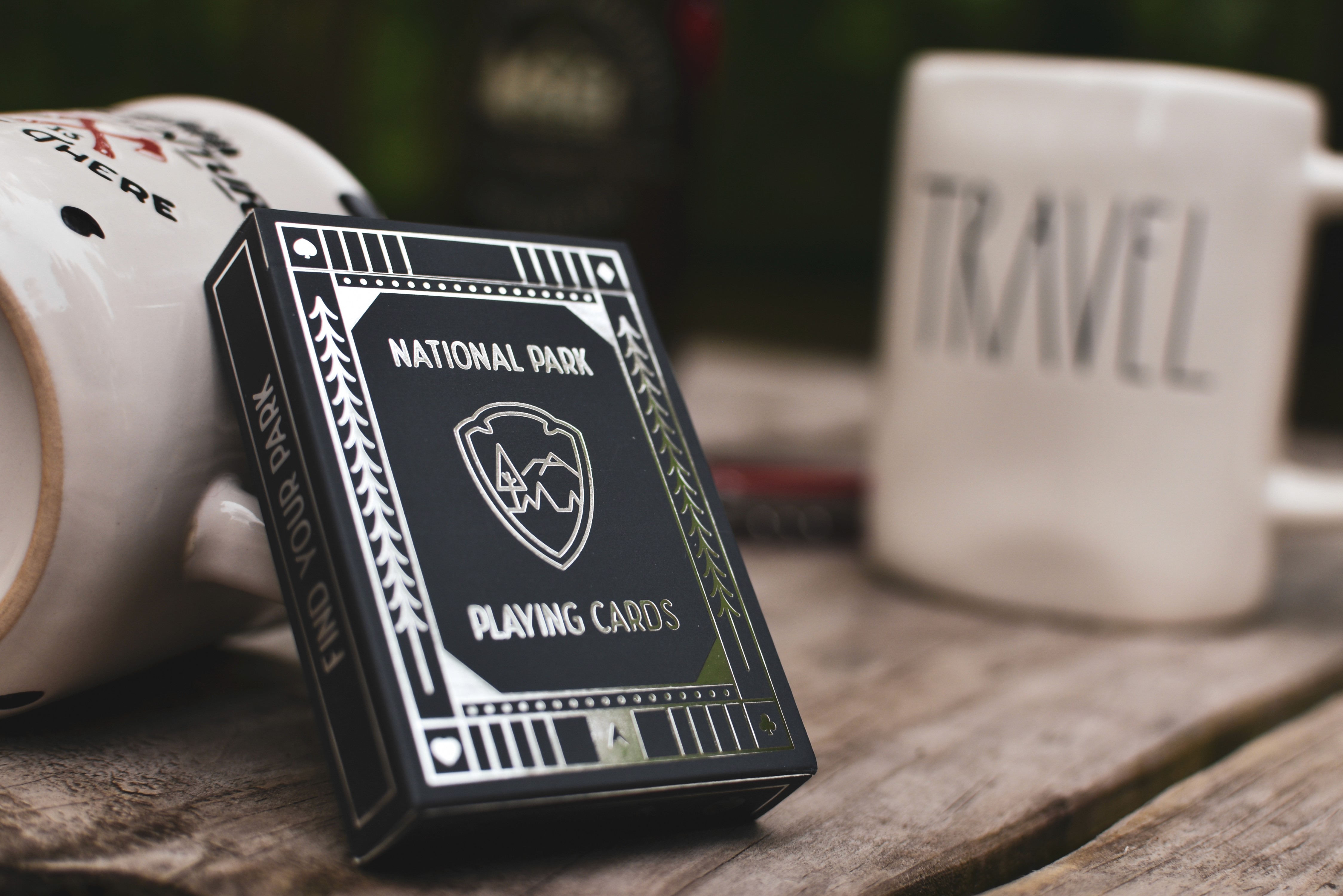


I specified silver foil pressed onto a matte uncoated box. Visitor center shelves are full of cheap, commercial decks, and I wanted this one to read as a keepsake the moment someone picks it up. The foiled National Park Service arrowhead, rendered in a retro line style, is the shelf cue that signals quality before anyone opens it.
In Retail


The cards reached more than 200 boutique retailers across 49 states, plus the visitor centers at Canyonlands, Arches, Saguaro, Mount Rainier, Shenandoah, and Zion. I placed every one of these accounts myself, cold emailing and cold calling buyers with no distributor or sales rep.
Building the Business


Driven by my love for the outdoors and U.S. national parks, I launched National Park Playing Cards in 2019 through a 30-day Kickstarter campaign that I designed, built, and ran myself. The goal was $2,500 to produce 500 decks. I raised $6,341, which let me print 1,000 decks and ship 300 to backers.

After the first run sold out, I built the direct-to-consumer business: a Shopify storefront I designed and built, plus Etsy and Amazon listings. Direct online sales were the primary revenue source in the early years. I partnered with a friend to run paid acquisition across Google, Meta, and TikTok while I owned the product, the storefront, and the brand.

As demand grew, I moved the business toward wholesale, which is where most of the revenue comes from today. I handled buyer outreach for every account myself. In 2022, REI brought the deck into its stores and told me that, at 18, I was the youngest vendor it had ever signed.