MICAH HOANG

/ About the project
Weaponized Innocence is a newsprint publication about the exploitation of children in warfare. It moves from the realities of child soldiering toward the possibility of rehabilitation, emphasizing UNICEF's role in protecting affected children and helping them rebuild their lives.
Complementing the editorial is The Pinwheel Project, an interactive bonus piece featuring pinwheels adorned with drawings by child survivors and excerpts from Emmanuel Jal and Betty Ejang. Together, the publication and pinwheel kit are built to drive advocacy and support for UNICEF's mission.
/ INDUSTRY
Human Rights
/ SCOPE
Editorial, Product
/ Credits
Client: Self-Initiated Proposal; Designer: Micah Hoang
/ Year
2024
/ RECOGNITION
Background
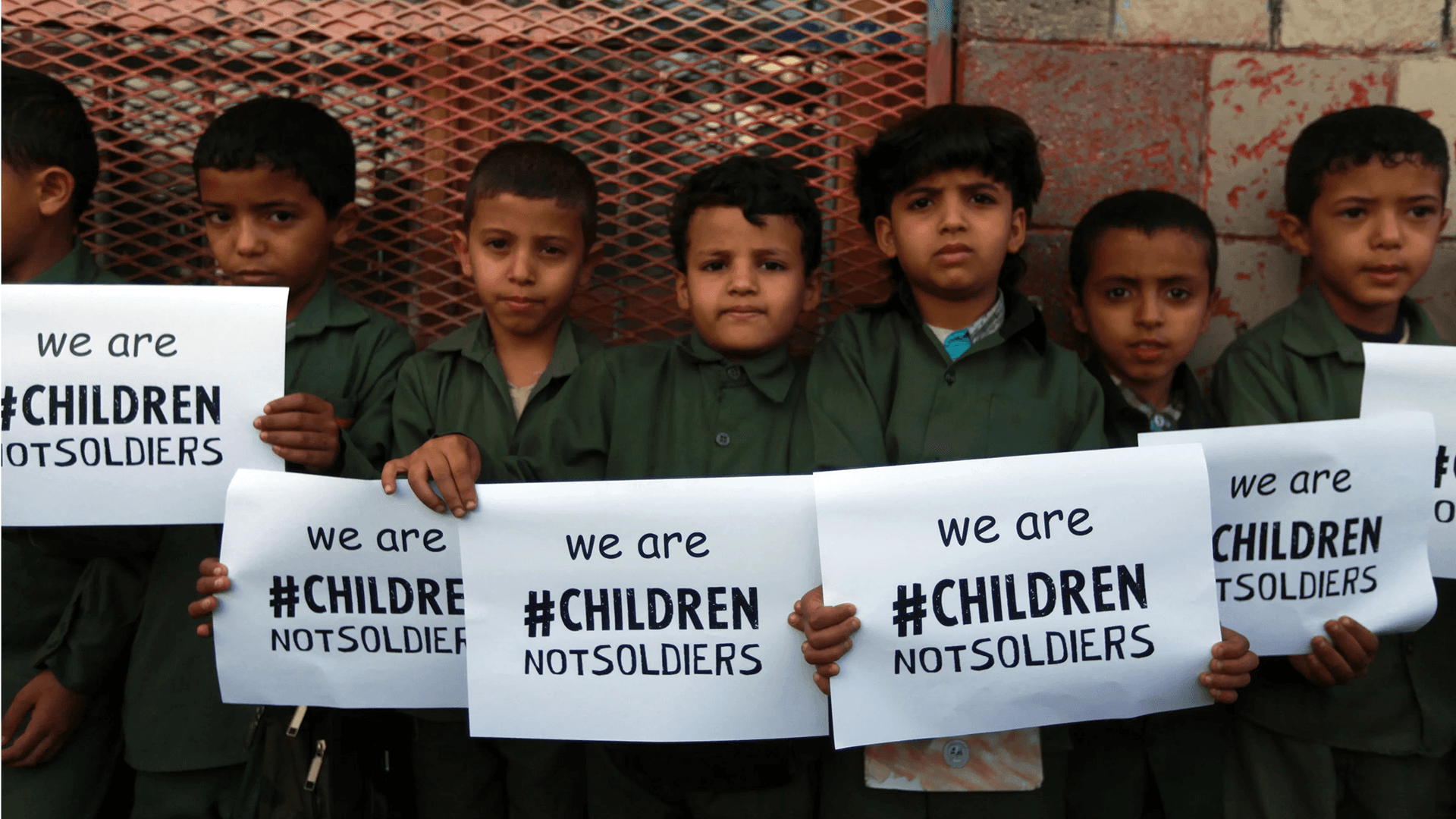

Child soldiers represent one of the most harrowing violations of human rights, with tens of thousands of children forced into warfare around the world. UNICEF has long fought to protect these children by securing their release, offering rehabilitation, and advocating for systemic change.
Cover
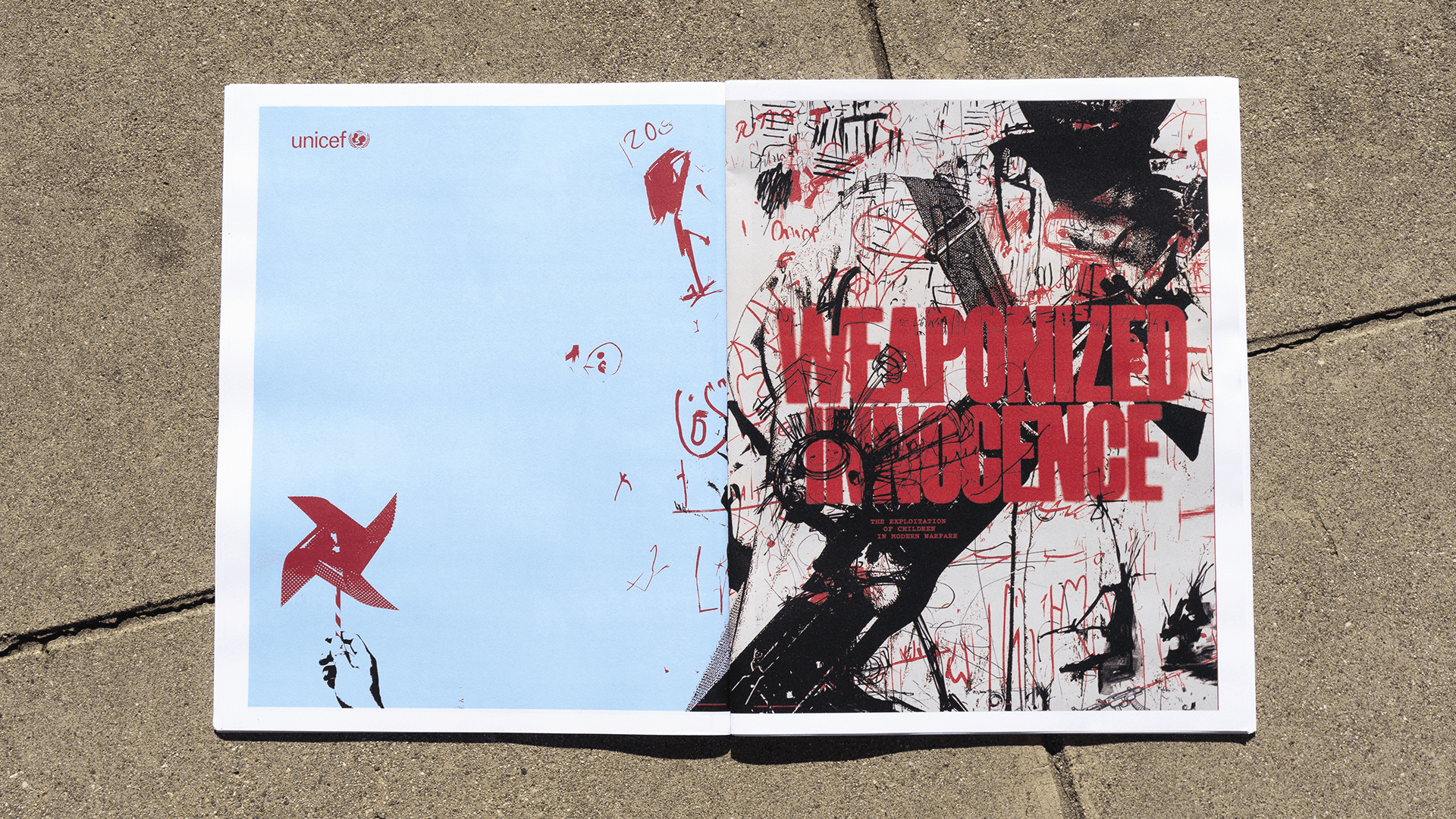

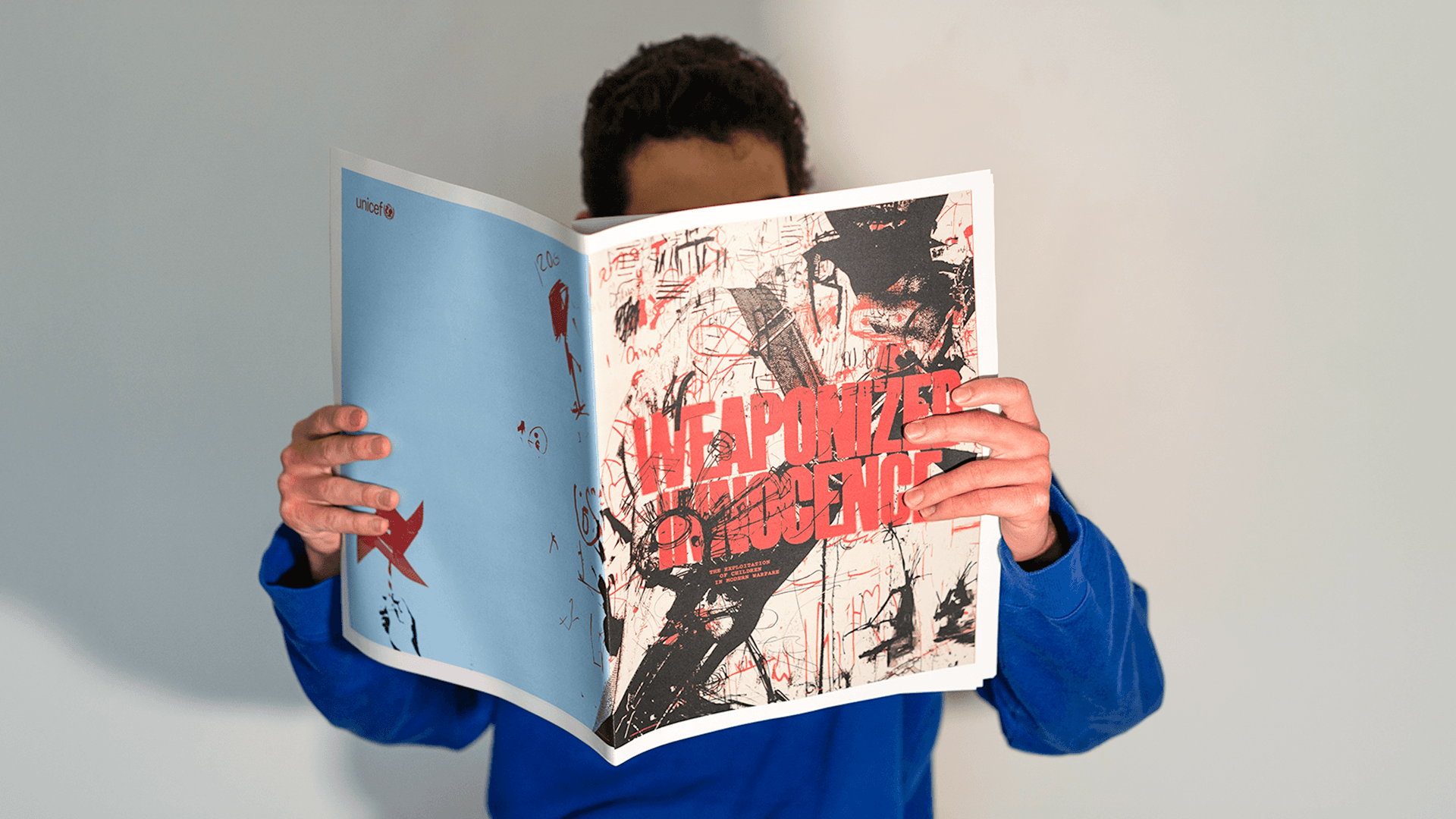
The front cover captures the chaos and horror of child soldiering, using fragmented visuals to convey the brutality of the issue. In contrast, the back cover introduces the pinwheel as a symbol of renewal and possibility.
Interior

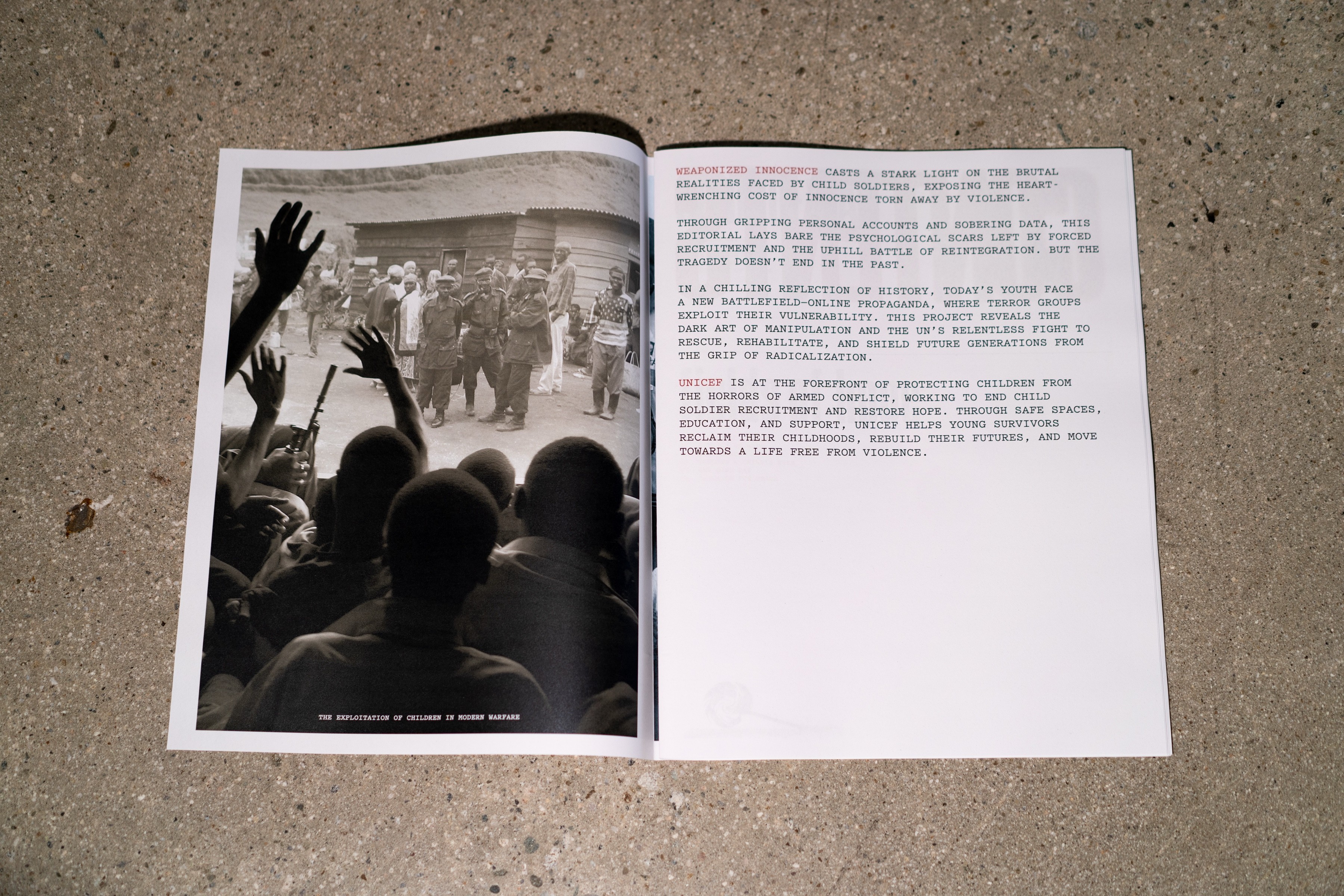
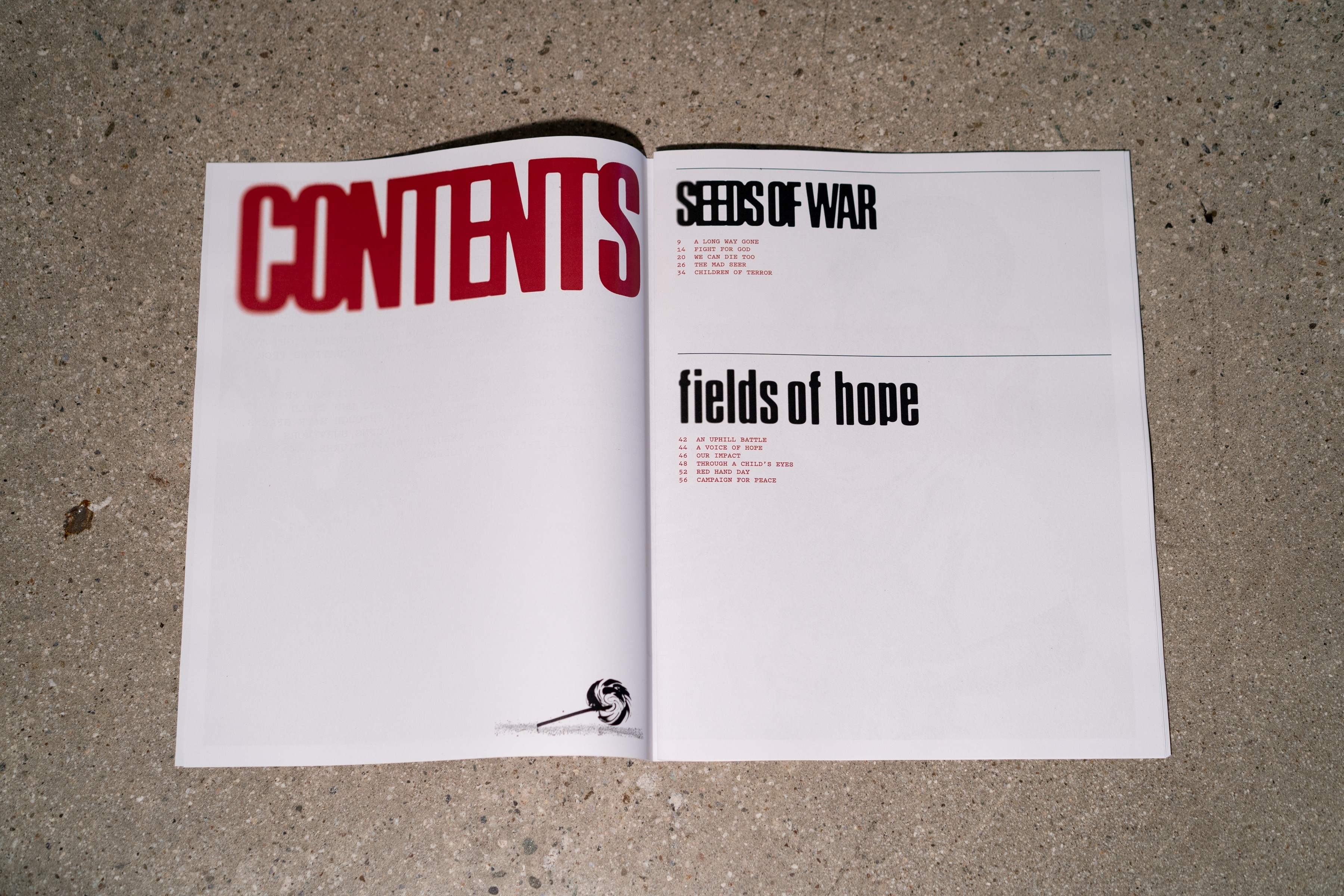
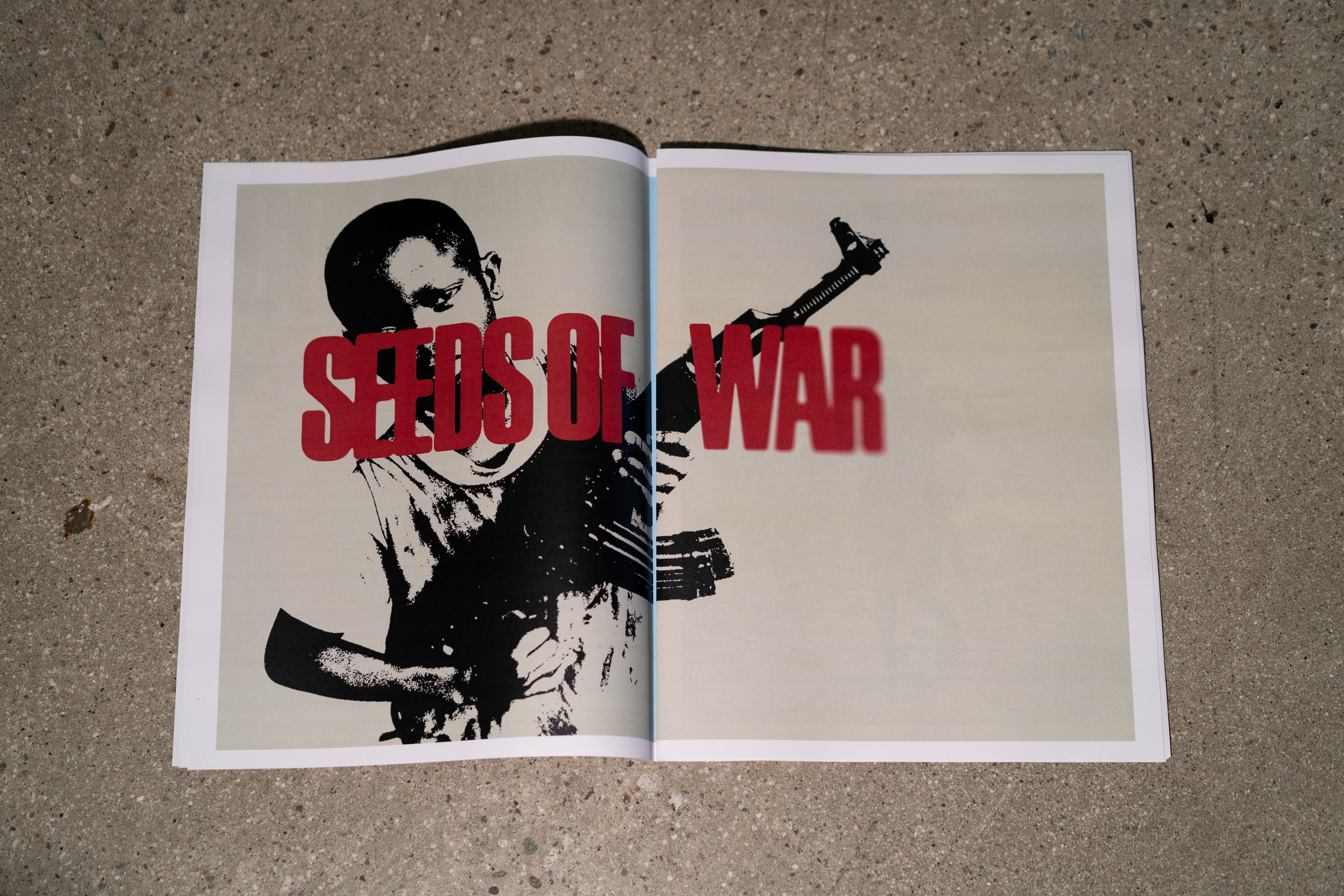
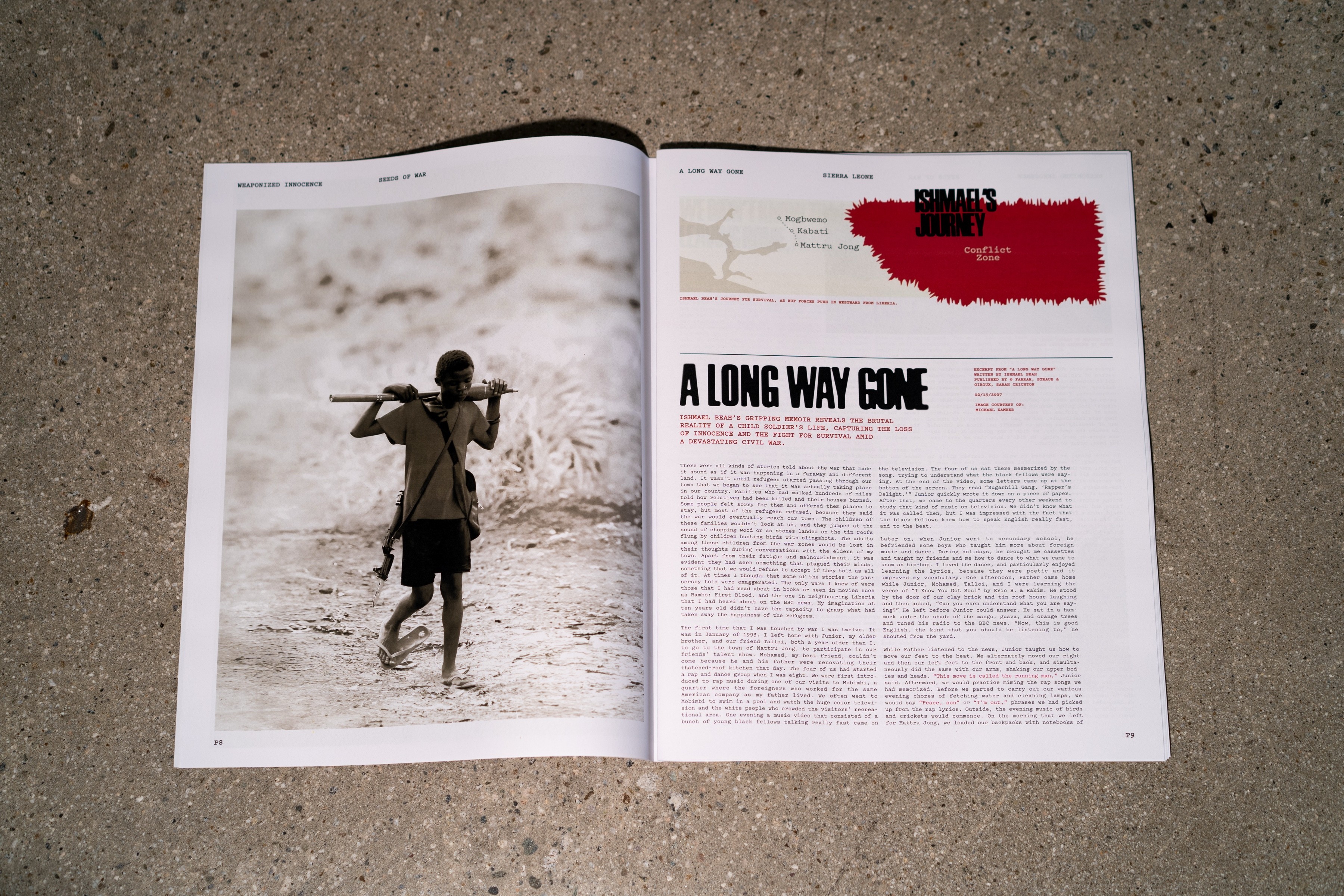
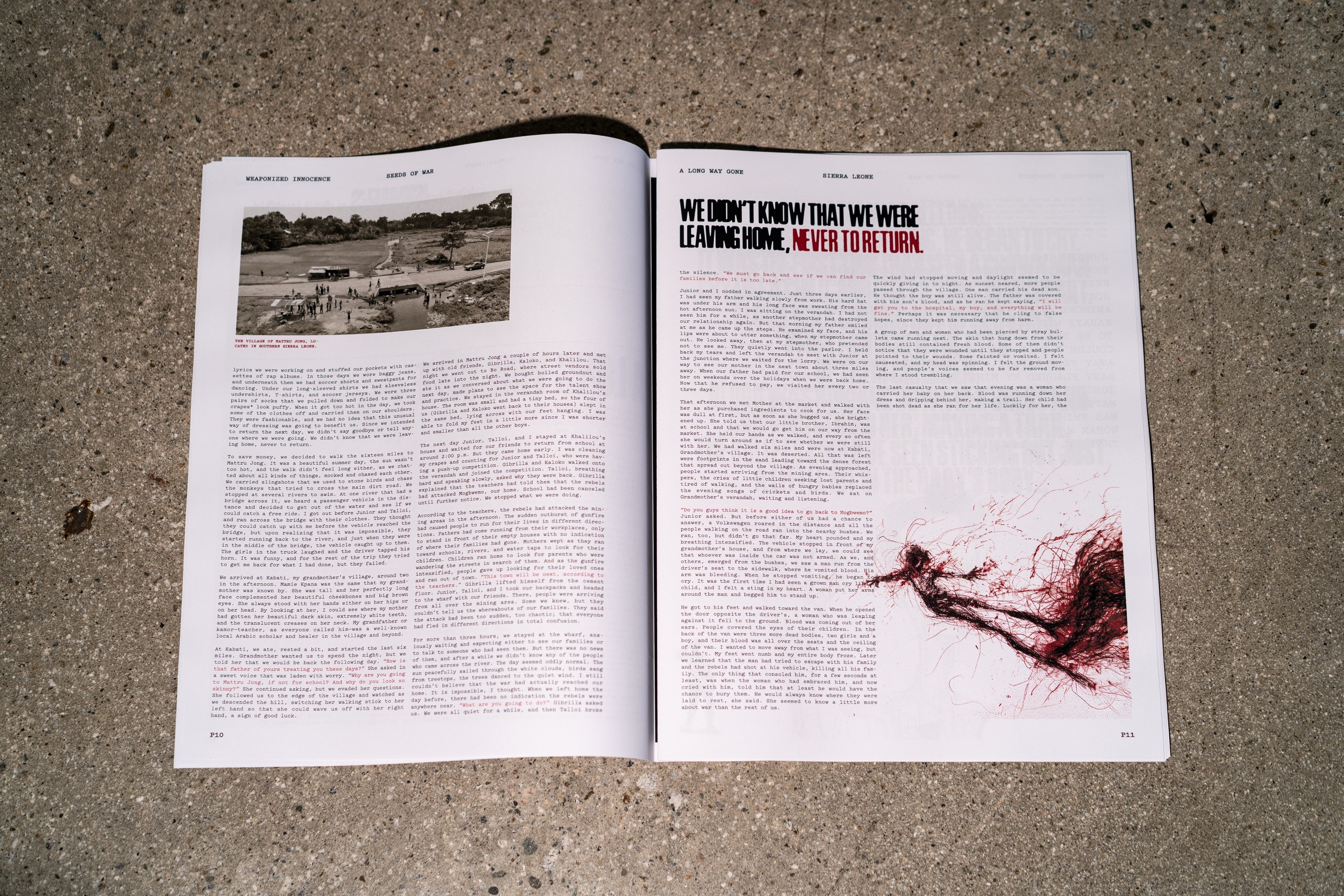
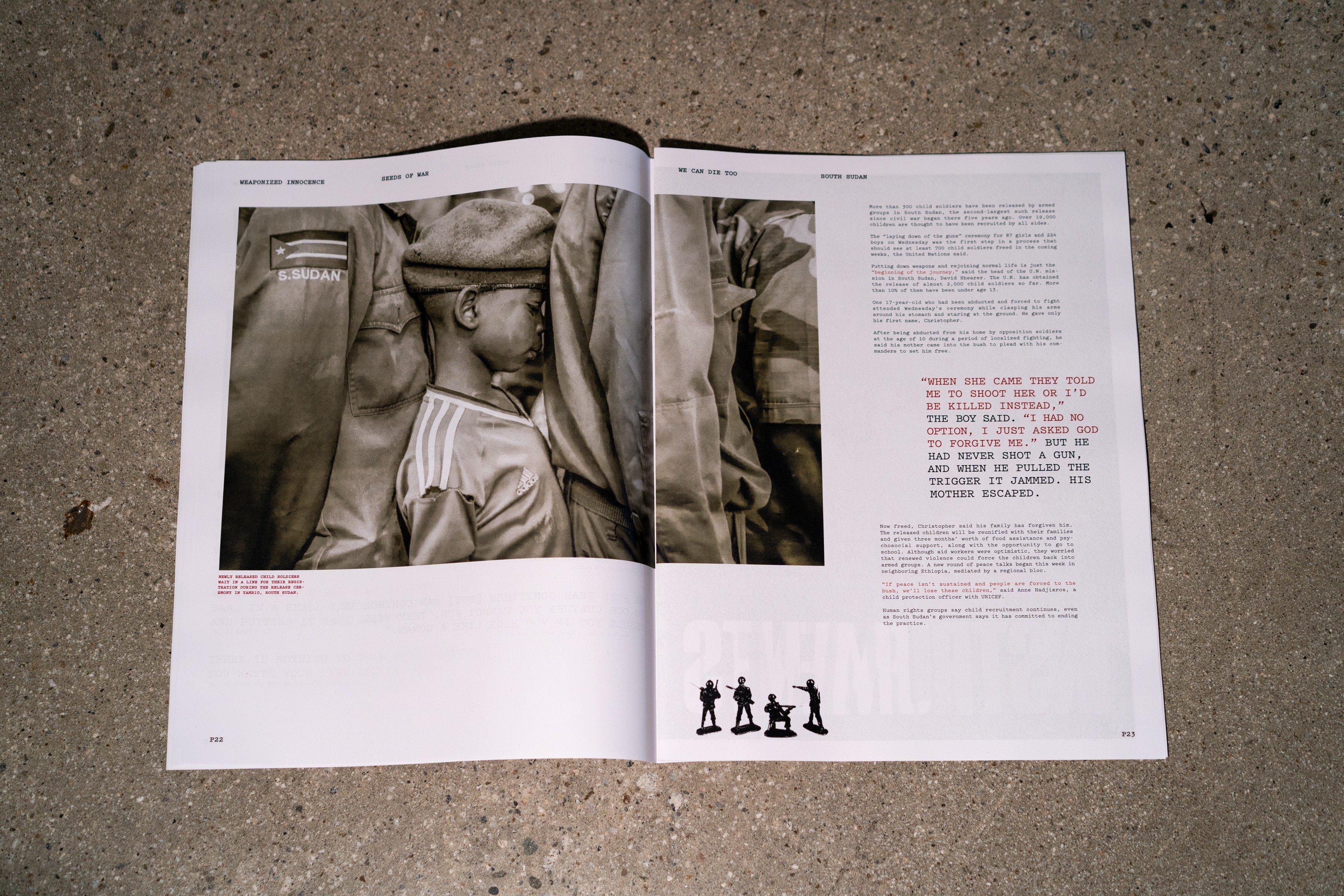
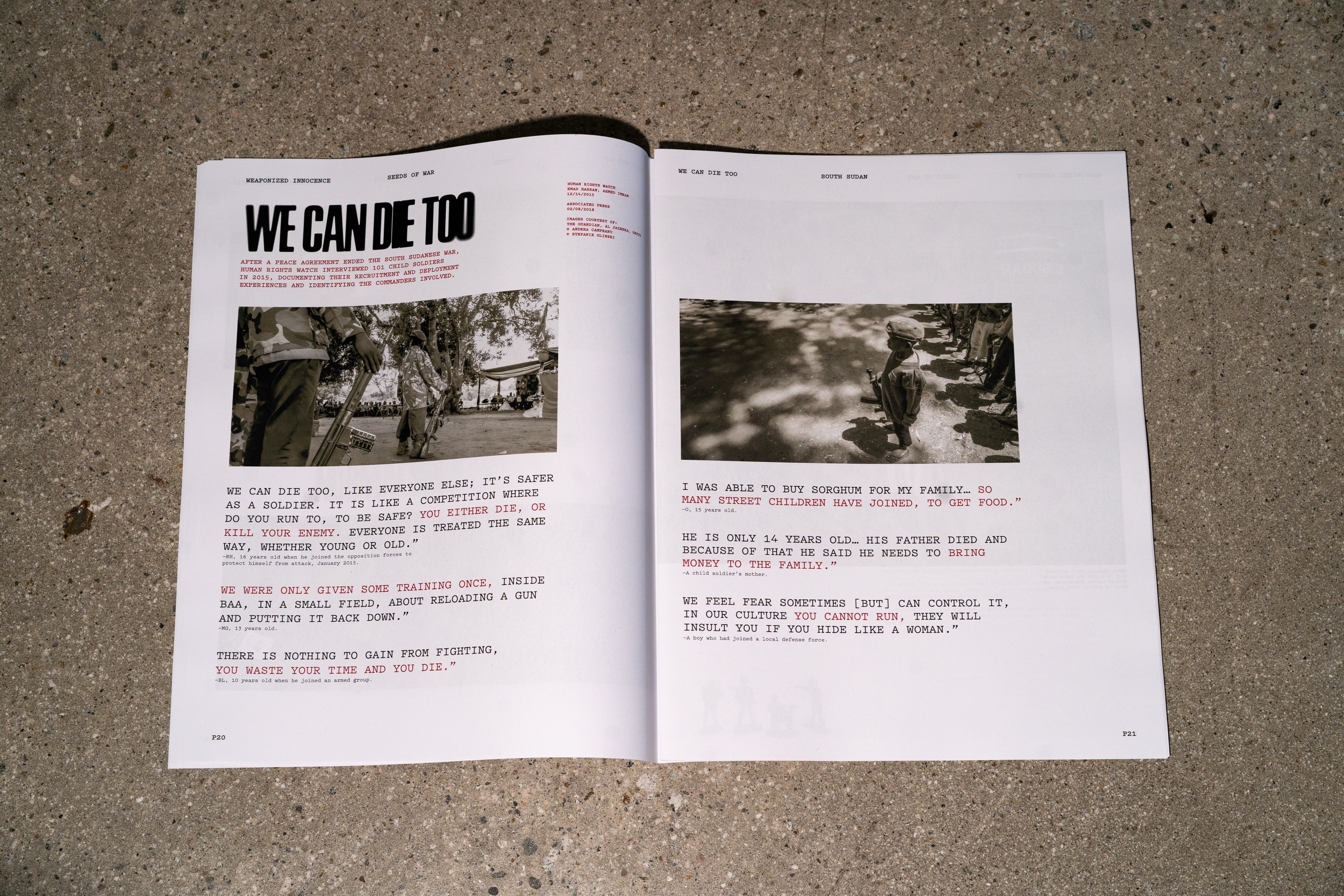
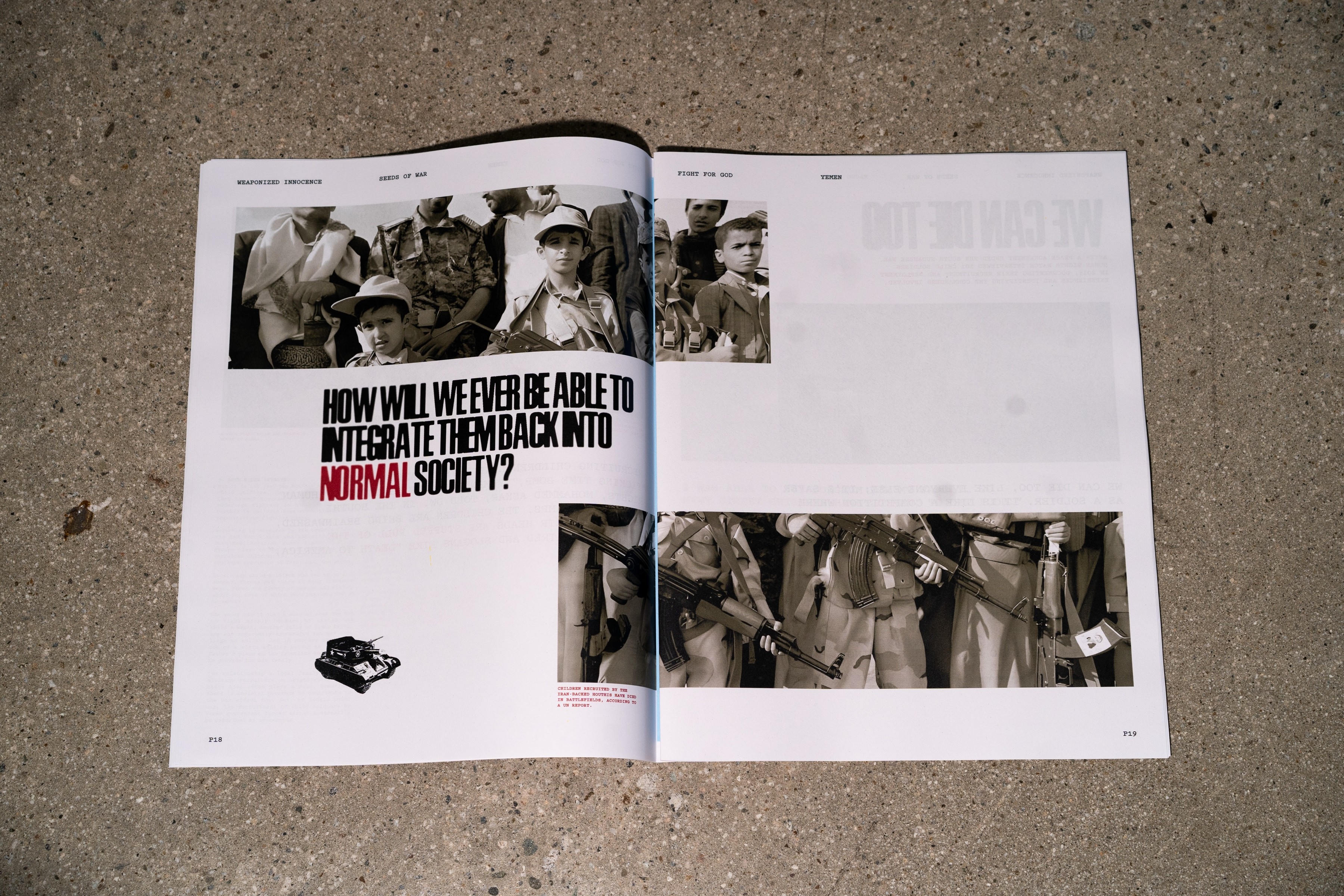
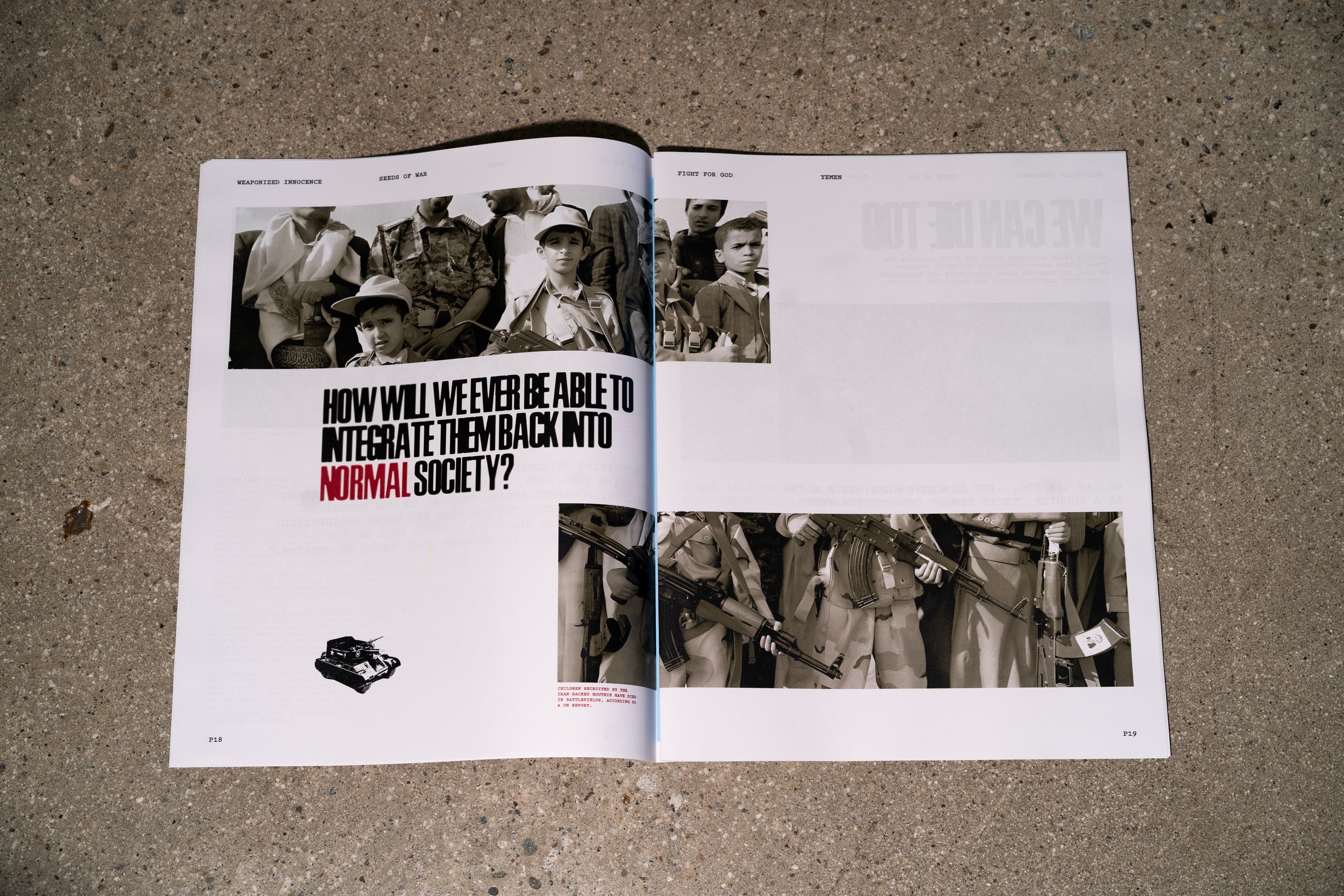
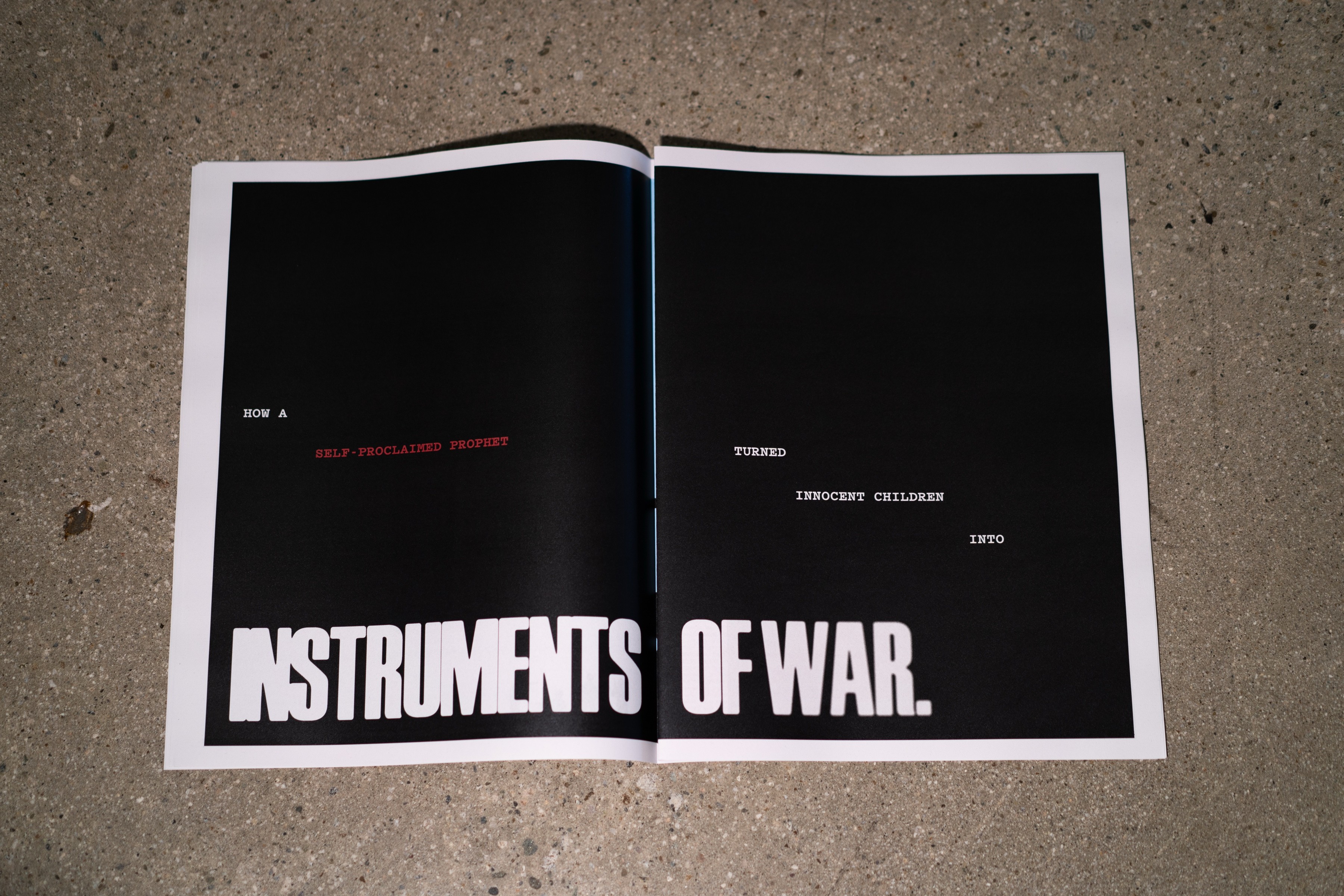
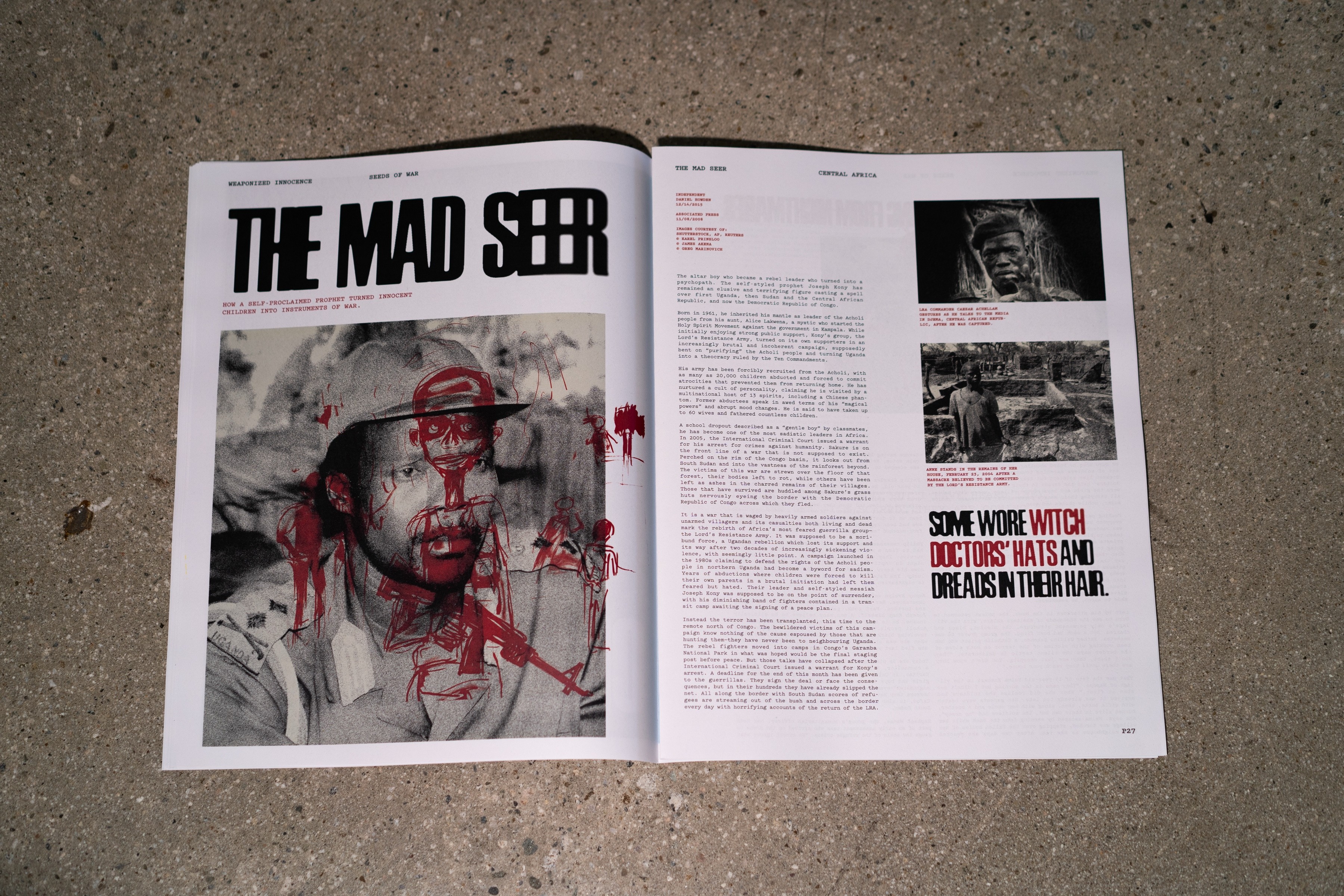
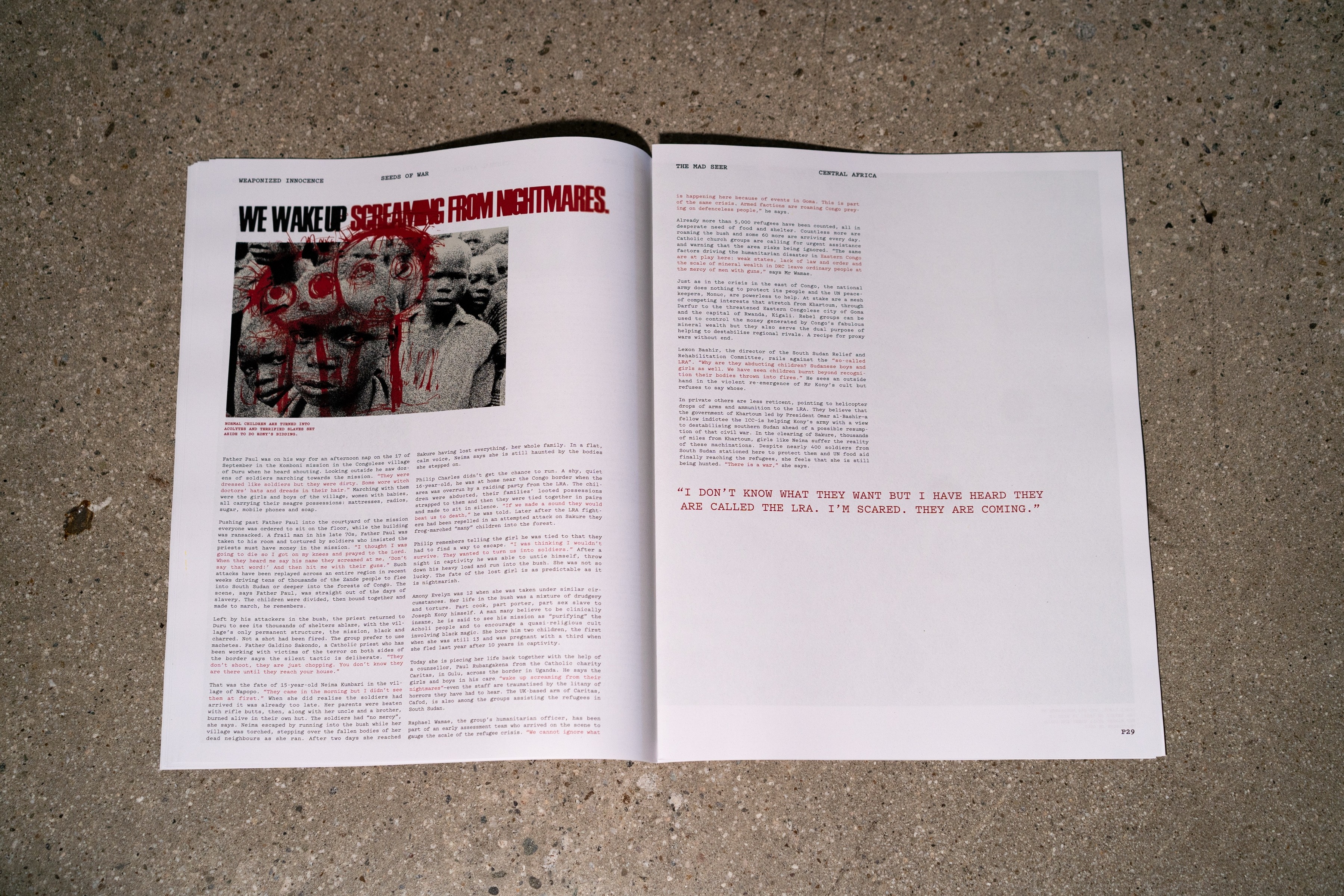
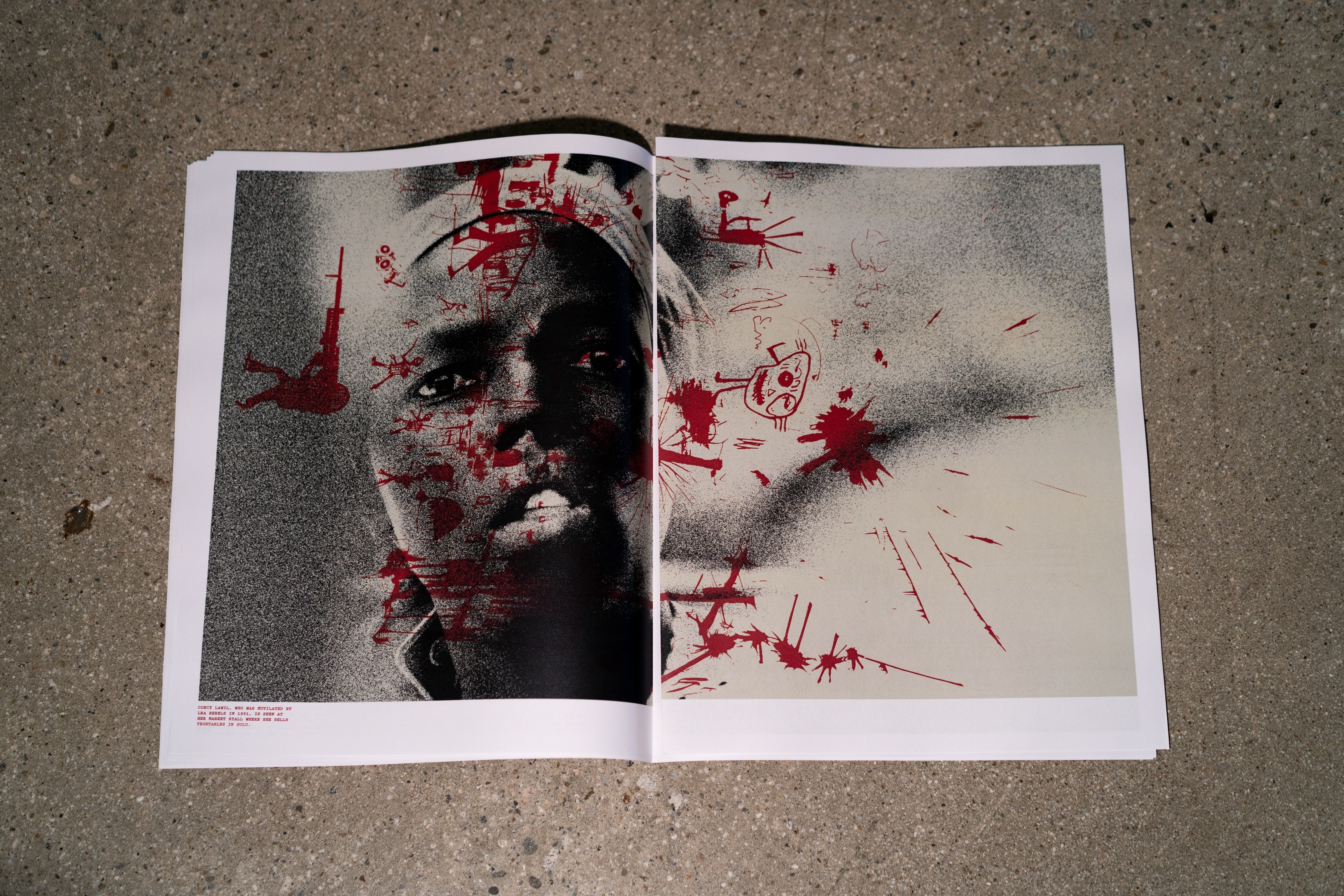

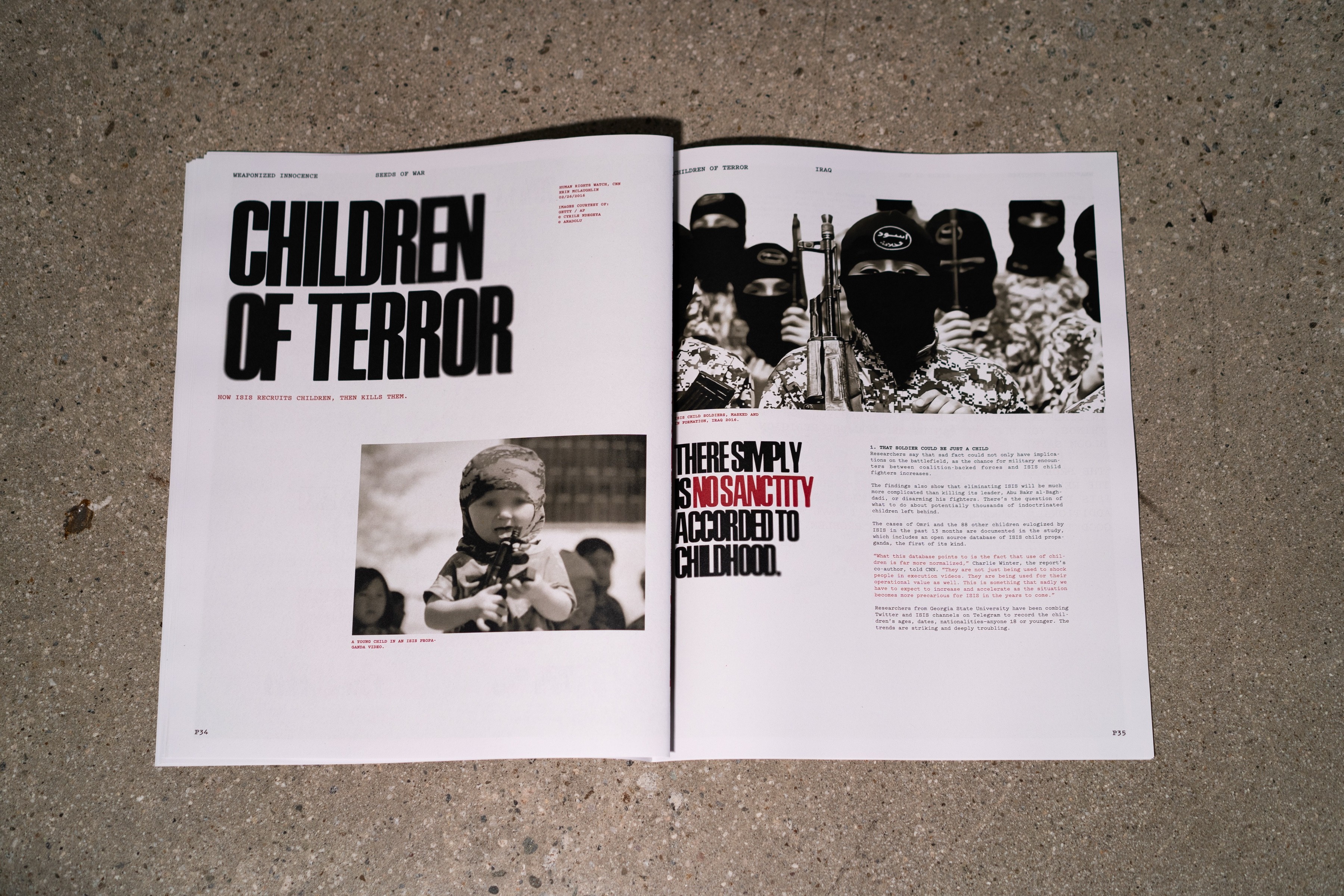
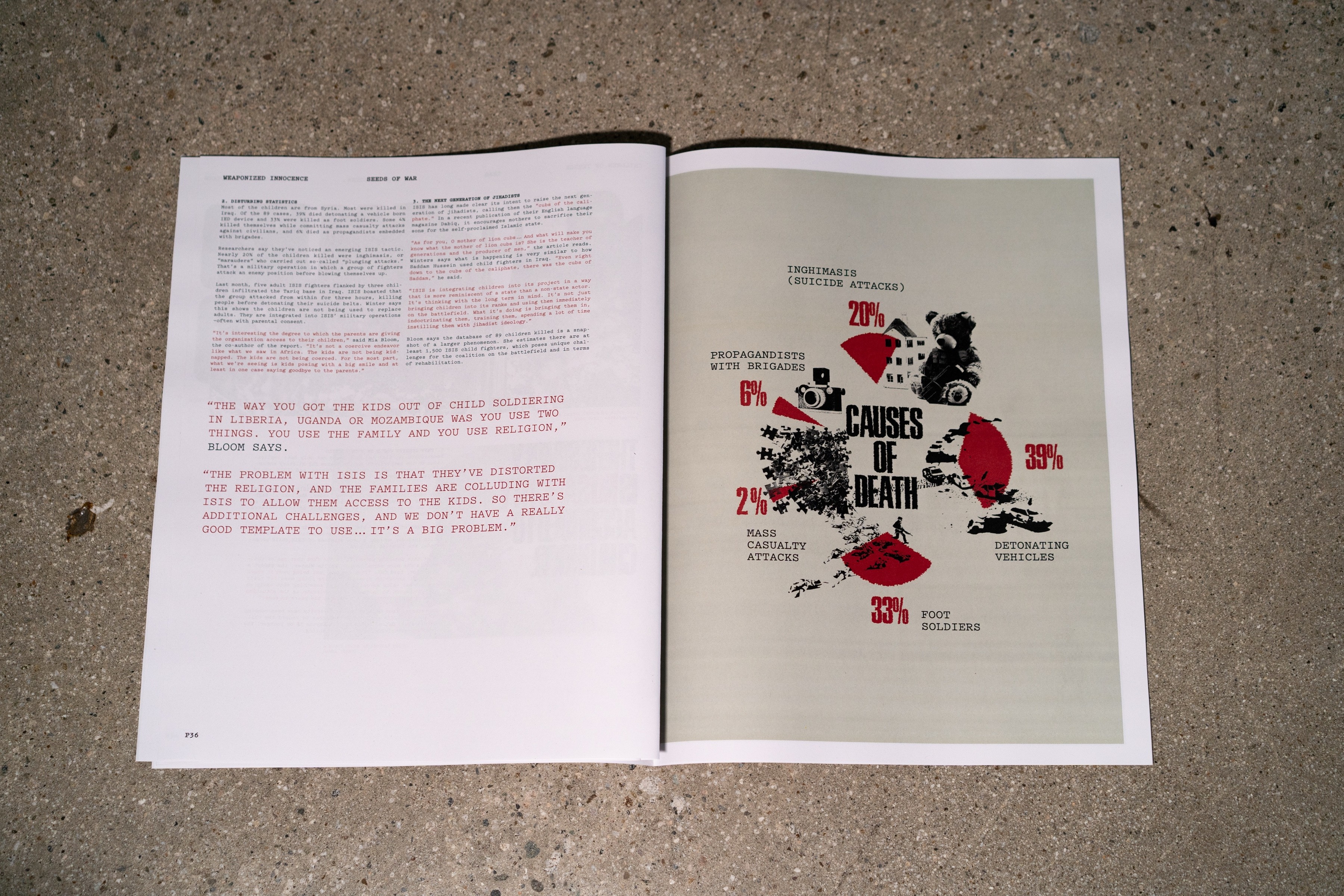
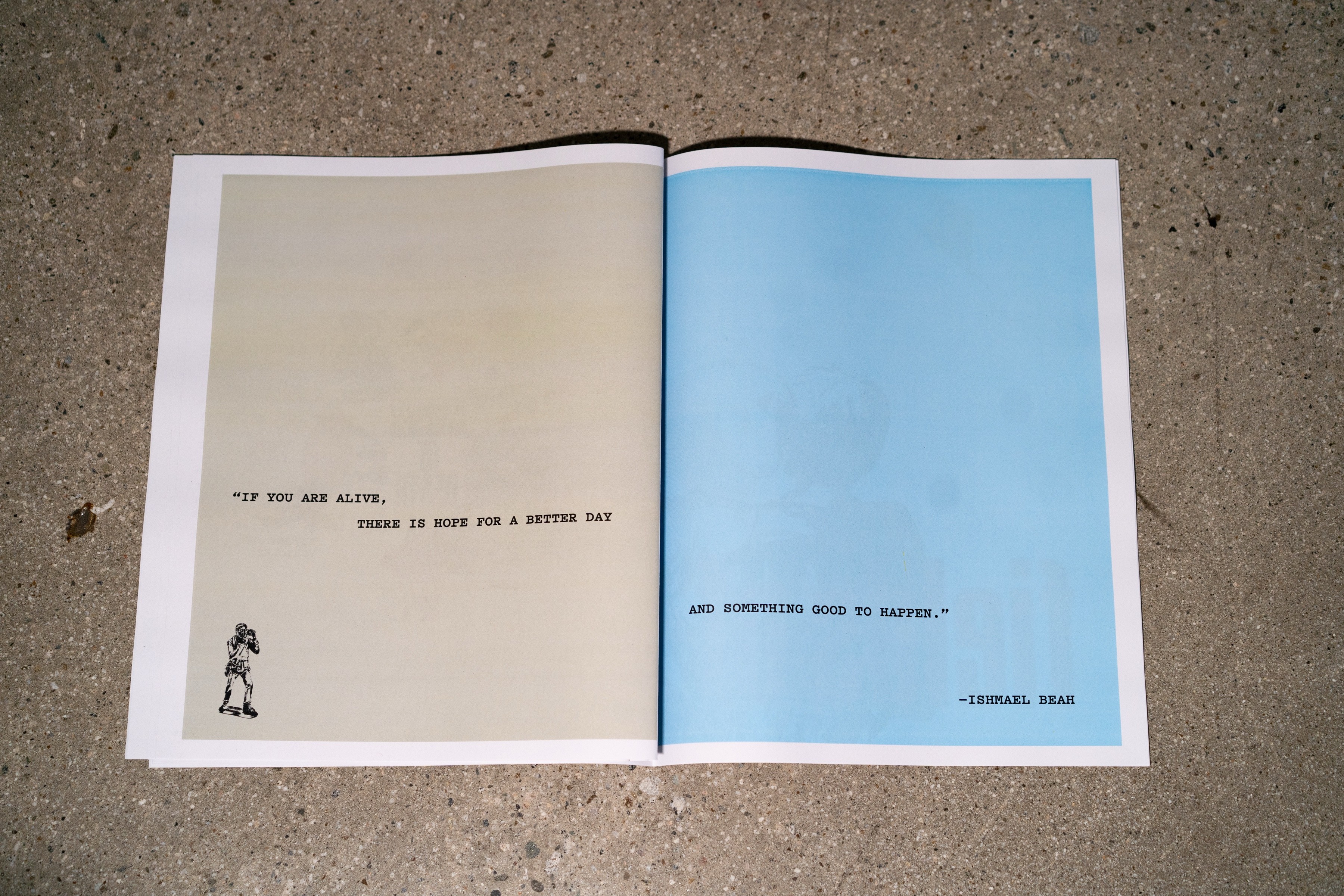
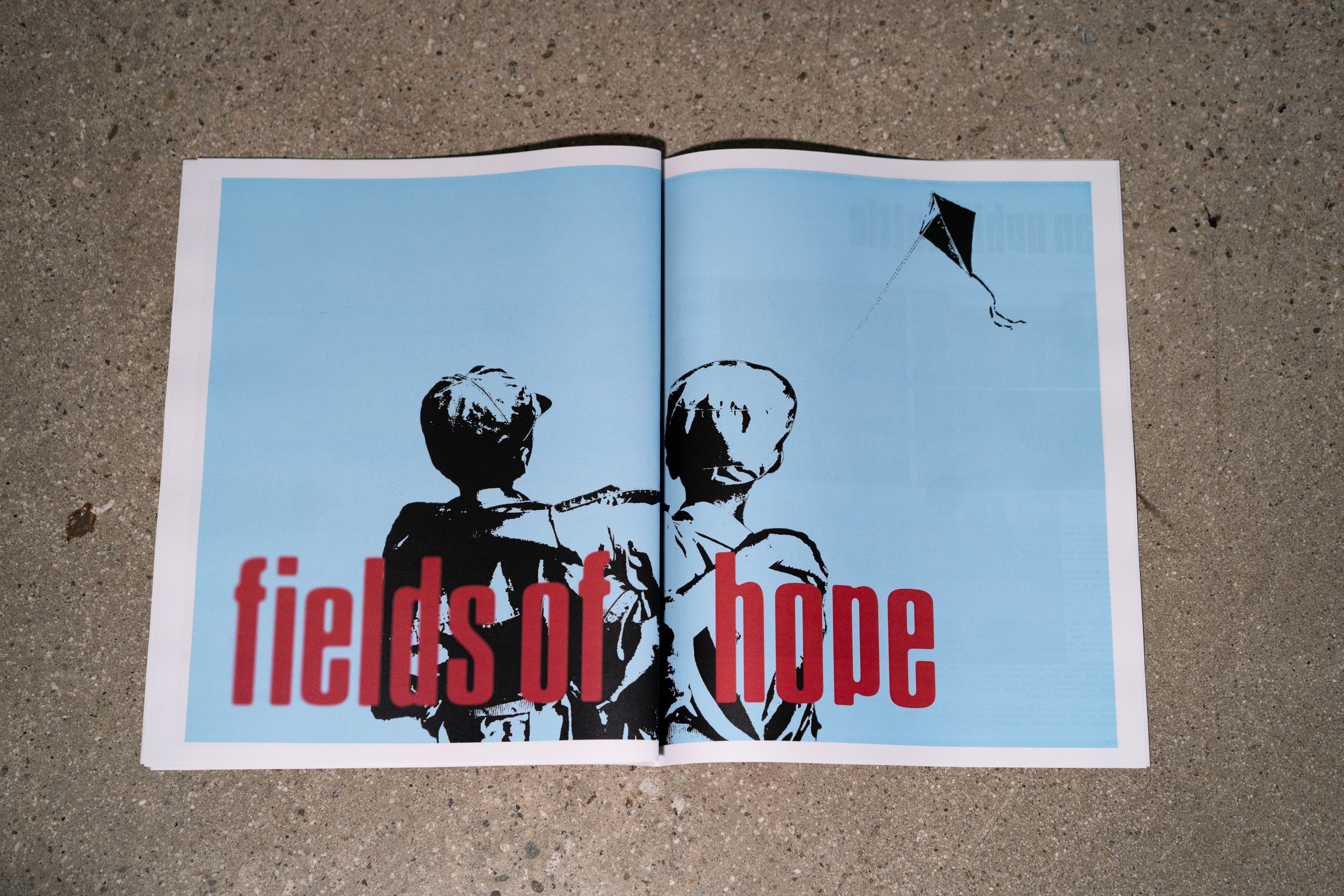
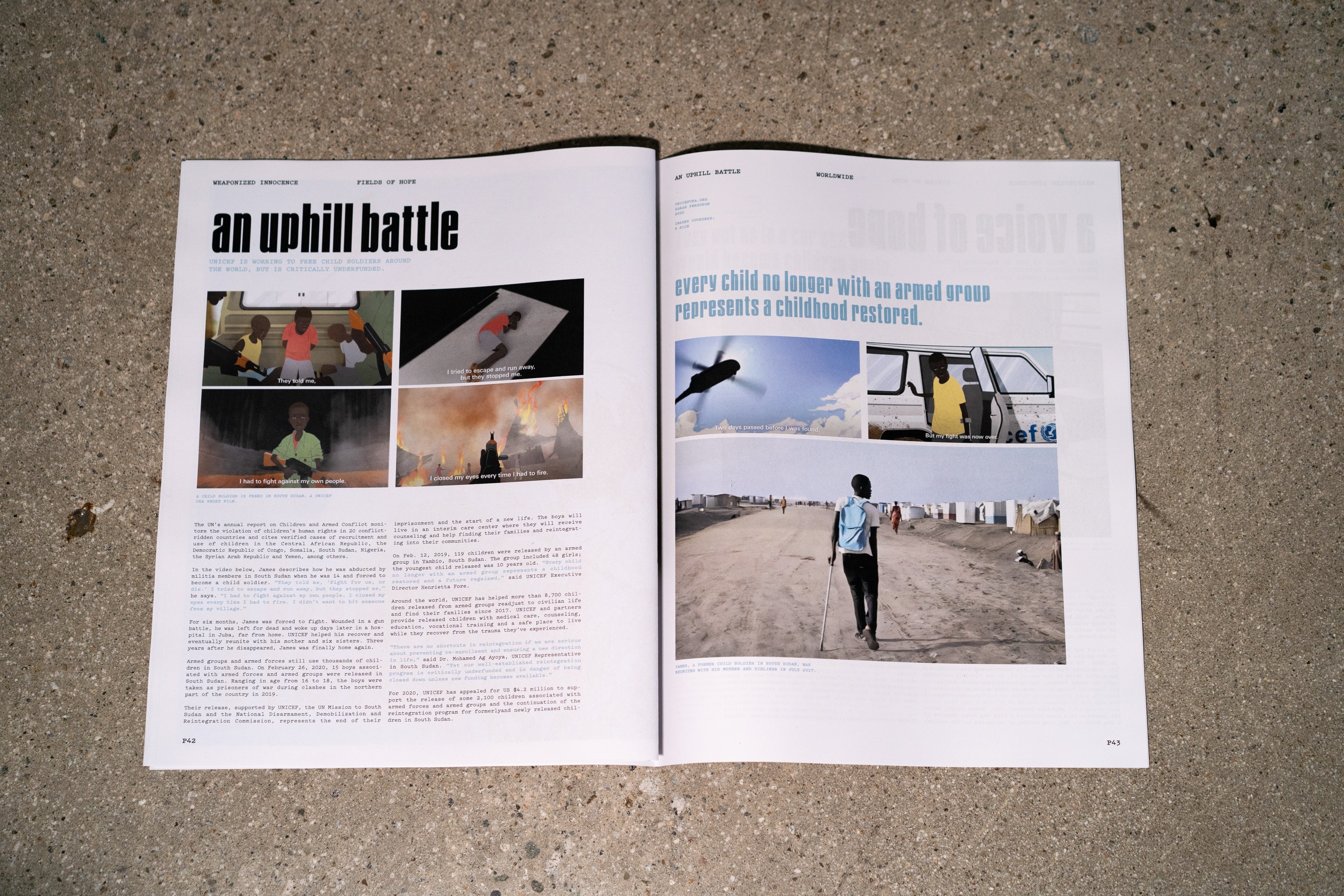
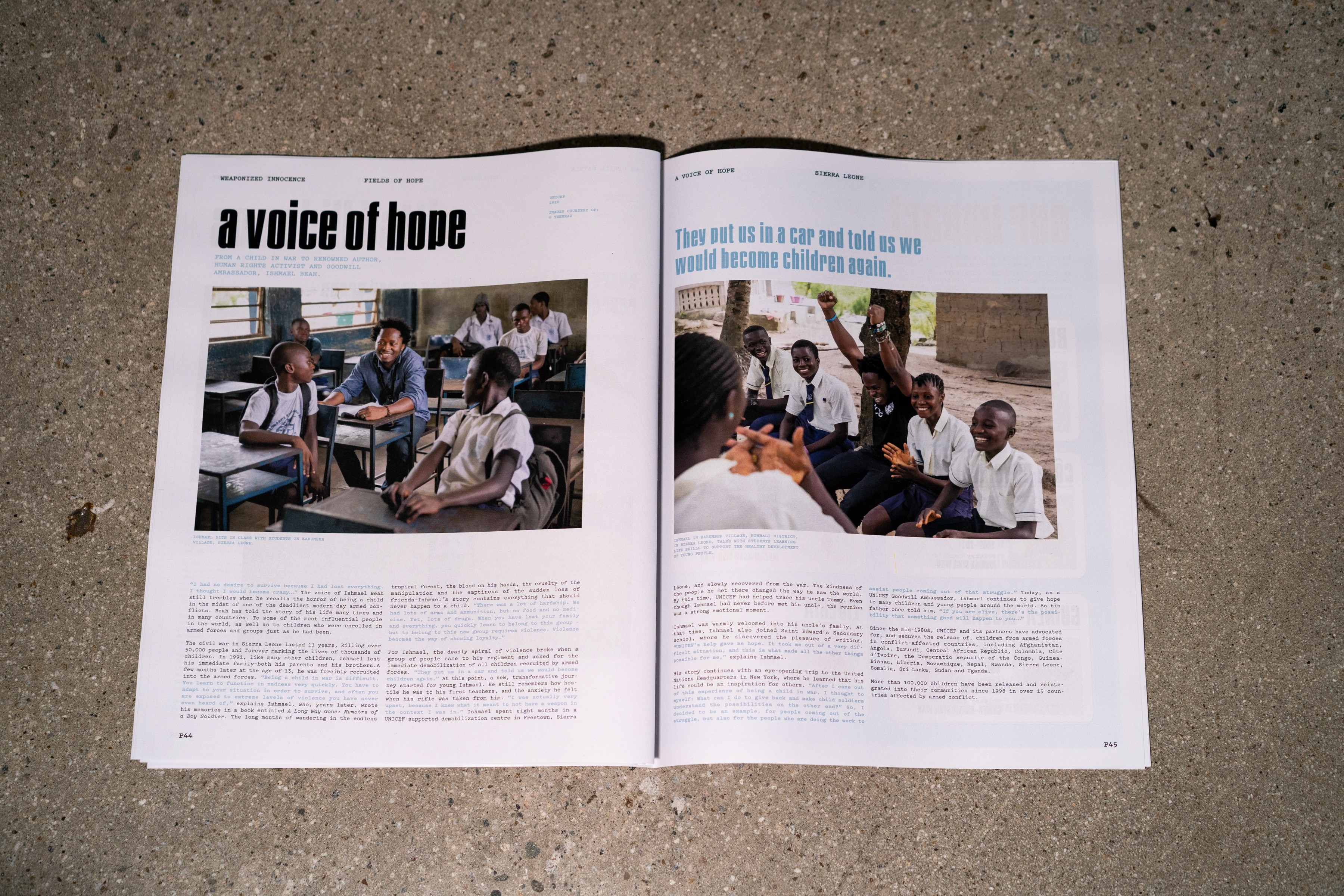
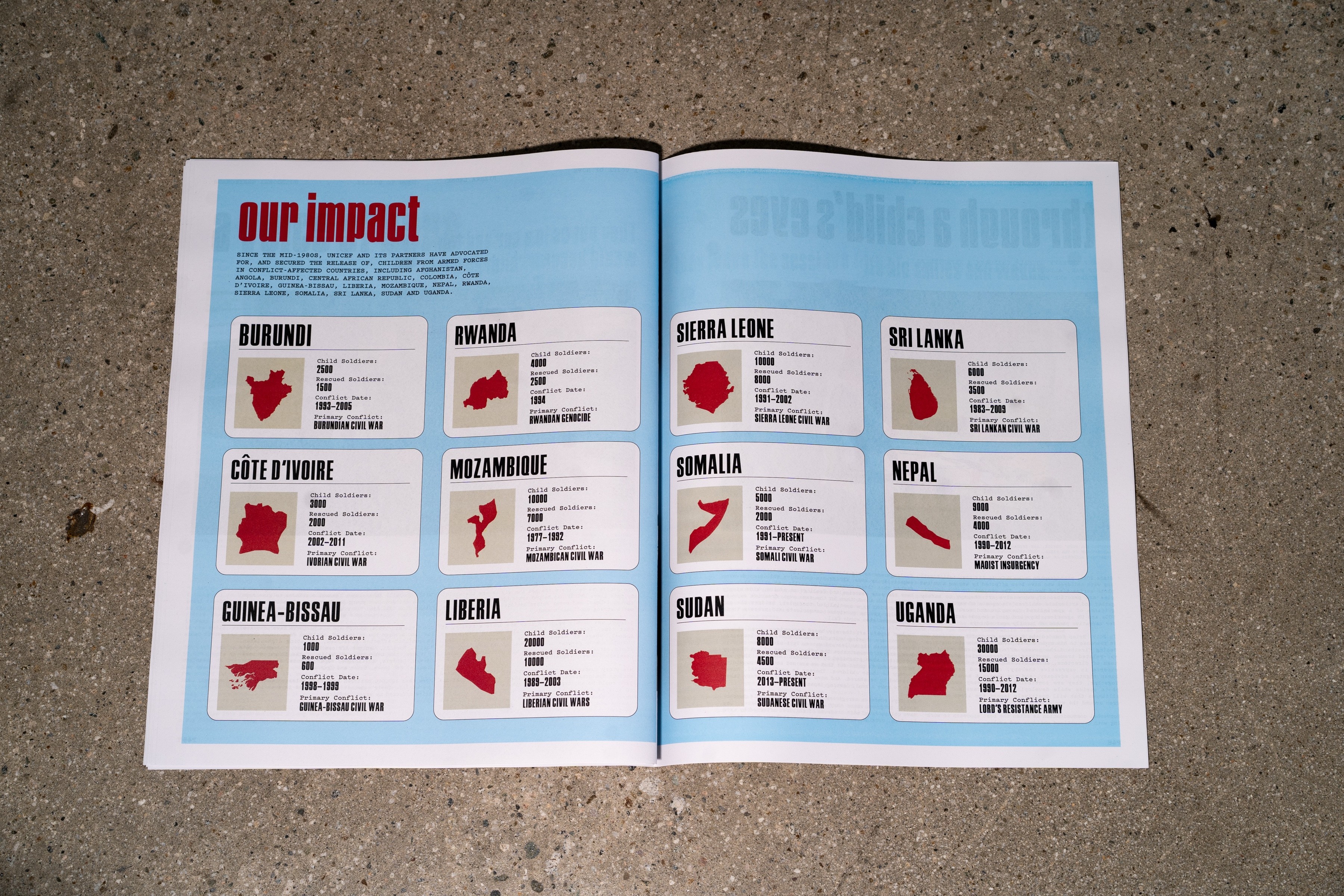
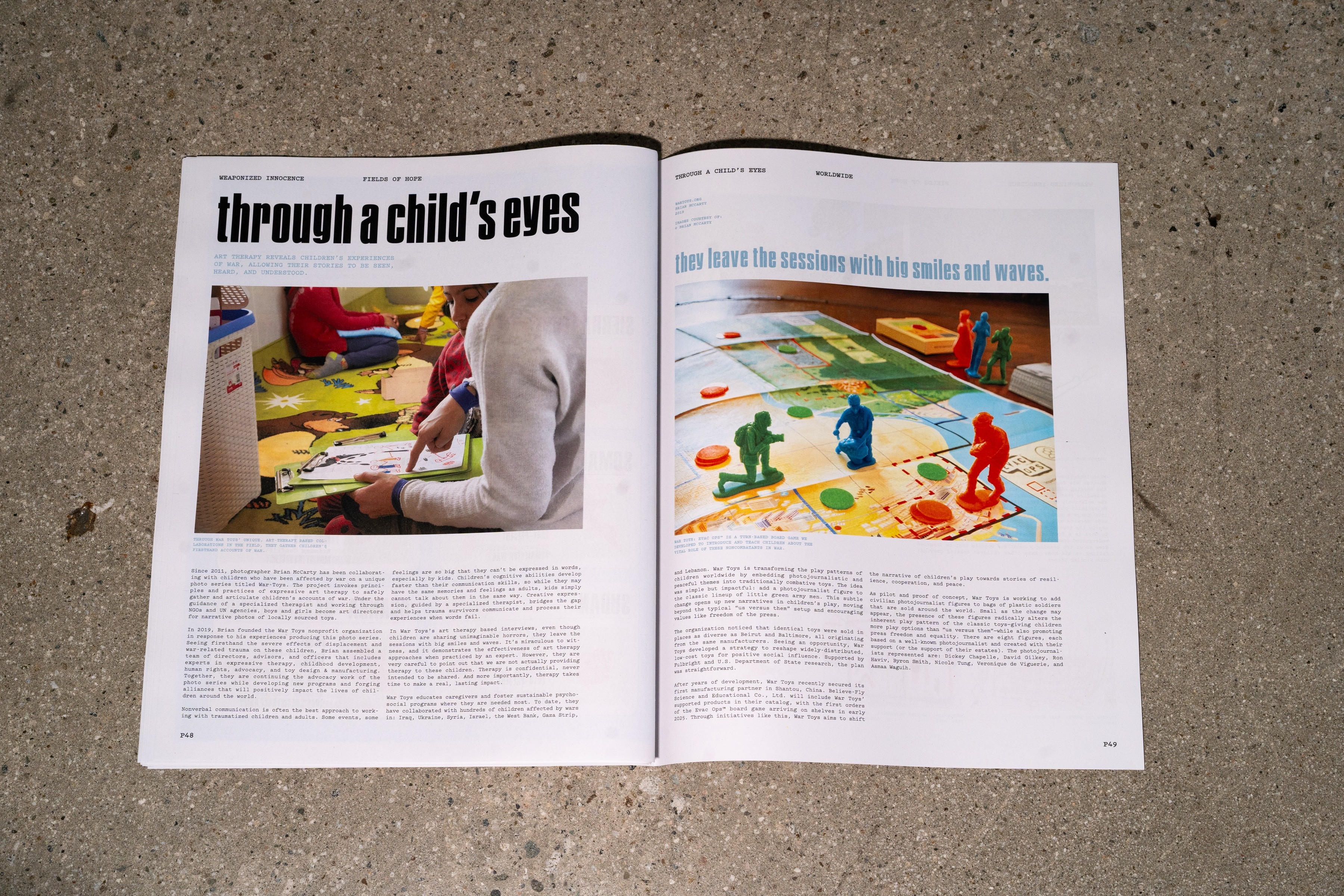
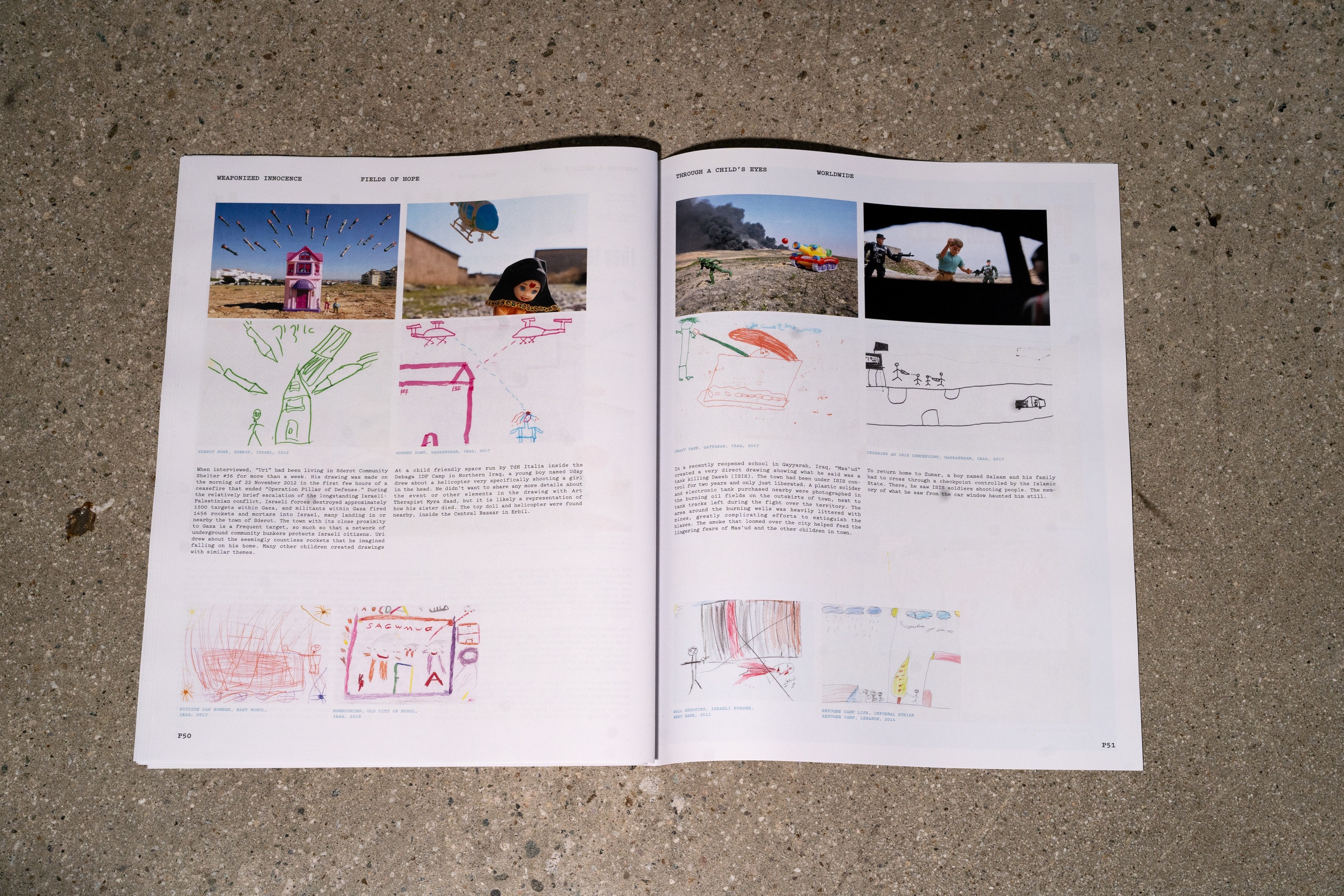
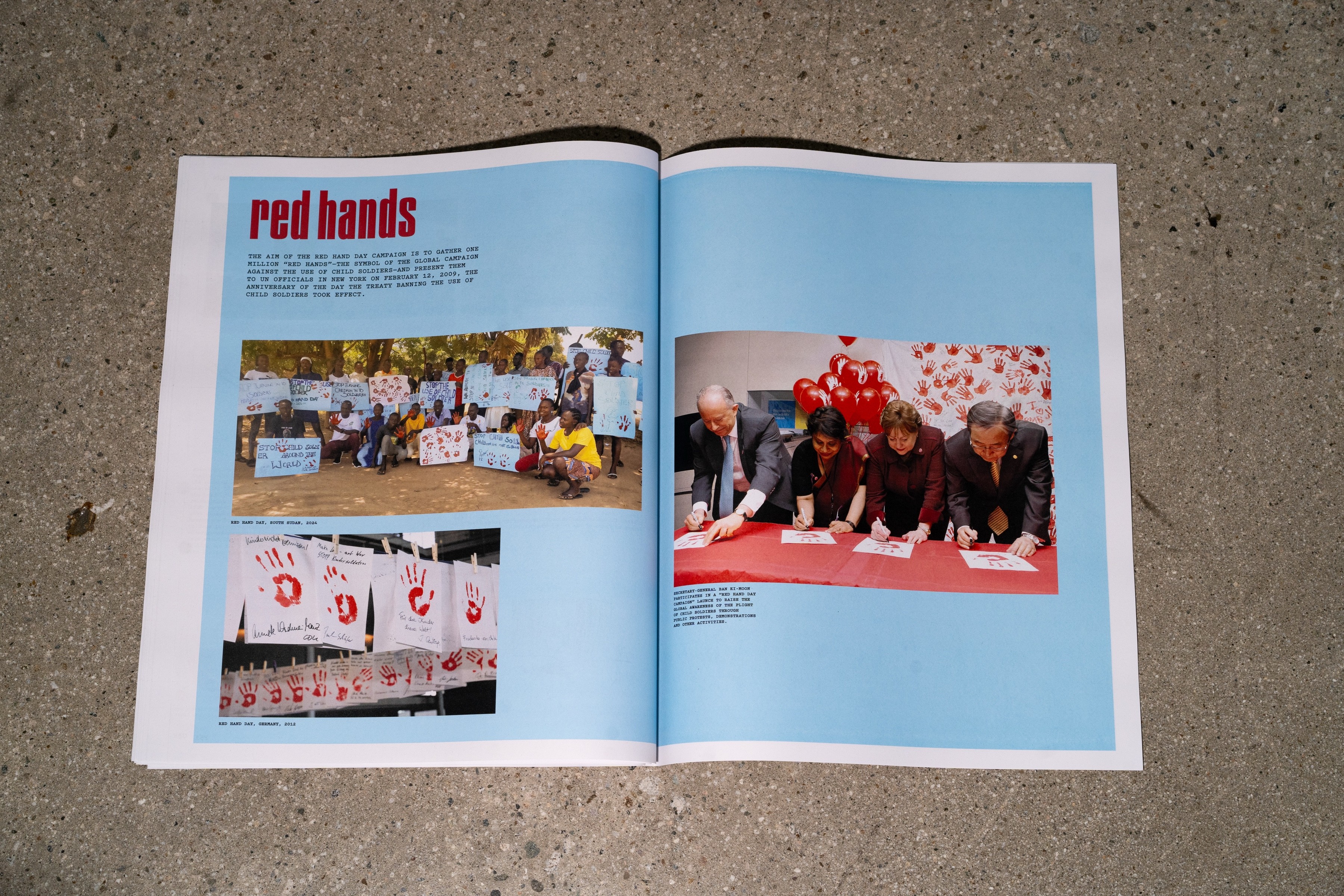
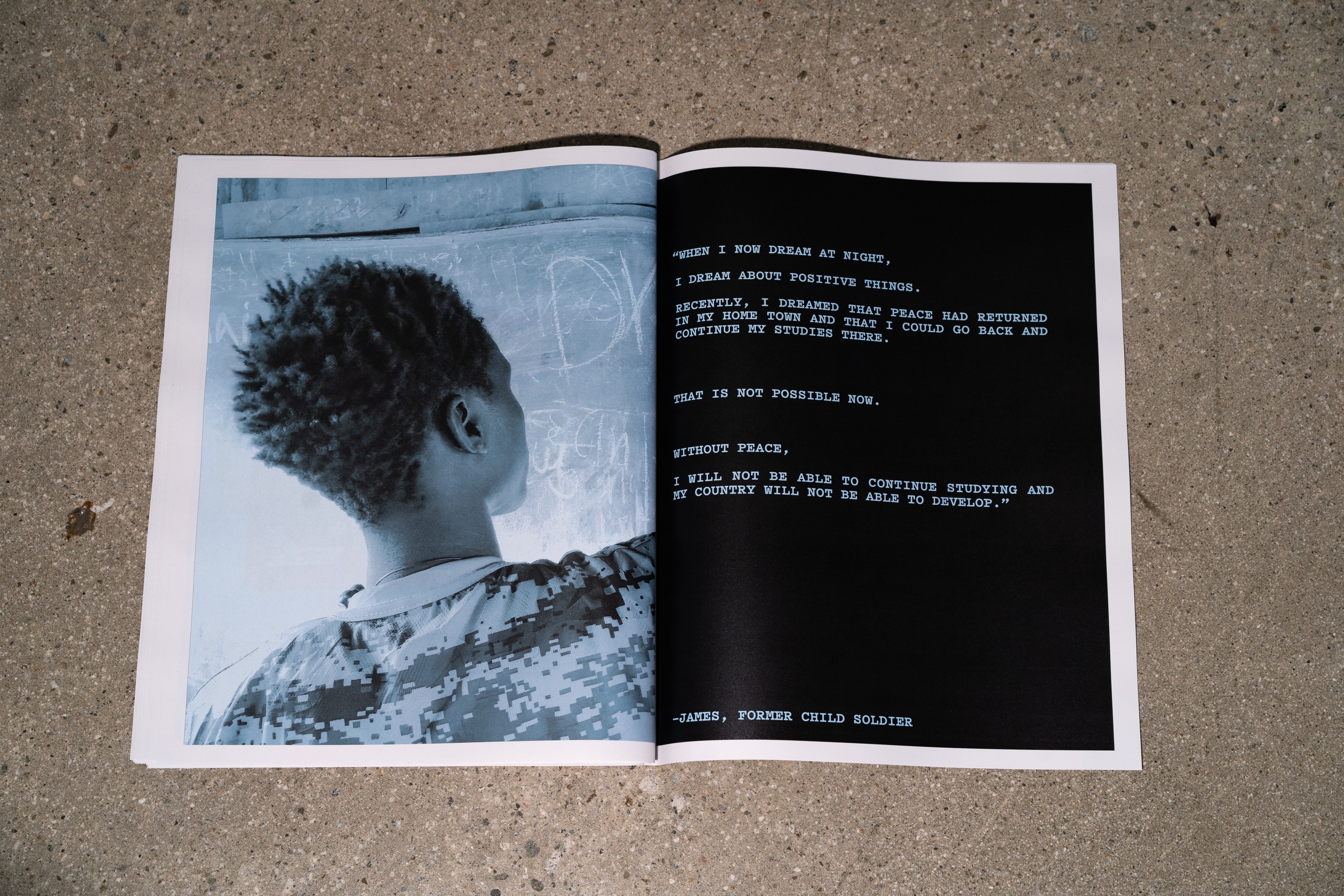
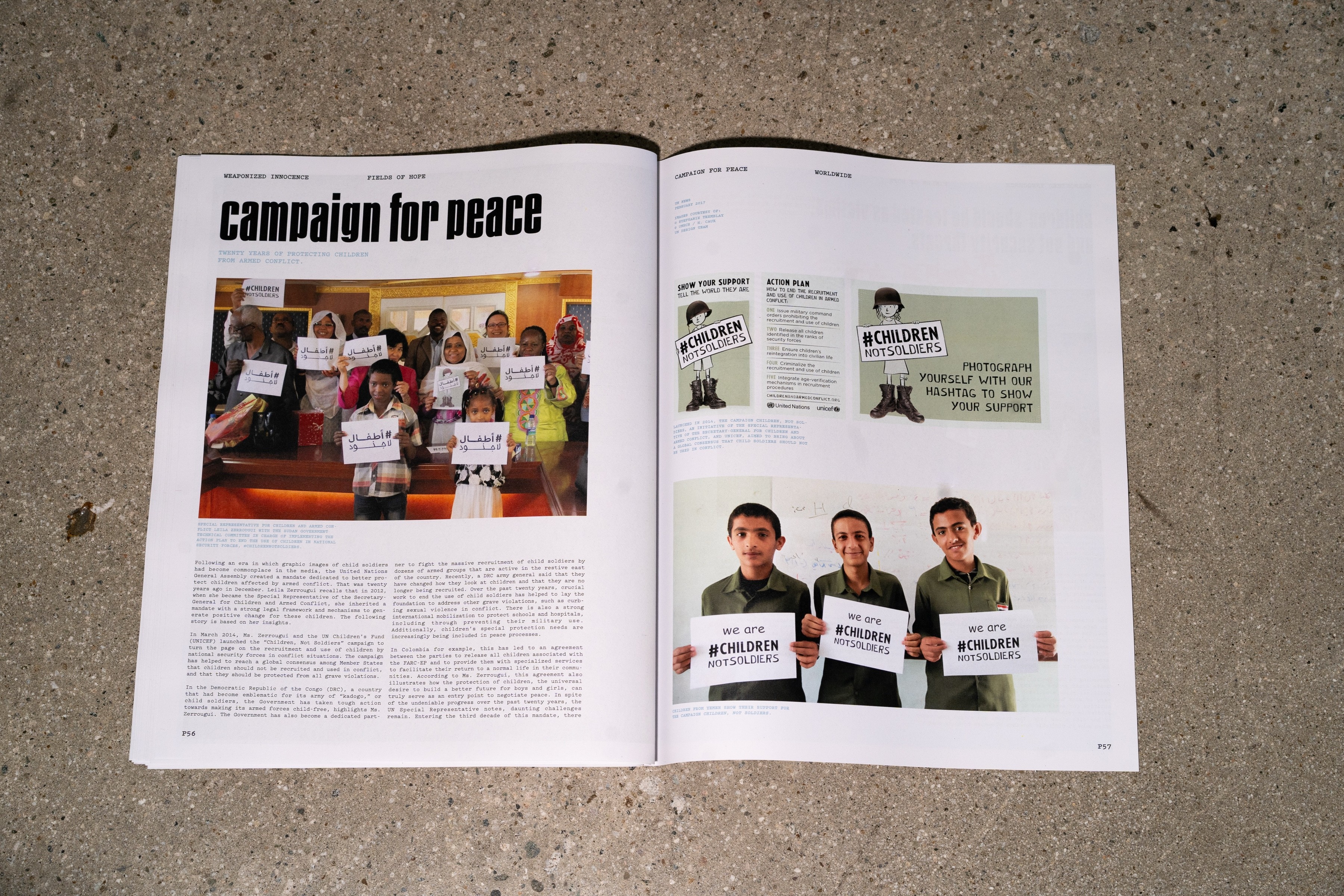
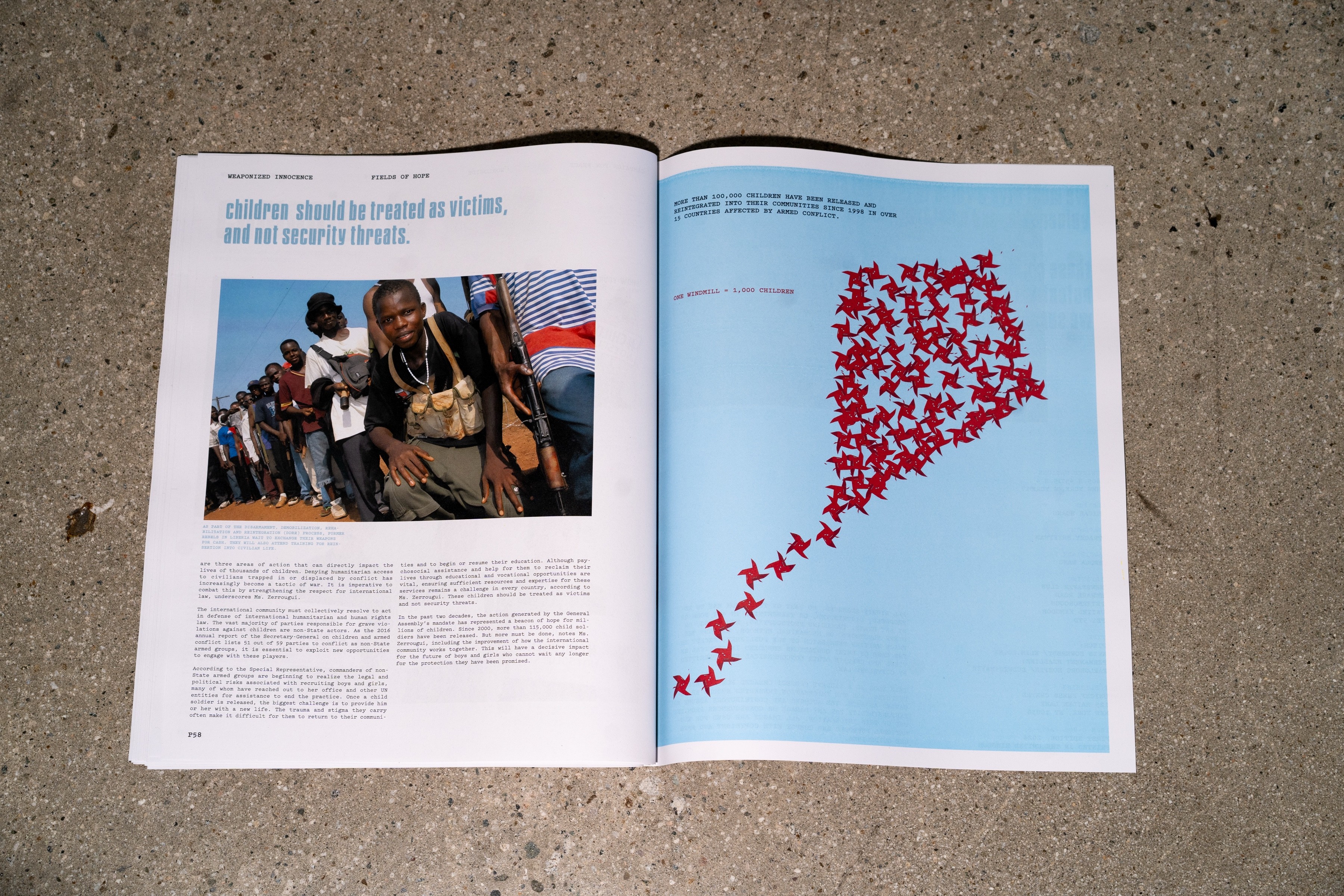
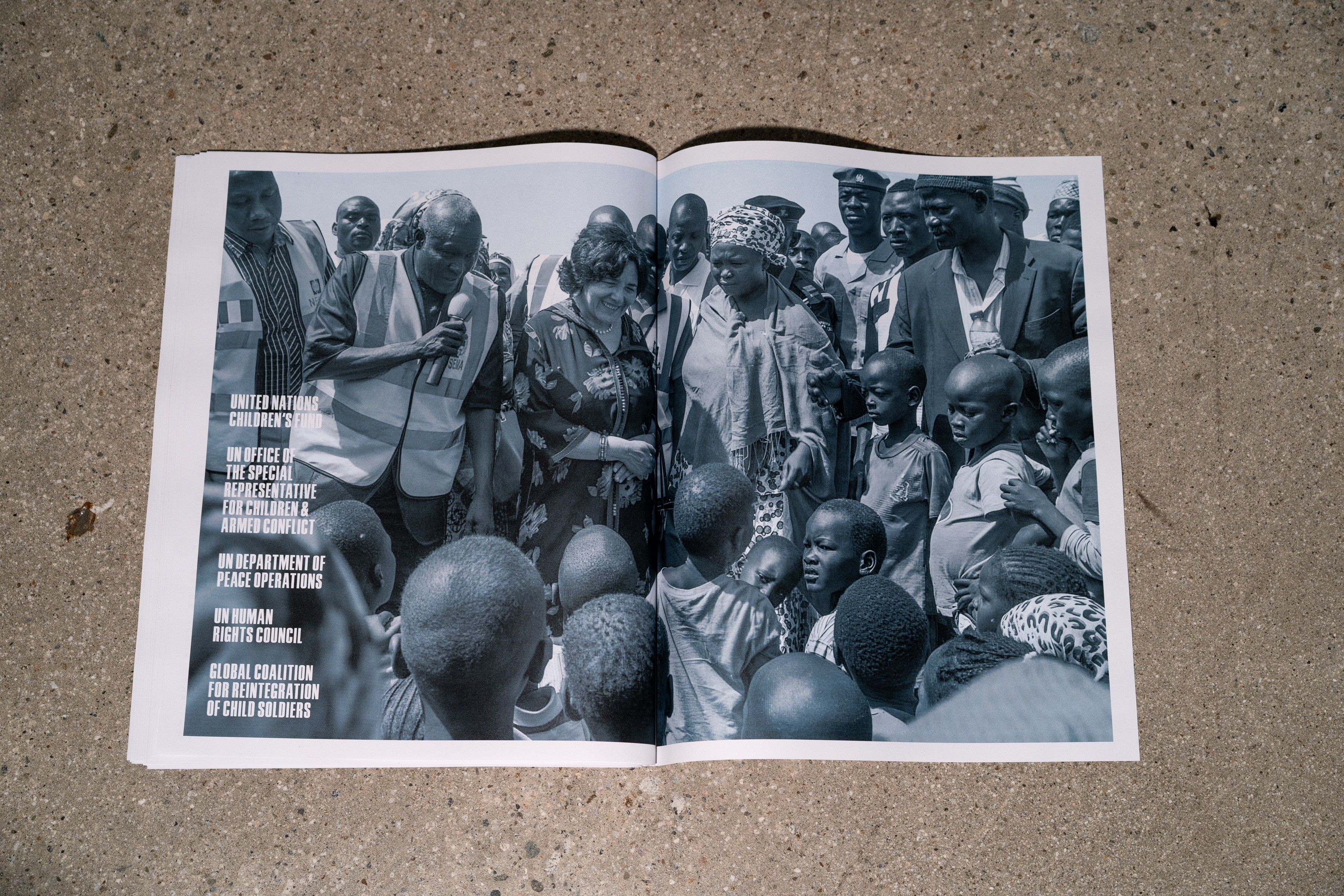
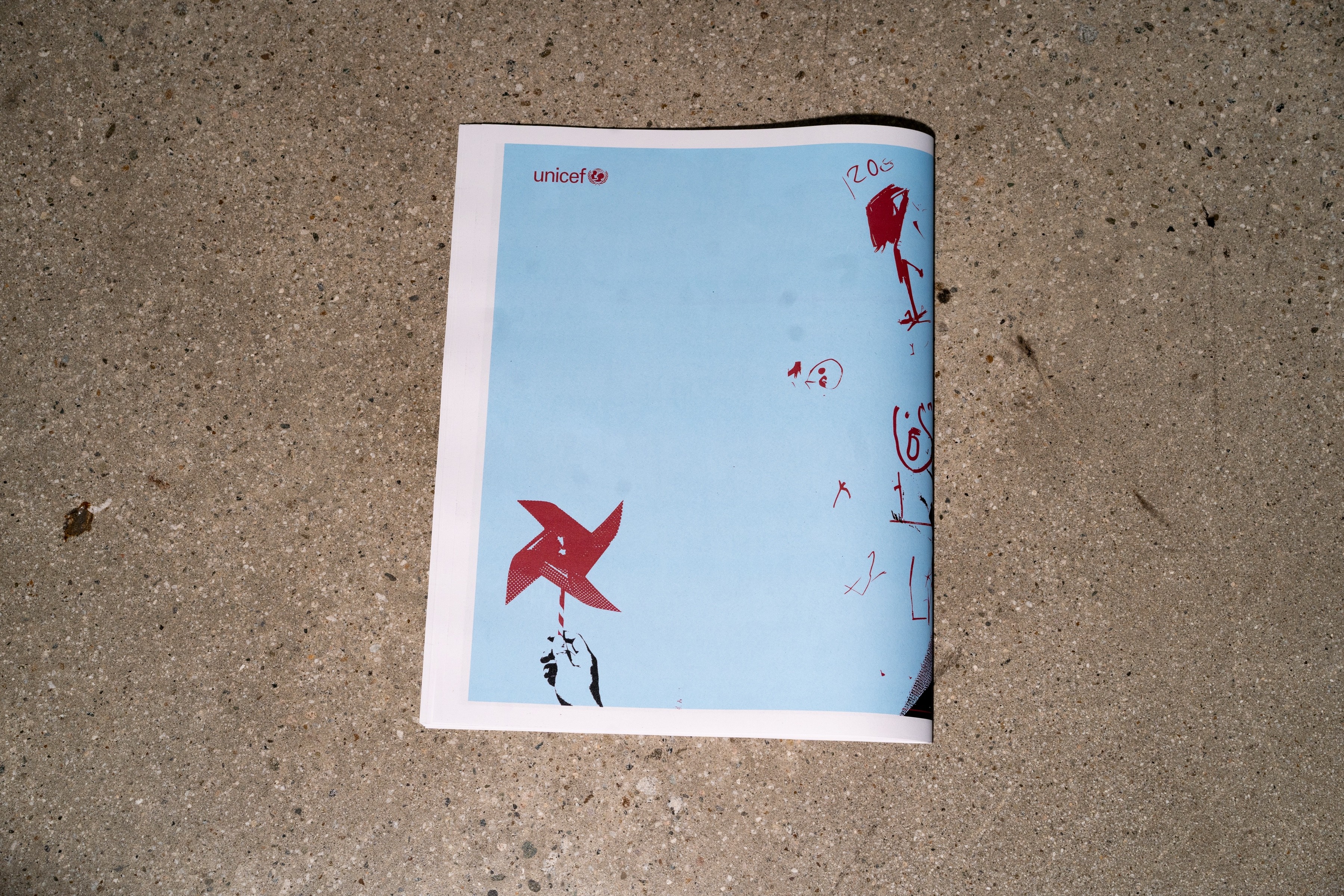
The interior moves from disjointed, chaotic layouts to clean, balanced spreads, mirroring a path from trauma toward recovery.


Stark infographics establish scale and context, while childlike illustrations convey the emotional toll of child soldiering. Together, they balance information with emotional impact and emphasize the transformative role of UNICEF's work.
The Pinwheel Project
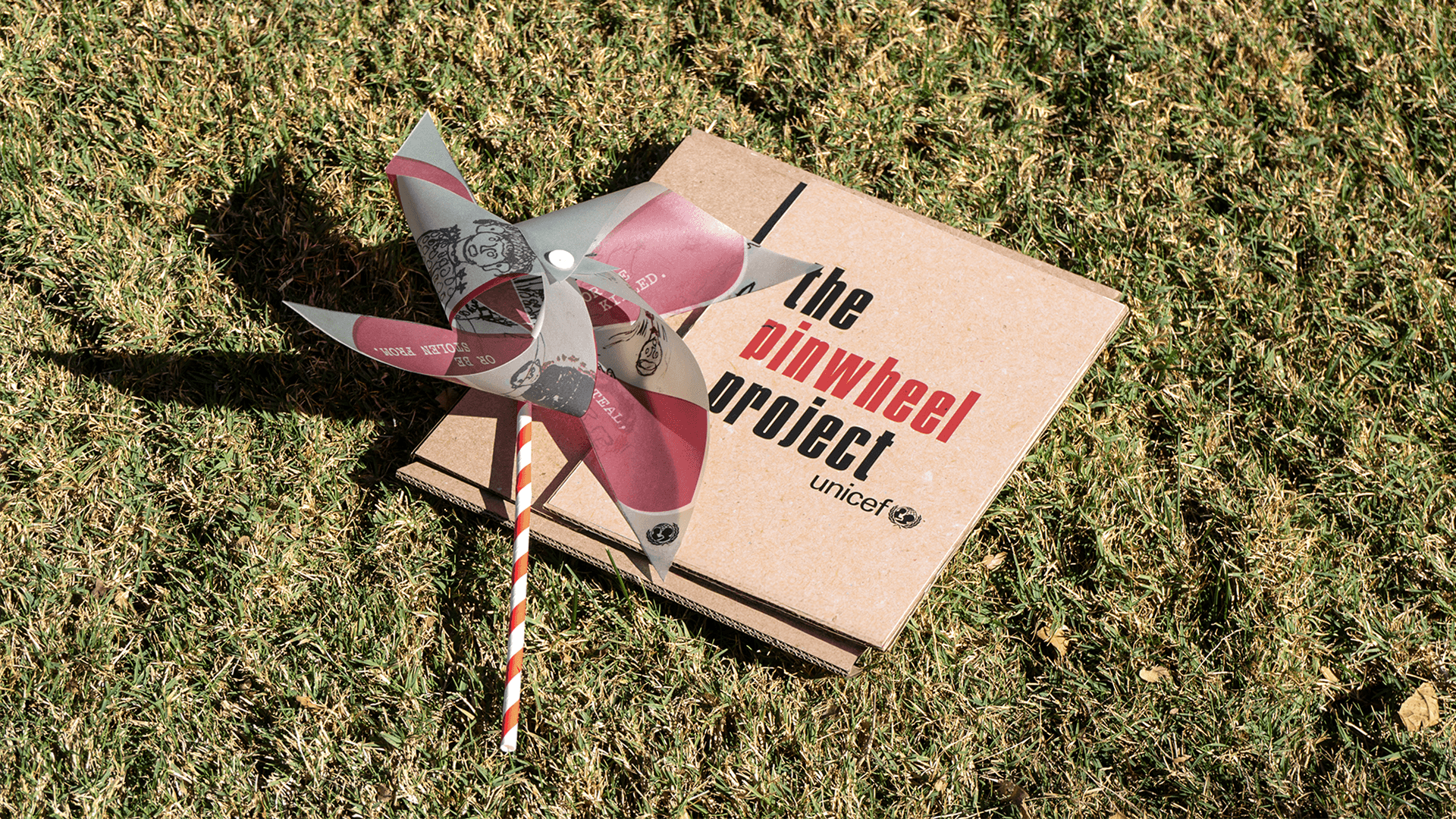
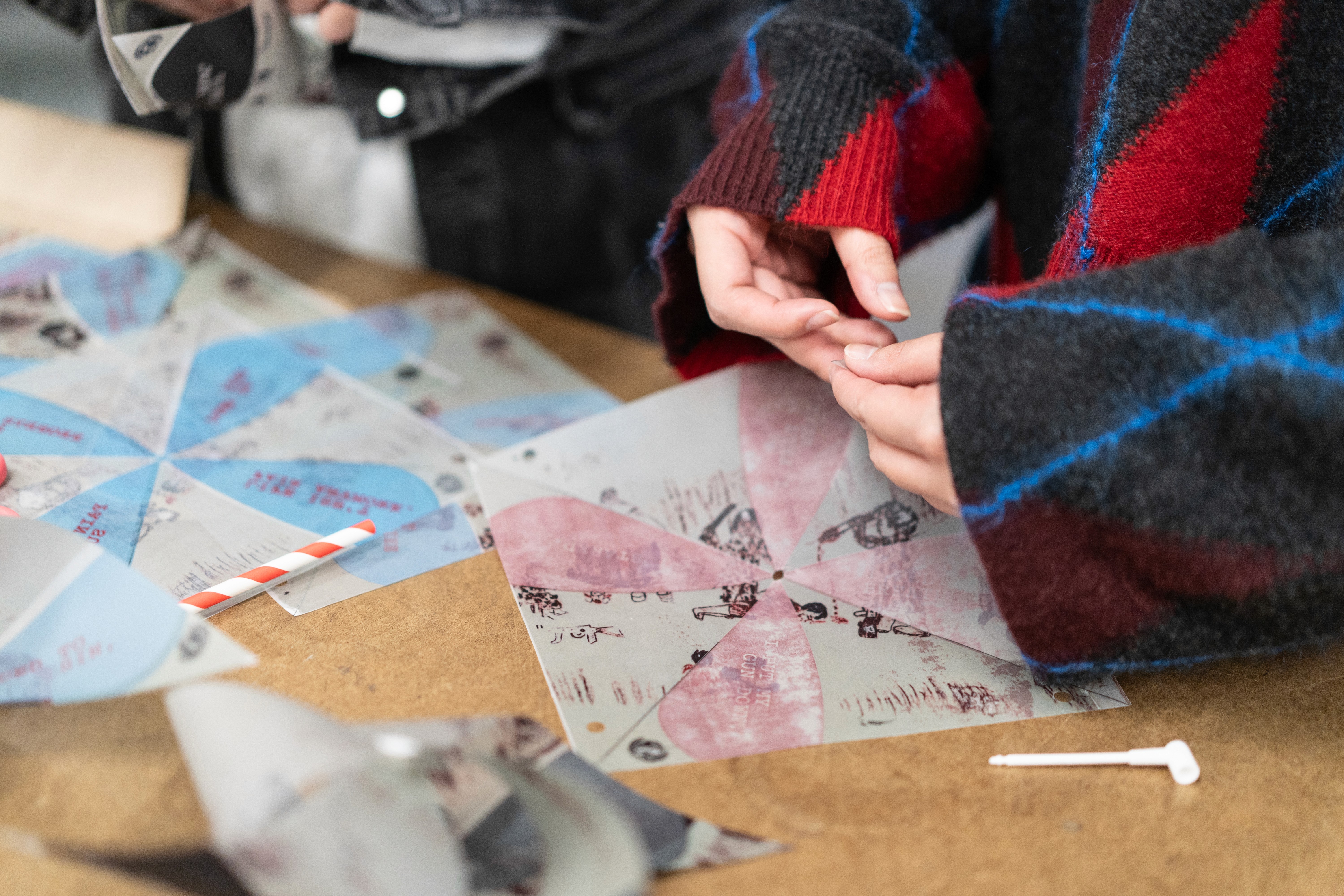
The Pinwheel Project is a hands-on pinwheel-making kit designed for stakeholders and educational campaigns. Assembling the pinwheel becomes a metaphor for rebuilding a life, turning a simple act into a gesture of care and renewal.
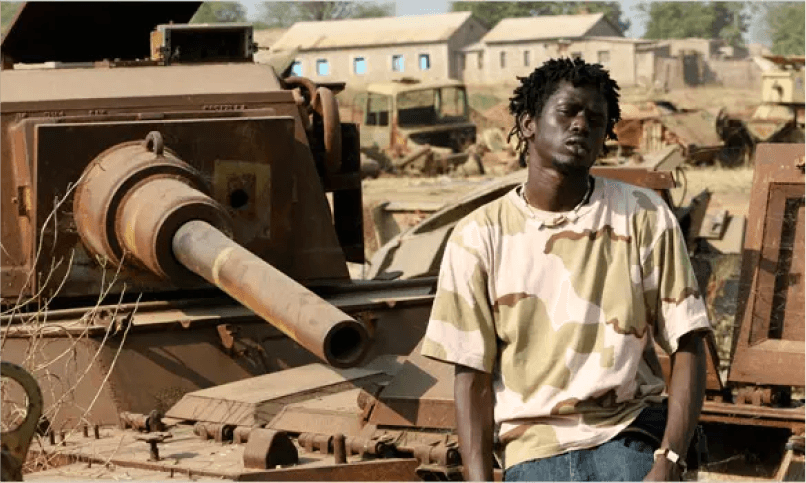

Each pinwheel design showcases a distinctive blend of drawings by former child soldiers and rap lyrics by Emmanuel Jal, a poet and musician who survived child soldiering.



Process
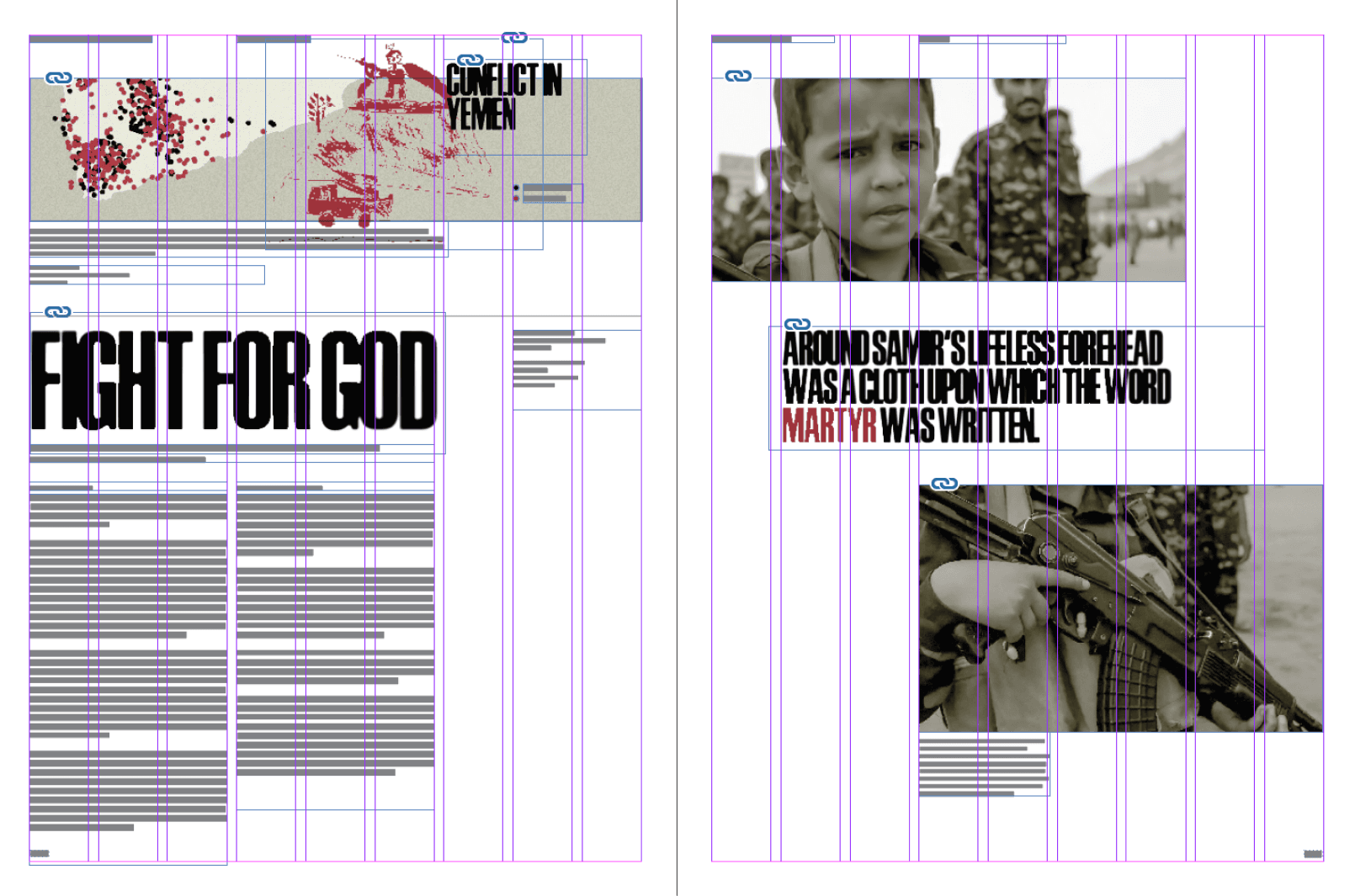
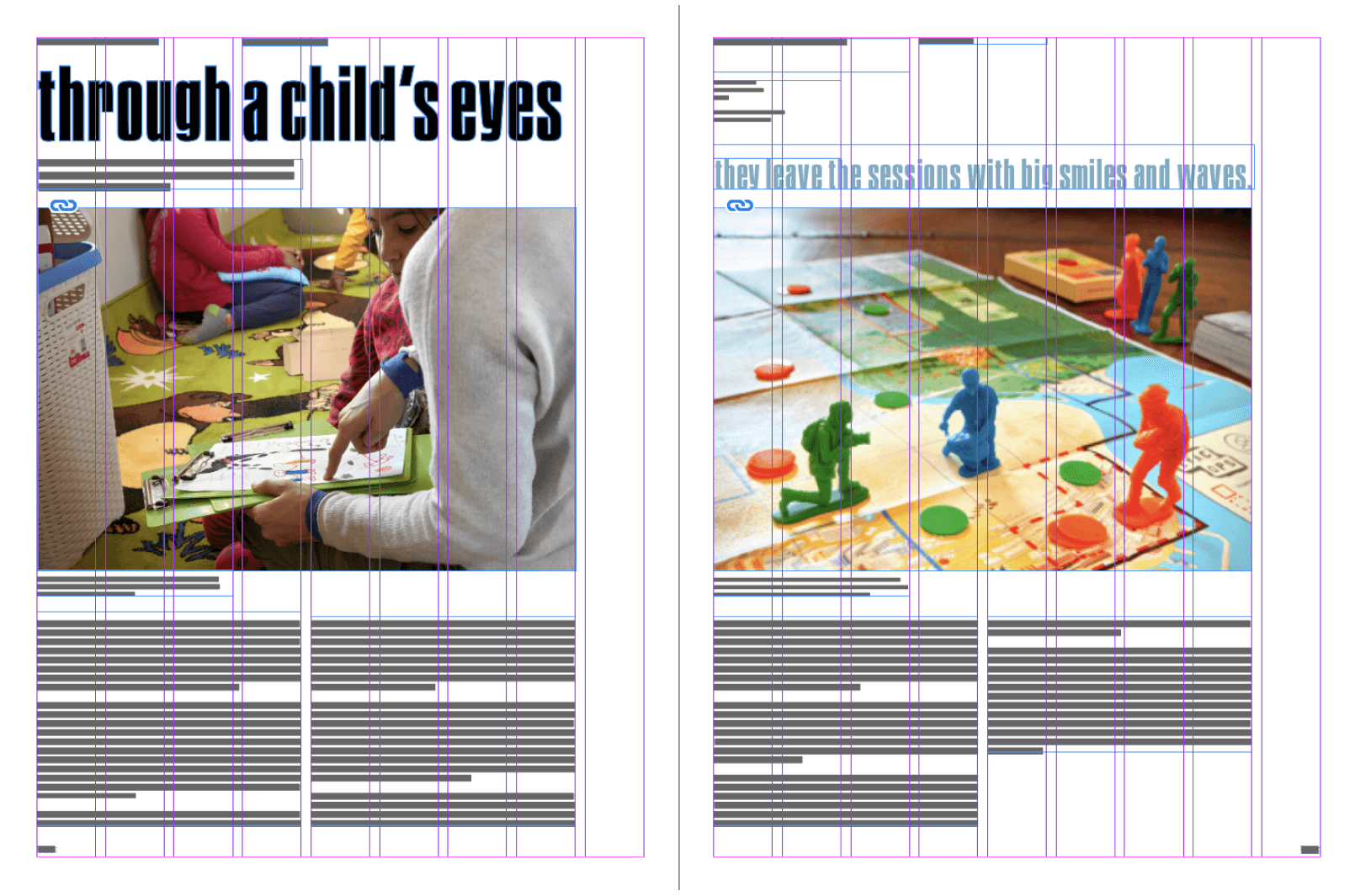
A 9-column grid creates dynamic, asymmetric spreads in the first half and shifts to a clean, informational tone in the second half.

Midjourney AI was used to generate chaotic, childlike, and nightmarish drawings depicting the fear and horror of warfare and forced soldiering from a child's perspective.